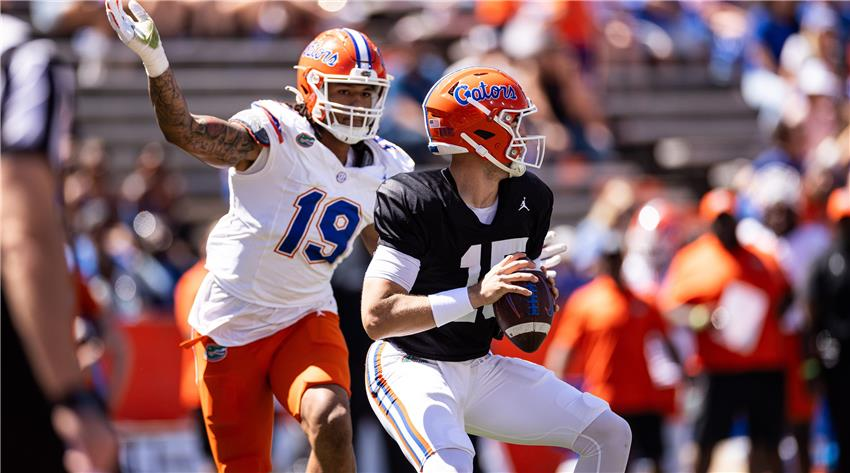
A quietly rising NCAA football program is redefining success through a system-first approach built on analytics, roster depth, tempo manipulation, and elite mental preparation. Rather than relying solely on star power, this strategy maximizes every snap and every player—creating late-game dominance, resilience against injuries, and a blueprint that could reshape the entire NCAA season.
College football has always been a sport of powerhouses, tradition, and star recruits. Fans are used to seeing the same programs dominate year after year, fueled by five-star talent, massive budgets, and national exposure. But every so often, a different kind of contender emerges—one that doesn’t just win because it has better players, but because it thinks differently.
This season, one NCAA team is doing exactly that.
While headlines focus on marquee matchups and Heisman candidates, insiders and analysts are increasingly pointing to a behind-the-scenes strategy that could dramatically alter conference races and playoff conversations. It isn’t flashy. It doesn’t rely on trick plays or gimmicks. Instead, it’s a deeply structured, system-based approach designed to exploit the modern realities of college football.
And it’s working.
The Changing Landscape of NCAA Football
To understand why this strategy is so dangerous, you first have to understand how much the NCAA game has changed.
Over the last decade, college football has evolved in several key ways:
• The transfer portal has made rosters fluid year-to-year
• NIL deals have changed recruiting dynamics
• Offensive tempo has increased league-wide
• Player depth is harder to maintain
• Injury rates rise late in the season
Traditional models—stack elite starters and out-talent opponents—still work for blueblood programs. But for most teams, that approach isn’t sustainable.
This is where the “secret strategy” comes in.
What Is the Secret Strategy?
Contrary to the hype, the strategy is not a single tactic. It’s a four-part system built around maximizing efficiency, adaptability, and endurance across a full season.
At its core, the approach focuses on:
• Deep rotational roster usage
• Analytics-driven decision-making
• Adaptive tempo control
• Advanced psychological preparation
Each element reinforces the others, creating a team that doesn’t just survive adversity—it thrives in it.
Depth as a Weapon, Not a Backup Plan
Most NCAA teams rely heavily on their starters. In close games, those players log snap counts that would make NFL coaches nervous. Fatigue sets in. Mistakes follow.
This team flipped the script.
Instead of treating backups as emergency options, the coaching staff planned for rotation from day one. Players are developed with the expectation that they will play meaningful snaps—not mop-up duty.
The result?
By the fourth quarter, when opponents are gasping for air, this team looks faster, sharper, and more disciplined.
Real-Life Example
In a midseason matchup against a ranked opponent, this team trailed at halftime despite winning the time-of-possession battle. In the second half, their defensive rotation took over. Fresh pass rushers consistently beat tired offensive linemen, forcing turnovers and short fields.
They won comfortably—despite being out-recruited on paper.
Analytics Are Quietly Driving Winning Decisions
For decades, college football coaching was guided by instinct, tradition, and “gut feeling.” Punt on fourth-and-short. Kick the field goal. Play conservative.
But modern data tells a different story.
This team embraced analytics not as a supplement, but as a decision-making foundation.
They evaluate:
• Fourth-down conversion probabilities
• Expected points added (EPA)
• Opponent play-calling tendencies
• Clock management scenarios
• Red-zone efficiency metrics
As a result, their in-game decisions consistently maximize win probability rather than public approval.
Why This Matters
Analytics-driven teams convert more drives into points and steal possessions that swing close games. Over a season, those margins stack up.
In one game, this team went for it on fourth down three times in opponent territory. All three drives ended in touchdowns. The opposing coach punted twice in similar situations. The final margin? Two touchdowns.
Tempo Control: The Invisible Advantage
Most fans think tempo means playing fast.
That’s only half the story.
This team doesn’t just play fast—it plays smart fast.
They deliberately change tempo based on situation:
• Speed up after explosive plays
• Slow down to protect defensive legs
• Accelerate late in halves to steal possessions
• Freeze tempo to disrupt substitutions
Opposing defenses struggle to adjust. Communication breaks down. Mistakes multiply.
Tempo becomes a psychological weapon.
Mental Preparation in High-Pressure Moments
One of the most overlooked elements of college football is the mental side of the game.
This team invests heavily in:
• Sports psychologists
• Leadership development programs
• Pressure-simulation practices
• Film-based decision training
Players rehearse chaos.
Crowd noise. Late-game scenarios. Adverse officiating. Momentum swings.
So when pressure moments arrive on Saturday, they feel familiar.
Real-Life Example
In a hostile road environment with less than two minutes remaining, this team executed a 12-play drive without a single penalty or missed assignment. Meanwhile, the home team committed two false starts and burned timeouts.
That composure doesn’t happen by accident.
Why Opposing Coaches Are Nervous
Several opposing coaching staffs have admitted—off the record—that preparing for this team is uniquely difficult.
Why?
• Personnel groupings change weekly
• Tempo varies unpredictably
• Play-calling adapts mid-game
• Defensive schemes disguise intentions
Traditional scouting reports lose value.
You’re not preparing for a system—you’re preparing for a decision-making philosophy.
And that’s much harder to stop.
How This Strategy Handles Injuries Better Than Most
Injuries are inevitable in college football. What separates contenders from pretenders is how they respond.
Because this team rotates heavily and prepares backups for real snaps, injuries don’t derail the season.
When a starter goes down, the next player already has experience, confidence, and trust within the system.
This approach keeps performance stable across long seasons—especially critical during playoff pushes.
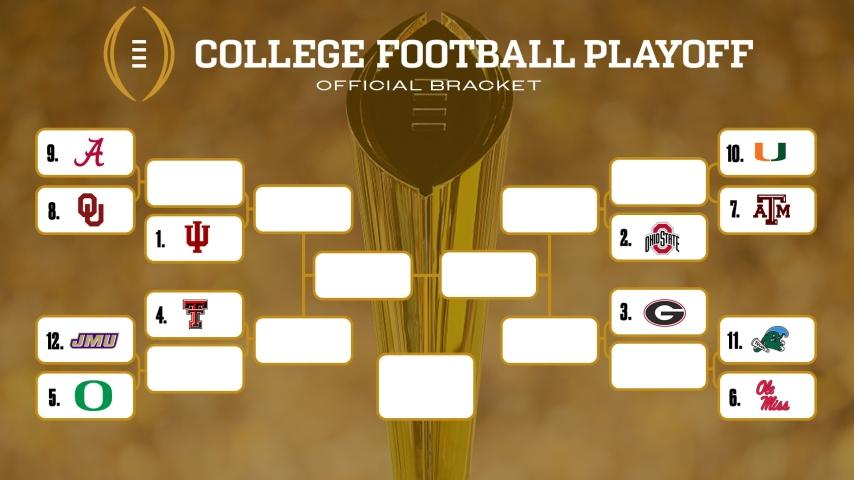
Implications for the NCAA Playoff Race
As playoff formats expand and schedules grow more demanding, depth and adaptability become non-negotiable.
Teams that rely on stars struggle when injuries pile up. Teams built on systems survive.
This strategy positions its users to:
• Peak late in the season
• Maintain physical freshness
• Win close playoff games
• Adapt to unfamiliar opponents
It’s not just a regular-season plan—it’s a postseason blueprint.
What This Means for the Future of College Football
If this team continues winning, expect ripple effects across the NCAA:
• More analytics departments
• Greater emphasis on depth recruiting
• Increased mental performance staffing
• Less reliance on hero-ball offenses
College football evolves through imitation. Success breeds copycats.
And this strategy may become the next standard.
Key Takeaways for Fans and Programs
• Depth can outperform star power
• Analytics improve close-game outcomes
• Tempo is as much psychological as physical
• Mental preparation wins late games
• Systems scale better than talent concentration
The teams that adapt fastest will dominate tomorrow’s NCAA landscape.
Frequently Asked Questions (FAQs)
- What is the secret strategy this NCAA team is using?
Ans. The strategy combines deep roster rotation, analytics-driven coaching decisions, adaptive tempo control, and advanced psychological preparation to gain consistent advantages over opponents. - Why is depth so important in college football today?
Ans. Longer seasons, faster tempo, and higher injury rates make depth essential for maintaining performance late in games and across the season. - How do analytics actually help teams win games?
Ans. Analytics optimize fourth-down decisions, clock management, and play selection, increasing overall win probability in close contests. - Is tempo manipulation really that effective?
Ans. Yes. Changing tempo disrupts defensive substitutions, increases fatigue, and creates mental pressure that leads to mistakes. - Do smaller programs benefit more from this strategy?
Ans. Absolutely. System-based strategies help mid-tier programs compete with talent-rich opponents by maximizing efficiency. - How does psychological preparation affect performance?
Ans. Mental training improves composure, reduces penalties, and enhances execution in high-pressure situations. - Can this strategy work in the NCAA playoffs?
Ans. Yes. Depth, adaptability, and mental resilience are critical advantages in playoff environments with limited recovery time. - Are more teams adopting analytics in college football?
Ans. Yes. Analytics usage is growing rapidly as teams seek marginal advantages that add up over a season. - Does this approach change recruiting priorities?
Ans. Programs may prioritize versatile, system-fit players over pure star rankings to sustain depth and flexibility. - Could this strategy lead to a championship run?
Ans. If executed consistently, system-based teams can outperform more talented opponents and make deep postseason runs.
Final Thoughts
College football is no longer just about who has the best players—it’s about who uses them best.
This NCAA team’s secret strategy proves that innovation, preparation, and discipline can level the playing field and even tilt it. As the season unfolds, don’t be surprised if this approach reshapes conference standings, playoff debates, and the future of the sport itself.
Sometimes, the biggest revolutions happen quietly—until everyone else has no choice but to follow.
About the Author