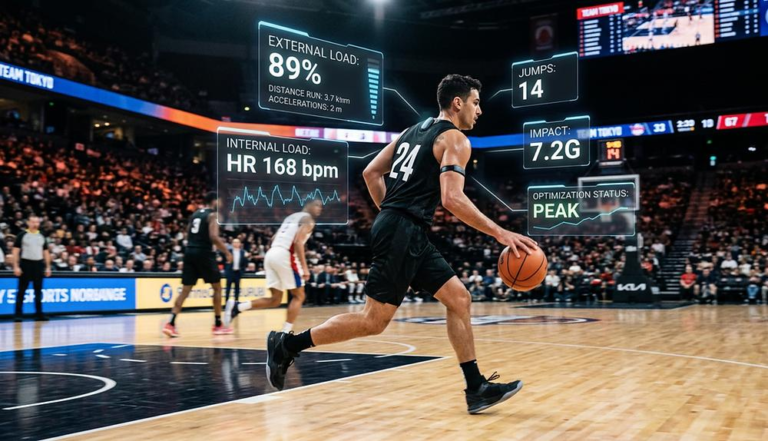

Basketball’s evolution from gritty streetball culture to analytics-driven strategy sparked one of the sport’s biggest identity debates. As efficiency, shot charts, and data reshaped how the game was played, many fans felt its soul slipping away. This in-depth exploration reveals how basketball lost its creative heartbeat, why backlash grew, and how the modern game ultimately found balance between instinct, individuality, and intelligence.
Introduction: When Basketball Felt Alive in Your Hands
There was a time when basketball didn’t need explanation.
No advanced metrics.
No heat maps.
No efficiency models.
Just cracked pavement, bent rims, and a ball worn smooth by hours of play. Basketball wasn’t optimized—it was felt. Every crossover told a story. Every contested jumper carried ego, pride, and reputation.
Then basketball grew up.
Today, the sport is shaped by analytics departments, algorithms, and data-driven decision-making at every level—from youth leagues to the NBA, college programs, and even USA Basketball. To many fans, something essential was lost in the process.
But basketball didn’t abandon its soul.
It tested it—and learned how to protect it.
Why Are Fans Asking: “Did Basketball Lose Its Soul?”
Search trends over the last decade reveal a growing emotional disconnect among fans. Common questions include:
- Why does every team play the same way?
- Why did mid-range shots disappear?
- Why does modern basketball feel repetitive?
- Is analytics killing creativity?
These questions aren’t anti-progress. They’re rooted in nostalgia, emotion, and identity. Fans don’t hate data—they fear losing what made basketball human.

Streetball: The Birthplace of Basketball’s Soul
Before basketball became a spreadsheet, it was a conversation.
Streetball rewarded instincts over instructions. There were no set plays—only reads, reactions, and respect. Players learned timing, deception, and psychological warfare long before they learned efficiency.
Streetball culture emphasized:
- Improvisation
- Swagger and confidence
- Adaptability to chaos
- Creativity under pressure
You didn’t just win games—you earned reputations.
This environment shaped generations of players who brought flair and unpredictability into organized basketball.
When Analytics Entered the Game
Analytics didn’t arrive to kill creativity. They arrived to answer questions.
Teams wanted to know:
- Which shots produce the most points?
- Which lineups perform best?
- How can risk be reduced?
The answers were uncomfortable—but undeniable.
Data revealed that:
- Three-point shots were more valuable than mid-range jumpers
- Layups and free throws maximized efficiency
- Shot selection mattered more than shot difficulty
Basketball began to shift—not culturally, but mathematically.
The Three-Point Revolution: When Logic Took Over
The rise of the three-point shot marked basketball’s biggest stylistic shift.
Teams didn’t shoot more threes because they liked them. They shot more threes because the numbers demanded it.
What Changed on the Court
- Post-ups declined
- Mid-range jumpers were discouraged
- Spacing became king
- Offensive systems simplified
Basketball became faster, wider, and more efficient—but also more predictable.
Why Fans Started Feeling Disconnected
The backlash didn’t come from ignorance. It came from familiarity.
When:
- Every offense looked similar
- Shot charts mirrored each other
- Creativity felt coached out
Fans felt something slipping away.
Basketball risked becoming optimized entertainment rather than expressive competition.
Players Felt the Shift Too
Analytics didn’t remove skill—but it restricted permission.
Many players admitted they were discouraged from:
- Pull-up jumpers
- Improvised plays
- Creative risk-taking
Mistakes became data points. Confidence became conditional.
Basketball had always thrived on trust. For a moment, it lost it.
The Breaking Point: When Data Was Misused
Analytics weren’t the problem. Absolutism was.
When numbers were treated as rules instead of tools:
- Players stopped trusting instincts
- Coaches overcorrected
- Games lost rhythm
Basketball needed nuance—not more math.
The Turning Point: Context Over Control
Smart teams learned the lesson first.
Analytics evolved from rigid commandments into contextual guidance. Numbers informed decisions—but players were trusted to read the moment.
Basketball didn’t reject data.
It humanized it.
The Quiet Return of the Mid-Range
Once declared inefficient, the mid-range shot made a comeback.
Why?
- Defenses overprotected the three-point line
- Spacing created open mid-range zones
- Elite players punished predictability
This wasn’t rebellion—it was adaptation.
Efficiency didn’t disappear. It expanded.
Streetball’s Survival Through Digital Culture
Streetball never vanished—it migrated.
Social media preserved:
- Playground creativity
- Unscripted moments
- Individual flair
YouTube mixtapes and Instagram clips kept improvisation alive while organized basketball recalibrated.
A new generation grew up fluent in both worlds.
The Hybrid Era: Where Basketball Found Its Balance
Modern basketball now lives in a hybrid space.
Today’s best teams combine:
- Data-backed strategy
- Creative freedom
- Player expression
- Situational intelligence
Analytics guide decisions. Instincts finish plays.
The soul returned not by rejecting numbers—but by redefining their role.
Why Fans Fell Back in Love
Basketball didn’t become less intelligent—it became more honest.
Fans responded because:
- Games felt less robotic
- Players expressed individuality again
- Narratives returned alongside numbers
Basketball remembered it was played by people, not algorithms.
What This Evolution Teaches Coaches and Players
The most successful programs today:
- Teach analytics as context, not commandments
- Encourage situational creativity
- Trust player judgment
Basketball thrives when intelligence and imagination coexist.
Practical Takeaways for Fans, Coaches, and the Game
- Data is powerful—but incomplete
- Creativity thrives within structure
- Fans crave authenticity, not perfection
- Balance is the future of basketball
Basketball didn’t lose its soul. It learned how to guard it.
Frequently Asked Questions (Trending Search Queries)
1. Did analytics ruin basketball?
Ans. No. Misusing analytics reduced creativity, but smarter integration restored balance.
2. Why did the three-point shot take over?
Ans. Math showed it produced more points per possession.
3. Is streetball still relevant today?
Ans. Yes. It heavily influences creativity and modern play styles.
4. Why did mid-range shots disappear?
Ans. They were labeled inefficient—but later returned as defenses adjusted.
5. Do players dislike analytics?
Ans. Most dislike rigid interpretations, not data itself.
6. Has basketball become less creative?
Ans. Temporarily—but creativity is resurging within smarter systems.
7. Why do modern games look similar?
Ans. Efficiency models standardized offensive approaches.
8. How did social media affect basketball culture?
Ans. It preserved individuality and rewarded flair.
9. What is the future of basketball style?
Ans. A hybrid of analytics-driven efficiency and expressive play.
10. Did basketball actually lose its soul?
Ans. No. It evolved—and rediscovered it.

Final Verdict: Basketball Didn’t Lose Its Soul—It Learned to Protect It
Basketball’s soul was never about rejecting intelligence. It was about honoring humanity.
From asphalt courts to data dashboards, the game has always adapted. Analytics challenged basketball’s identity—but also strengthened it.
By finding balance, basketball didn’t just survive.
It became whole again.
About the Author