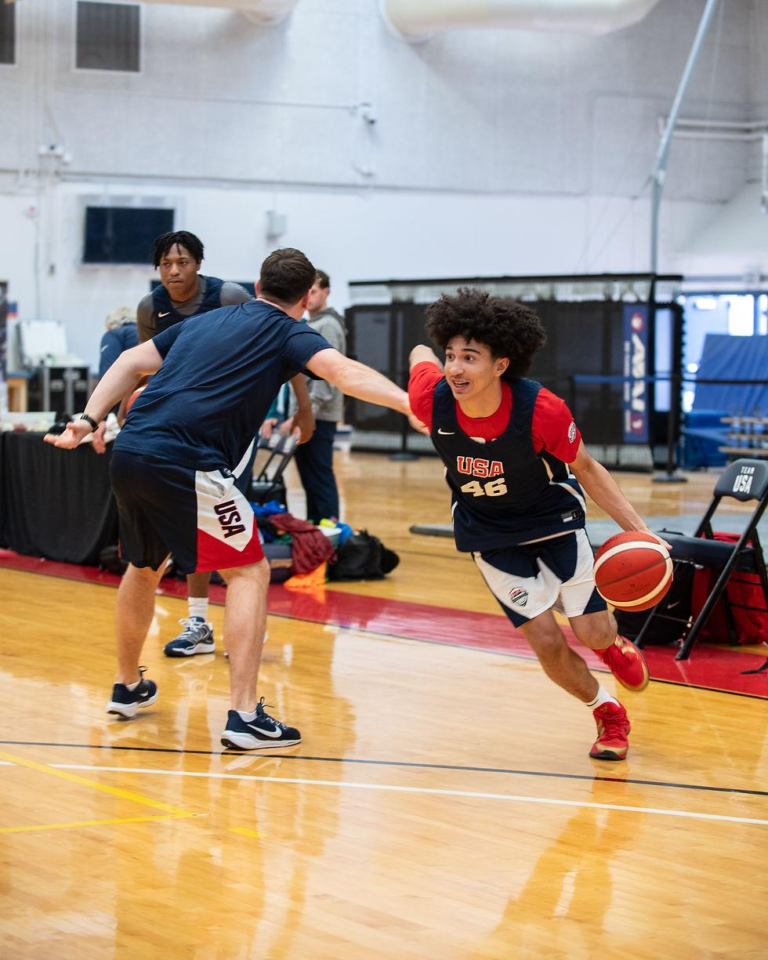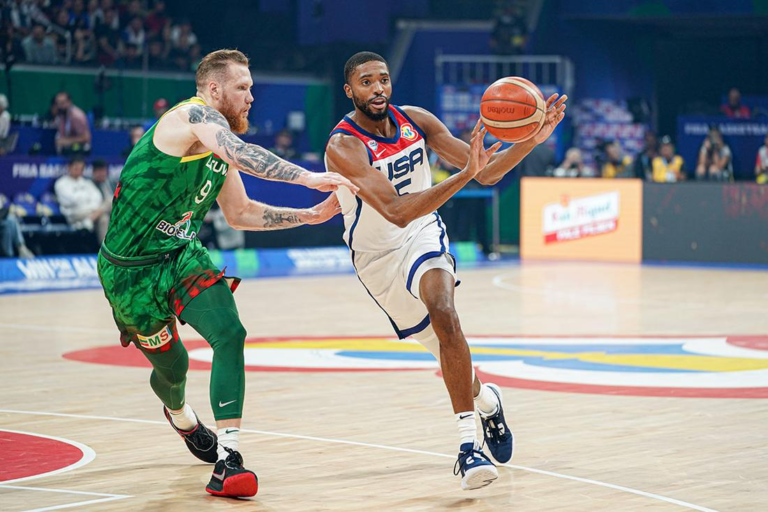
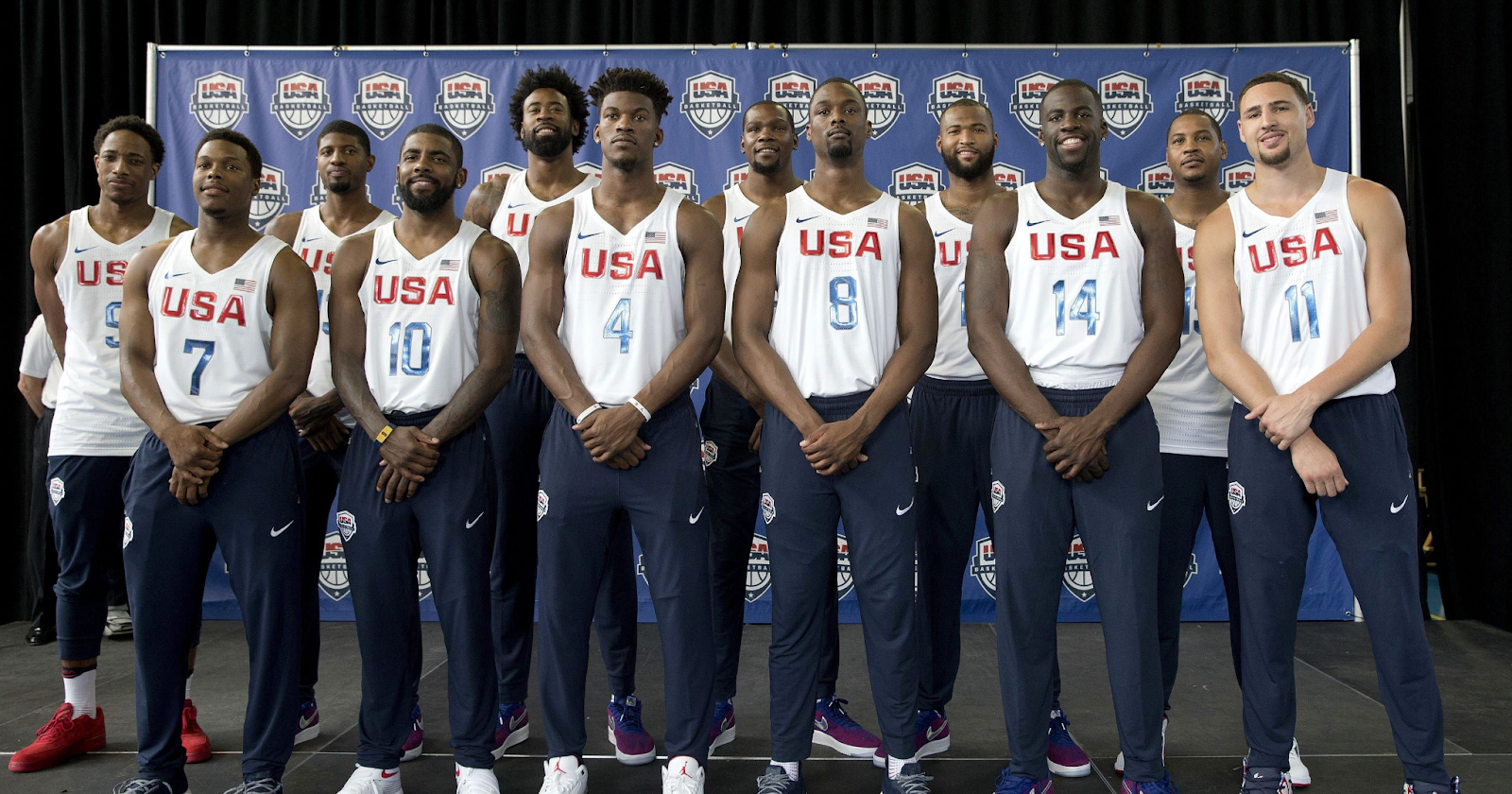
Even in an era of rapid global growth, USA Basketball remains the most feared force in international basketball. This in-depth analysis explains why—highlighting unmatched talent depth, NBA infrastructure, psychological dominance, elite crisis response, coaching adaptability, and the ability to peak under pressure. Together, these factors ensure Team USA still defines the sport’s highest ceiling.
Introduction: If the World Has “Caught Up,” Why Does the Fear Still Exist?
Over the last decade, a popular narrative has taken hold: the rest of the world has caught up to USA Basketball. International stars dominate the NBA, FIBA tournaments are increasingly competitive, and Team USA no longer wins every game by 30 points.
On the surface, that narrative sounds convincing.
But fear in sports is not measured only by win margins. It’s measured by expectation, psychological pressure, and potential devastation. And in that regard, USA Basketball still occupies a unique place in the global imagination.
International teams may believe they can beat Team USA. Very few believe they can survive Team USA when it plays to its full capacity. That distinction matters.
This article breaks down six fundamental reasons USA Basketball remains the most feared team in the world—not through nostalgia, but through modern evidence, real-world examples, and structural advantages that continue to separate the U.S. from everyone else.
Reason 1: No Other Nation Can Match the Depth of Elite Talent
Why does Team USA remain dangerous even when stars struggle?
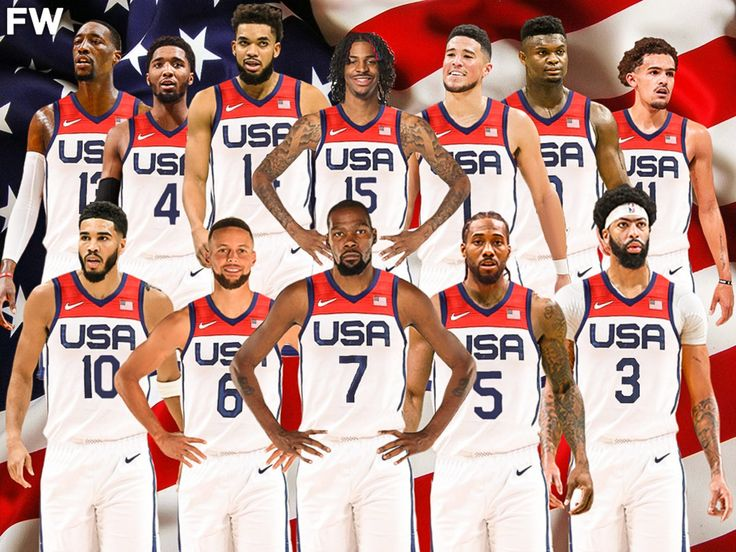
The single greatest advantage USA Basketball still possesses is depth—not just depth of players, but depth of elite players.
While many national teams rely heavily on one or two superstars, Team USA regularly fields lineups where:
- Every player is a current or former NBA starter
- Multiple players are capable of leading a franchise
- Defensive specialists would be offensive stars elsewhere
This depth changes the math of international games. When one player struggles, there is no talent cliff. Fatigue doesn’t force drop-offs. Injuries don’t cripple entire systems.
Real-world impact:
In high-stakes tournament games, international teams often expend enormous energy stopping one American star—only to find themselves facing another All-Star within minutes. Few teams can maintain defensive intensity against that rotation depth for 40 minutes.
Depth doesn’t just win games—it creates fear because it removes hope.
Reason 2: Team USA Knows How to Peak When Elimination Is on the Line
Why does Team USA often look ordinary early and unstoppable late?
One of the most misunderstood patterns in USA Basketball history is pacing.
Early tournament games can look sloppy:
- Missed rotations
- Cold shooting stretches
- Chemistry issues
Critics interpret this as decline. Experienced international coaches interpret it differently.
Team USA players are conditioned by NBA playoff culture, where:
- Early games are about survival
- Adjustments matter more than style
- Elimination demands maximum intensity
As tournaments progress, Team USA typically:
- Tightens defensive schemes
- Shortens rotations
- Raises physicality and focus
Historical pattern:
Across multiple Olympic cycles, Team USA has looked vulnerable early—then dominant in medal rounds. That switch-flipping ability is deeply ingrained.
Opponents fear this because early success against the U.S. offers no guarantees.
Reason 3: The NBA Pipeline Still Gives USA Basketball an Enormous Edge
How does the NBA continue to fuel USA Basketball dominance?
USA Basketball is not built in isolation. It is the direct product of the most advanced basketball ecosystem in the world.
By the time players reach Team USA, they have already experienced:
- High-pressure playoff environments
- Advanced sports science and recovery systems
- Tactical exposure to international playing styles
- Year-round elite competition
International innovations often enter the NBA first, where they are tested, refined, and stress-tested against elite athletes. Team USA then benefits from those refinements on the global stage.
This pipeline advantage still doesn’t exist anywhere else at scale.
Why this matters:
Team USA players don’t “learn” international basketball—they adapt it. That adaptability shortens learning curves and raises ceilings.
Reason 4: Psychological Dominance Still Shapes Games Before Tip-Off
Does the USA name still intimidate opponents?
Yes—and sports psychology confirms it.
Fear in competition isn’t about expecting to lose. It’s about knowing that mistakes are punished more harshly.
For decades, USA Basketball symbolized:
- Unavoidable runs
- Momentum-shifting athleticism
- Ruthless depth
Even today, international players admit privately that games against Team USA feel different. Media attention intensifies. Crowd energy spikes. Pressure multiplies.
Observed pattern:
Teams often play their most emotional basketball against the U.S.—sometimes peaking early and fading late. Team USA, experienced in absorbing early storms, benefits from that emotional imbalance.
Fear creates urgency. Urgency creates mistakes.
Reason 5: Coaching and Adjustments Are Smarter Than Critics Admit
Is Team USA actually poorly coached?
This criticism persists largely because Team USA coaching looks simple on the surface.
In reality, simplicity is strategic.
With limited preparation time, USA Basketball coaches focus on:
- Defensive versatility
- Lineup flexibility
- Clear role definition
- Rapid in-game adjustments
Complex systems fail under time constraints. Adaptability succeeds.
Real-world example:
When Team USA offenses stagnate, coaches often respond by increasing defensive pressure to generate transition scoring rather than overhauling half-court schemes.
Opponents fear this adaptability because:
- Matchups change quickly
- Game plans age fast
- No single strategy remains effective
Reason 6: Crisis Response Is USA Basketball’s Greatest Hidden Weapon
Why does Team USA often improve after failure?
Perhaps the most overlooked reason USA Basketball remains feared is its response to adversity.
When Team USA loses, the reaction is rarely denial. Instead, losses trigger:
- Structural changes
- Cultural reassessments
- Roster philosophy shifts
- Increased accountability
Historical evidence:
After early-2000s international disappointments, USA Basketball completely restructured its approach—leading to renewed dominance in subsequent Olympic cycles.
Few nations have:
- The resources to rebuild instantly
- The depth to absorb change
- The institutional memory to learn quickly
Opponents know that beating Team USA once often makes them more dangerous the next time.
Key Takeaways (Quick-Scan Section)
- Talent depth remains unmatched
- Late-tournament focus separates the U.S.
- NBA infrastructure fuels adaptability
- Psychological pressure still favors Team USA
- Coaching prioritizes flexibility over complexity
- Losses lead to evolution, not collapse
What This Means for the Future of International Basketball
Global basketball is better than ever. Skill development is widespread. Confidence is higher. The margins are thinner.
But fear doesn’t disappear simply because competition improves.
USA Basketball remains feared because it still combines:
- The highest ceiling
- The deepest safety net
- The fastest learning curve
Until another nation can consistently match all three, Team USA will continue to define the global standard—win or lose.
Frequently Asked Questions (Trending Search Queries)
1. Is USA Basketball still the best team in the world?
Ans. Yes. While competition has improved, Team USA still has the highest talent ceiling and deepest roster globally.
2. Why does Team USA sometimes lose international games?
Ans. Limited preparation time, chemistry challenges, and different rules can cause short-term struggles.
3. Has the rest of the world caught up to USA Basketball?
Ans. The gap has narrowed, but the U.S. still leads in depth, adaptability, and peak performance.
4. Why do international teams play their best games against Team USA?
Ans. Emotional intensity, national pride, and media attention peak when facing the U.S.
5. Is Team USA weaker in FIBA tournaments than the Olympics?
Ans. FIBA rules reduce athletic advantages, making games more competitive.
6. Does the NBA still give USA Basketball an advantage?
Ans. Yes. The NBA’s competitive environment and global exposure remain unmatched.
7. Are Team USA coaches less tactical than international coaches?
Ans. No. They emphasize adaptability and clarity due to limited preparation windows.
8. Why is Team USA more dangerous after a loss?
Ans. Losses often trigger accountability, structural change, and renewed focus.
9. Will another country surpass USA Basketball soon?
Ans. Not consistently. Depth and infrastructure still heavily favor the U.S.
10. What makes USA Basketball the most feared team psychologically?
Ans. History, talent depth, late-game execution, and the ability to overwhelm quickly.
Final Thought
The world may be closer than ever—but fear remains. And in international basketball, fear is often the first battle Team USA still wins.
About the Author