NBA games are lasting longer and feeling less exciting largely because of one dominant trend: excessive stoppages driven by replay reviews, coach’s challenges, and late-game officiating procedures. While intended to improve accuracy, these interruptions disrupt rhythm, kill momentum, and stretch final minutes into drawn-out sequences. The result is slower endings, frustrated fans, and a viewing experience that feels increasingly fragmented.
Introduction: Why Watching NBA Games Feels Different Now
If you’ve watched an NBA game recently and felt strangely exhausted by the end, you’re not imagining things. The league is overflowing with elite talent, historic scoring, and highlight-worthy moments—yet many fans walk away feeling bored, restless, or frustrated.
The biggest complaint isn’t about defense, scoring, or even star players sitting out. It’s about time.
A game that should feel fast, emotional, and dramatic now often feels procedural. The final minutes, once the most thrilling stretch in basketball, frequently turn into a stop-and-start sequence of whistles, reviews, and delays.
The NBA hasn’t lost its talent. It hasn’t lost its stars.
But it has lost something just as important: flow.
And one specific trend is responsible.
What Is the One Trend Slowing NBA Games Down?
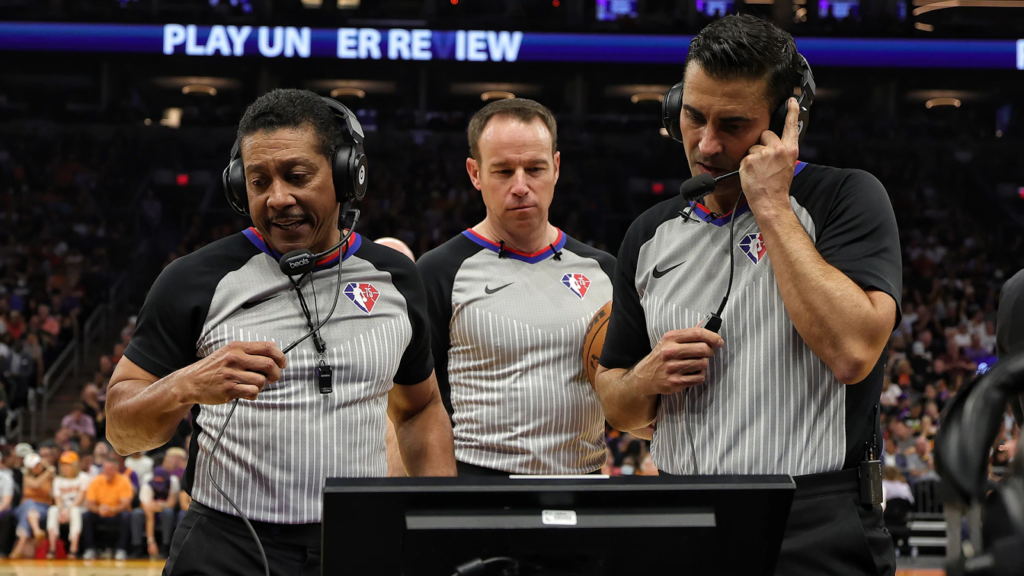
The single most damaging trend affecting NBA game length and entertainment value is the overuse of replay reviews and officiating stoppages, especially in close games.
What began as a tool to fix obvious mistakes has slowly evolved into a system that:
- Interrupts momentum
- Extends game endings
- Breaks emotional tension
- Turns dramatic moments into administrative delays
Replay reviews, coach’s challenges, flagrant checks, clock adjustments, and out-of-bounds reviews now dominate the most critical moments of games.
Instead of basketball deciding outcomes, procedure often takes over.
Why Basketball Suffers More Than Other Sports
All sports have stoppages. But basketball is uniquely vulnerable to them.
Basketball thrives on:
- Rhythm
- Momentum
- Crowd energy
- Emotional swings
Unlike football or baseball—where pauses are built into the structure—basketball is meant to flow continuously. When that flow is interrupted repeatedly, the entire experience collapses.
A fast break stopped by a review doesn’t just pause the game—it kills the emotion attached to the play.
Replay Reviews: A Well-Intentioned Problem
Replay reviews were introduced with good intentions:
- Correct missed calls
- Improve fairness
- Increase officiating accuracy
In isolation, that sounds reasonable. In practice, replay has expanded far beyond its original purpose.
Today, replays are used for:
- Marginal out-of-bounds calls
- Fingertip deflections
- Slight contact fouls
- Clock tenths of a second
- Technical interpretations
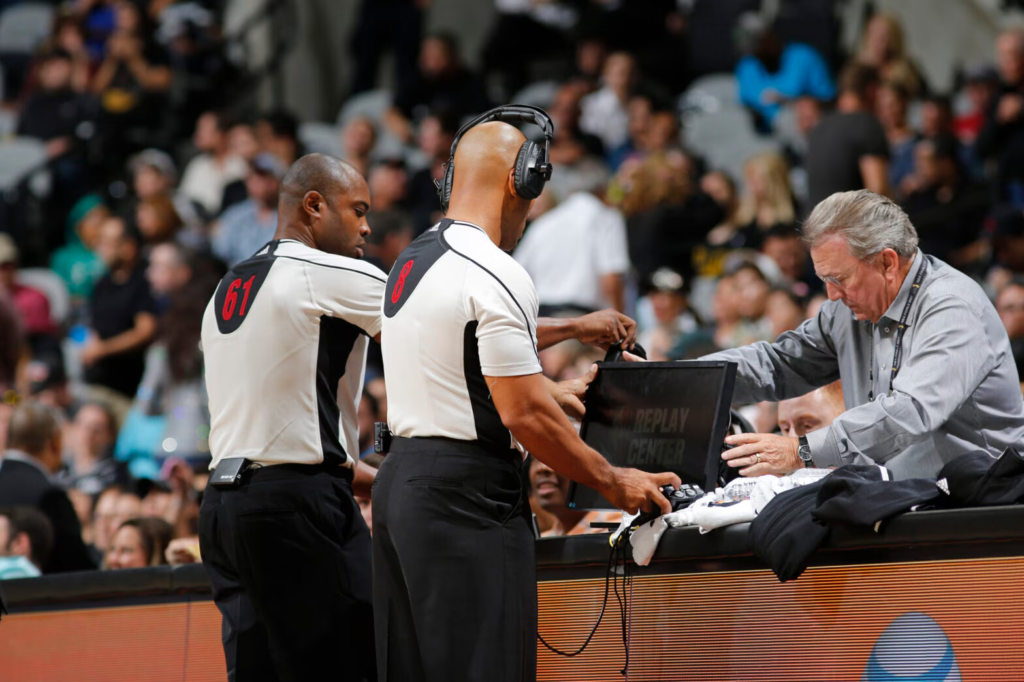
Each review might last only a minute or two. But stacked together—especially late—they stretch games to exhausting lengths.
Late-Game Basketball: From Drama to Delay
The cruel irony is that the NBA’s most exciting moments are now the most tedious.
In close games, the final two minutes often include:
- Intentional fouls and free throws
- Multiple timeouts
- Coach’s challenges
- Replay-triggered stoppages
- Clock resets
What should be heart-pounding basketball becomes a checklist.
Fans don’t remember:
- Who touched the ball last by a fingernail
They remember: - Game-winners
- Chaos
- Emotion
- Momentum swings
Replay reviews strip those moments of their power.
Coach’s Challenges: Another Layer of Delay
When the NBA added the coach’s challenge, the goal was accountability. But unintended consequences followed.
Coaches now:
- Save challenges for late-game leverage
- Use them strategically as extended timeouts
- Challenge borderline calls hoping for reversal
Instead of reducing stoppages, challenges added:
- Extra reviews
- Longer endings
- More dead-ball time
What was meant to correct obvious errors now often debates judgment calls that don’t change fan perception—or enjoyment.
The “Two Minutes That Take Fifteen” Problem
Every NBA fan has lived this scenario.
A close game enters the final two minutes:
- Foul → free throws
- Timeout
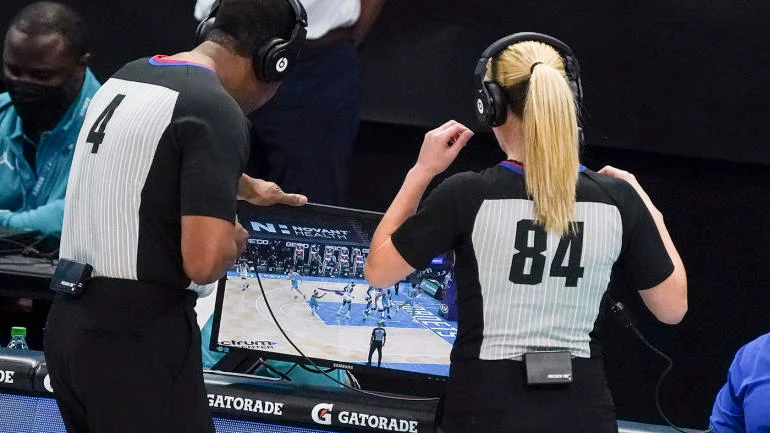
- Coach’s challenge → replay
- Out-of-bounds review
- Clock adjustment
- Another timeout
Two minutes of basketball time can stretch into 10–15 real minutes.
For hardcore fans, it’s tolerable.
For casual fans, it’s exhausting.
For new fans, it’s alienating.
Why Casual Fans Are Tuning Out
The NBA doesn’t lose die-hards easily. But casual fans—the ones the league needs for growth—are far less patient.
Long stoppages hurt:
- Younger viewers with shorter attention spans
- International audiences in inconvenient time zones
- Fans juggling multiple entertainment options
In a world of streaming, short-form video, and instant gratification, asking viewers to sit through repeated interruptions is risky.
The product doesn’t feel broken—but it feels slow.
Data and League Acknowledgment
While exact averages vary by season, league-wide analysis consistently shows:
- NBA broadcasts are longer than in previous decades
- Late-game sequences account for a disproportionate share of stoppage time
- Replay usage has increased year over year
Even the NBA’s competition committee has publicly discussed concerns about game flow and viewer experience. The league knows there’s an issue.
The challenge is balancing accuracy with entertainment.
Is Perfect Officiating Worth the Cost?
Fairness matters. But perfection has diminishing returns.
Basketball has always been imperfect:
- Missed calls
- Bad whistles
- Human error
Fans accepted that as part of the game. They argued about calls, but they stayed emotionally invested.
Today, instead of debating calls, fans wait for officials to debate among themselves.
Accuracy without flow drains excitement—and excitement is the NBA’s lifeblood.
Other Factors That Make Games Feel Longer
Replay reviews are the main culprit, but they’re not alone.
Contributing factors include:
- Excessive intentional fouling late
- Lengthy free-throw routines
- Commercial-heavy national broadcasts
- Mandatory TV timeouts
Still, none disrupt emotional momentum as consistently as replay stoppages.
Why This Trend Makes Games Feel More Boring (Not Just Longer)
Length alone isn’t the problem. Fragmentation is.
Stoppages:
- Kill narrative arcs
- Flatten emotional peaks
- Reset momentum repeatedly
Instead of tension building naturally, games feel segmented—like chapters interrupted mid-sentence.
Fans don’t feel pulled in. They feel paused.
What Fans Are Searching For Right Now
Search trends show fans asking:
- “Why are NBA games so long now?”
- “Why does the last 2 minutes take forever?”
- “Do replay reviews ruin basketball?”
- “Why are there so many stoppages?”
The frustration is widespread—and growing.
What the NBA Could Do to Fix This
The NBA doesn’t need to eliminate replay. It needs to control it.
Possible solutions include:
- Strict time limits on reviews
- Fewer reviewable plays late
- Faster centralized replay decisions
- Limiting coach’s challenges to obvious errors
- Accepting inconclusive evidence quicker
None of these sacrifice fairness. All of them restore flow.
Key Reasons This Trend Is Hurting the NBA Experience
- Interrupts momentum and emotion
- Extends game length unnecessarily
- Pushes casual fans away
- Makes endings feel bureaucratic
- Competes poorly with modern attention spans
Basketball should feel alive—not administrative.
What This Means for the NBA’s Future
The NBA is still thriving, but it’s at a crossroads.
If games continue to feel slower—especially at the finish line—the league risks losing younger and casual audiences.
The NBA sells emotion, drama, and star moments. Those elements depend on flow.
Protect the flow, and the excitement returns.
Final Takeaway: Fix the Flow, Save the Game
The NBA doesn’t need fewer stars, fewer points, or fewer games.
It needs fewer interruptions.
Replay reviews were designed to improve fairness. Instead, they’ve quietly drained energy from the most important moments in basketball.
If the league wants games to feel electric again, it must prioritize rhythm as much as accuracy.
Because in basketball, momentum isn’t optional—it’s everything.
Frequently Asked Questions (FAQs)
1. Why do NBA games feel longer than before?
Ans. Increased replay reviews, coach’s challenges, and late-game stoppages have significantly extended game length.
2. What slows NBA games down the most?
Ans. Instant replay reviews, particularly in the final minutes.
3. Are replay reviews necessary in the NBA?
Ans. Yes, but their current overuse hurts flow and entertainment.
4. Why do the last two minutes take so long?
Ans. Fouling, timeouts, reviews, and clock adjustments stack together late.
5. Do coach’s challenges make games worse?
Ans. Often yes, because they add stoppages and extend endings.
6. Has the NBA acknowledged this issue?
Ans. League officials have discussed concerns about game flow publicly.
7. Do replay reviews improve fairness?
Ans. They improve accuracy but at the cost of momentum and excitement.
8. Are fans actually watching less because of this?
Ans. Casual fan engagement drops most during slow, drawn-out endings.
9. Could the NBA fix this without major rule changes?
Ans. Yes. Time limits and stricter replay standards would help immediately.
10. Will NBA games continue getting longer?
Ans. Not necessarily—if the league prioritizes flow over perfection.
About the Author