 Marcus Reed
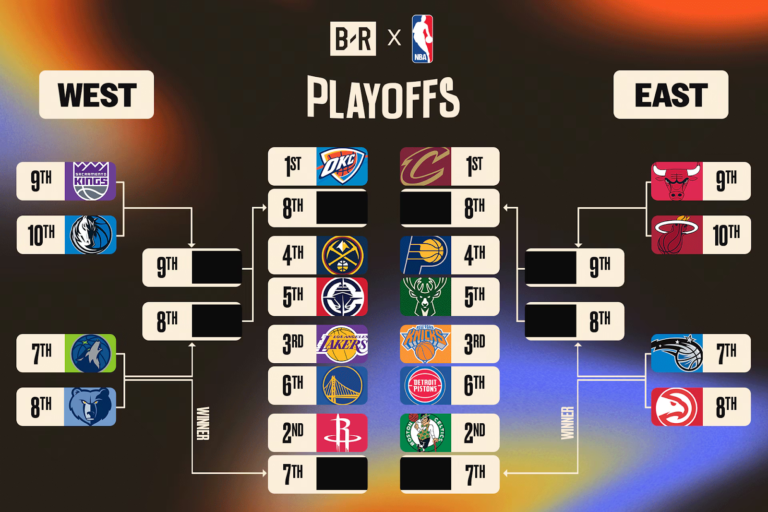
Early NBA Finals predictions are fueling nonstop debate across the basketball world. With no single runaway favorite, contenders like the Boston Celtics, Denver Nuggets, and the rising Oklahoma City Thunder are splitting opinion among fans, analysts, and betting markets. This in-depth guide breaks down the arguments, data, risks, and real-world factors shaping the NBA Finals conversation.
Why Are Early NBA Finals Predictions So Controversial This Year?
Every NBA season brings predictions, but this year’s Finals debate feels louder and more divided than usual. The reason is simple: there is no clear-cut juggernaut dominating the league from wire to wire.
In past seasons, a superteam or defending champion often stood above the rest. This time, parity has created uncertainty. Multiple teams have legitimate cases, but each also carries visible flaws. Fans aren’t just arguing over who is best—they’re arguing over what matters most.
Some prioritize regular-season dominance. Others trust playoff experience. Many believe injuries will decide everything anyway. That philosophical divide is what’s driving the endless arguments online, on TV, and in betting circles.
How Reliable Are Early NBA Finals Predictions Historically?
Early predictions are valuable—but rarely definitive.
Looking back over the last decade, several trends stand out:
- Fewer than half of preseason top-three favorites actually reach the Finals
- Teams peaking after the All-Star break outperform early-season leaders
- Defensive rating is a stronger predictor than raw win totals
- Lineup continuity matters more than star count
In real life, it’s similar to predicting a company’s year-end performance based only on Q1 results. You get clues, not conclusions.
Early Finals predictions tell us who belongs in the conversation, not who will finish the story.

Are the Boston Celtics the Safest Pick—or the Most Pressured One?
The Boston Celtics appear in nearly every early Finals projection, and for good reason. Their roster checks almost every championship box: elite scoring, positional size, defensive versatility, and postseason experience.
Led by Jayson Tatum, Boston looks more mature than in previous seasons. Their ball movement is cleaner, their shot selection more disciplined, and their late-game execution calmer.
Why many analysts trust Boston:
- Consistently elite net rating
- Multiple two-way starters
- Experience from deep playoff runs
Why skeptics hesitate:
- Past postseason disappointments
- Occasional offensive stagnation late in games
- The mental weight of being preseason favorites
Boston feels like the team everyone expects to win—often the hardest position to play from.
Can the Denver Nuggets Prove Last Year Wasn’t a One-Off?
If any team inspires confidence rooted in reality, it’s the Denver Nuggets.
With Nikola Jokić orchestrating the offense, Denver doesn’t rely on hot shooting or frantic pace. Their game is built on precision, patience, and trust—qualities that age well in the playoffs.
Why Denver remains a popular Finals pick:
- The league’s most consistent superstar
- Championship-tested chemistry
- Playoff offense that travels
Why some analysts are cautious:
- Heavy mileage from deep playoff runs
- Defensive matchups against faster teams
- A crowded Western Conference
In debates, Denver often represents the “logic” pick—the team no one doubts, even if they don’t excite everyone.
Are the Oklahoma City Thunder Ahead of Schedule—or Right on Time?
Few teams spark louder arguments than the Oklahoma City Thunder.
Supporters see a fearless, modern contender built on speed, defense, and versatility. Skeptics see a talented group still learning how brutal playoff basketball can be.
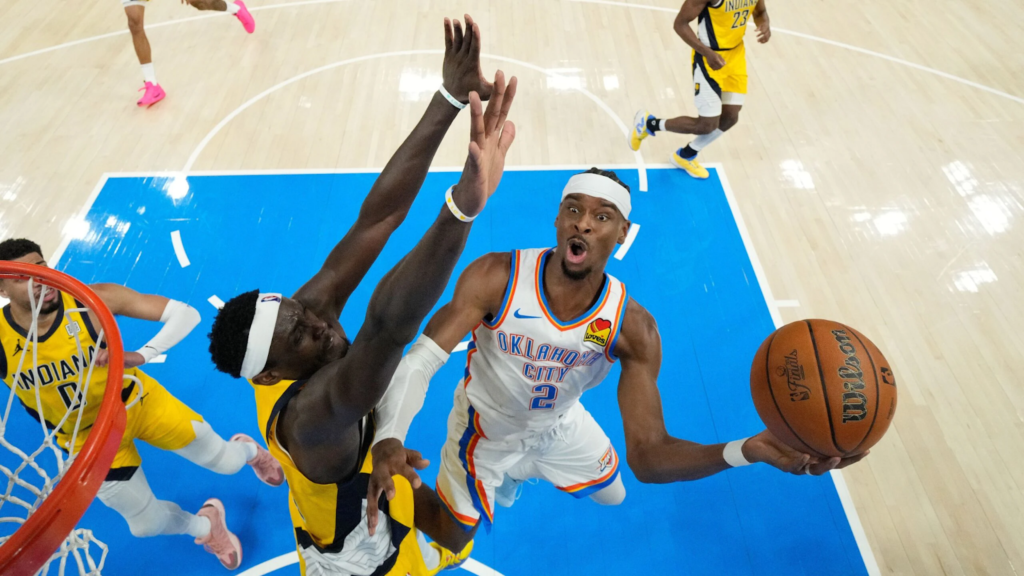
Led by Shai Gilgeous-Alexander, Oklahoma City has posted elite efficiency numbers and overwhelmed opponents with collective pressure rather than star isolation.
Why believers are confident:
- Top-tier point differential
- Defensive intensity across all positions
- Multiple players capable of closing games
Why doubters hesitate:
- Limited deep-playoff experience
- Young cores historically struggle under pressure
- Unproven responses to postseason adversity
This debate mirrors real life: potential versus experience. Both sides have a point—and that’s why the argument won’t die.
Do the Los Angeles Lakers Still Belong in Finals Predictions?
As long as Los Angeles Lakers exist, so will Finals debates involving them.
With LeBron James still capable of controlling playoff games, the Lakers remain dangerous despite inconsistency. Their success depends less on regular-season dominance and more on matchup control and health.
Arguments for the Lakers:
- Unmatched playoff experience
- Ability to slow games down
- Defensive ceiling when locked in
Arguments against:
- Inconsistent effort across the season
- Health concerns for key players
- Thin margin for error
The Lakers debate is less about numbers—and more about belief.
Which Eastern Conference Team Could Shock Everyone?
While Boston dominates the East conversation, several teams linger as dangerous disruptors.
Common names include:
- The Milwaukee Bucks, if healthy and cohesive
- The New York Knicks, if defense carries them
- The Miami Heat, because history demands respect
Miami, in particular, continues to frustrate predictions. Nearly every year, they outperform expectations through discipline, toughness, and execution.
What Metrics Actually Matter Most for NBA Finals Predictions?
Not all stats are created equal. The most predictive indicators tend to be:
- Top-10 defensive rating after the All-Star break
- A reliable late-game shot creator
- Lineup flexibility against different styles
- Turnover control in close games
Teams strong in all these areas—not just one—are far more likely to survive four playoff rounds.
How Injuries Can Instantly Rewrite the Finals Picture
No prediction survives injuries.
History shows that even short absences can swing entire series. Continuity, recovery timelines, and depth often matter more than star power alone.
This reality is why early predictions shift so dramatically by April—and why so many debates end with the same phrase: “If they stay healthy.”
What Betting Markets Reveal About NBA Finals Consensus
Sportsbooks often capture public and professional sentiment faster than media narratives.
Early odds typically place:
- Boston and Denver as co-favorites
- A second tier including Oklahoma City, Milwaukee, and the Lakers
- Long-shot disruptors like Miami
Sharp bettors focus less on hype and more on timing—who peaks when it matters.
Key Takeaways From the NBA Finals Prediction Debate
- There is no unanimous favorite this season
- Proven champions and rising contenders are colliding
- Defense and late-game execution matter more than hype
- Youth versus experience is the core argument everywhere
This uncertainty is exactly what makes the season so compelling.
Frequently Asked Questions (Trending Searches)
1. Who is the early favorite to win the NBA Finals?
Ans. The Boston Celtics and Denver Nuggets are most commonly listed as early favorites based on roster strength and efficiency metrics.
2. Are early NBA Finals predictions reliable?
Ans. They provide useful direction but often change due to injuries, trades, and late-season momentum.
3. Can a young team like the Thunder reach the NBA Finals?
Ans. Yes, but youth increases volatility. Execution under playoff pressure is the key unknown.
4. Are the Lakers legitimate Finals contenders?
Ans. When healthy and focused, they remain dangerous, particularly in slower-paced playoff series.
5. Which team is most overrated in early predictions?
Ans. Teams relying heavily on regular-season offense without defensive balance often draw skepticism.
6. Which underrated team could surprise everyone?
Ans. The Miami Heat continue to outperform expectations due to playoff experience and discipline.
7. Do MVP candidates usually reach the Finals?
Ans. Often, but Finals success depends more on roster balance than individual awards.
8. How important is defense for Finals teams?
Ans. Extremely important—nearly every recent Finals team ranked top-10 defensively.
9. When do Finals predictions become more accurate?
Ans. After the trade deadline and All-Star break, when rotations stabilize.
10. Should fans trust analytics or the eye test more?
Ans. The best predictions combine both—analytics show trends, the eye test reveals context.
About the Author

 Alex Turner