Mid-Range Is Cool Again—And It’s Not Because of Who You Think
 Jordan Ellis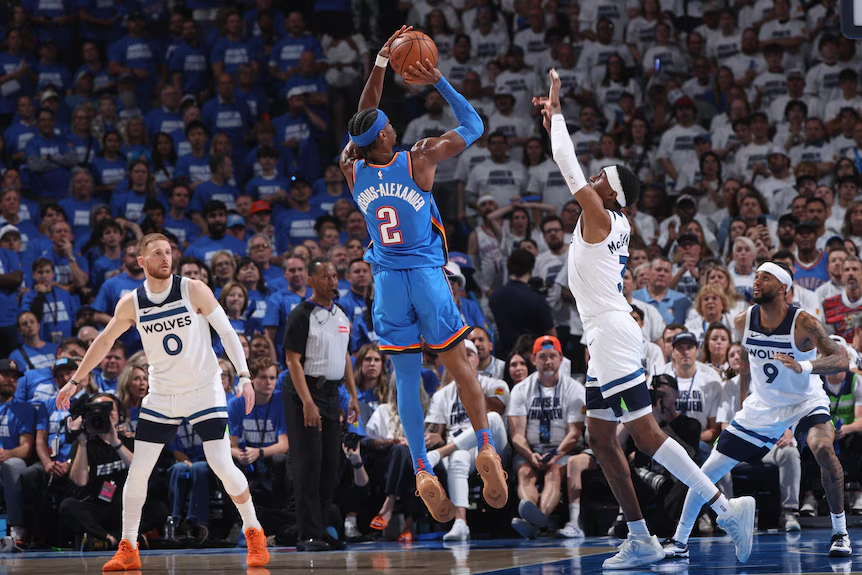
The mid-range jumper is back in modern basketball—not because analytics failed, but because defenses evolved. As teams overload the paint and chase shooters off the three-point line, players are exploiting open space between. This revival is driven by smarter decision-making, international influence, and defensive pressure, reshaping how winning basketball looks in today’s game.
The Shot Basketball Tried to Erase—And Failed
For nearly a decade, the mid-range jumper was treated like a relic of the past. Coaches discouraged it. Analysts questioned it. Young players were told to eliminate it from their games altogether. Basketball culture embraced a simple formula: threes and layups only.
Yet in 2026, something unexpected has happened.
The mid-range shot—once declared inefficient, outdated, and borderline irresponsible—is quietly everywhere again. Watch NBA playoff games, Olympic matchups, or elite college basketball, and you’ll see pull-ups from the elbow, floaters in the lane, and short jumpers off the pick-and-roll.
This resurgence isn’t nostalgic. It’s not accidental. And most importantly, it’s not because of who you think.
Why the Mid-Range Was Declared “Dead”
To understand the comeback, we need to revisit the exile.
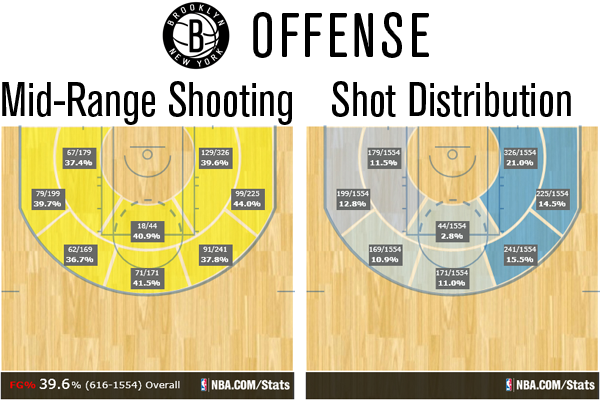
In the early 2010s, analytics transformed basketball decision-making. Shot charts revealed uncomfortable truths:
- Three-point shots generate more points per attempt
- Layups and dunks convert at the highest efficiency
- Long contested two-point shots had the lowest expected value
Front offices and coaching staffs responded aggressively. Offensive systems were rebuilt. Player development shifted. Shot selection became data-driven.
The conclusion seemed logical:
Why settle for two points when you can hunt for three?
For a while, the numbers backed it up.
The Problem With One-Size-Fits-All Analytics
What analytics didn’t fully account for was context.
Not every three-pointer is a good shot.
Not every drive reaches the rim.
And not every defense allows optimal spacing.
As teams optimized offense, defenses optimized faster.
Switch-heavy schemes, drop coverage, long closeouts, and packed paints began to dominate. The result? Offenses were increasingly forced into uncomfortable decisions.
That’s where the mid-range crept back in—not as a first option, but as a solution.
Defenses Created the Mid-Range Revival
Modern defenses are designed to eliminate efficiency:
- Run shooters off the three-point line
- Protect the rim at all costs
- Force ball-handlers into traffic
- Take away first and second options
When executed well, these strategies leave only one place consistently available:
the space between the arc and the paint.
That space—the nail, elbows, short corners—is exactly where the mid-range thrives.
What was once labeled inefficient suddenly became the path of least resistance.
It’s Not Just About Superstars (That’s the Myth)
Many fans assume the mid-range is back because of elite scorers who never abandoned it.
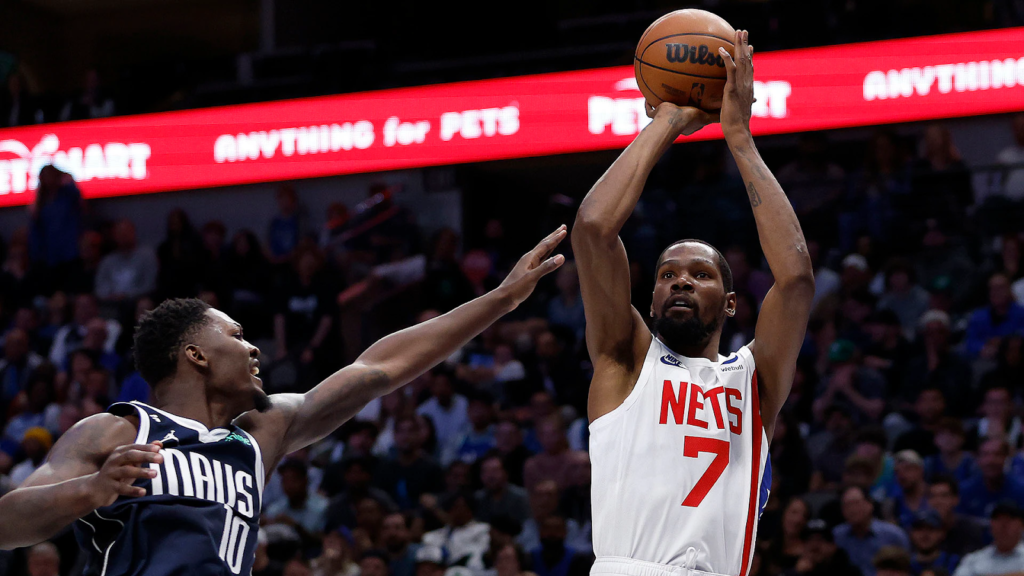
Yes, players like Kevin Durant or Devin Booker are deadly from 15–18 feet.
But they didn’t cause the shift.
The real story is happening lower on the depth chart.
Role Players and Decision-Making Changed Everything
The modern role player is not just a spot-up shooter anymore. They’re a processor—reading defenses in real time.
Across the league, you now see:
- Guards using floaters instead of forcing layups
- Wings pulling up when defenders retreat
- Bigs hitting short jumpers off the roll
These shots aren’t forced. They’re offered by the defense.
And when taken in rhythm, they are brutally effective.
International Basketball Never Abandoned the Mid-Range
While the NBA debated efficiency, international basketball stayed balanced.
In FIBA and Olympic play:
- Zone defenses are common
- The paint is crowded
- Three-point attempts are harder to manufacture
As a result, mid-range shots have always been a core weapon.
Ball movement, spacing discipline, and quick decision-making created a culture where shot quality mattered more than shot category.
As international players and coaches entered the NBA ecosystem, those principles followed.
Why the Mid-Range Is Actually Analytics-Friendly
The biggest misconception is that mid-range scoring contradicts analytics.
It doesn’t.
Analytics never said never shoot mid-range.
It said don’t take bad shots.
Modern tracking now measures:
- Defender proximity
- Shot timing
- Player efficiency zones
An open 15-footer can outperform:
- A contested step-back three
- A rushed drive into multiple defenders
The data has evolved—and so has the interpretation.
The Mid-Range as a Pressure Release Valve
Late-game basketball is chaotic.
Plays break down. Defenses switch everything. Passing lanes disappear.
In these moments, the mid-range becomes invaluable because it:
- Requires minimal space
- Reduces turnover risk
- Can be created off one dribble
That’s why playoff and Olympic games are filled with elbow jumpers and short pull-ups in crunch time.
It’s not pretty.
It’s reliable.
Why Coaches Are Teaching It Again
Player development has quietly shifted away from rigid shot rules.
Instead of “never shoot that,” coaches now emphasize:
- Reading the defender
- Understanding space
- Making the correct decision
Young players are trained to develop counters:
- Pull-ups when defenders go under
- Floaters against rim protectors
- Short jumpers off pick-and-rolls
Because real games rarely provide perfect shots.
Does the Mid-Range Hurt Spacing? Actually, No
Ironically, a respected mid-range game improves spacing.
When defenders must:
- Step up on pull-ups
- Respect floaters
- Close short jumpers
They hesitate.
That hesitation opens:
- Driving lanes
- Passing angles
- Cleaner three-point looks elsewhere
The mid-range doesn’t replace modern offense—it completes it.
What the Mid-Range Revival Really Represents
This isn’t basketball going backward.
It’s basketball growing up.
The modern game values:
- Adaptability
- Efficiency under pressure
- Spatial intelligence
The mid-range fits perfectly into that philosophy—not as a primary weapon, but as an essential one.
Key Takeaways for Players, Coaches, and Fans
For players:
- Learn when to shoot, not just how
- Prioritize balance and footwork
- Read defenders instead of forcing outcomes
For coaches:
- Teach decision-making over shot charts
- Encourage counters, not restrictions
- Trust players to exploit space
For fans:
- Watch defensive positioning
- Notice help defenders
- You’ll see why the mid-range exists
The Future of Basketball Is Balanced
The mid-range isn’t dominating.
It’s stabilizing.
And that’s why it’s here to stay.
Frequently Asked Questions (FAQ)
1. Is the mid-range shot efficient in modern basketball?
Ans. Yes, when taken in rhythm and with space. Open mid-range shots often outperform contested threes or forced drives.
2. Why did teams stop using the mid-range before?
Ans. Early analytics showed long contested two-point shots had low efficiency, leading teams to overcorrect offensively.
3. Who benefits most from the mid-range today?
Ans. Guards and wings who can read defenses, especially in pick-and-roll and late-game situations.
4. Does shooting mid-range hurt team spacing?
Ans. No. When respected by defenses, it actually improves spacing by preventing over-helping.
5. Is this trend limited to the NBA?
Ans. No. International, college, and youth basketball systems are all emphasizing balanced scoring again.
6. Are analytics becoming less important now?
Ans. Not at all. Teams are using more advanced analytics focused on shot quality, not just shot type.
7. Why do defenses allow mid-range shots?
Ans. They prioritize taking away threes and layups, often leaving the mid-range open by design.
8. Is the mid-range more valuable in playoffs?
Ans. Yes. As defenses tighten, adaptable scoring becomes crucial, and mid-range shots thrive.
9. Should young players still prioritize three-point shooting?
Ans. Yes, but they should also develop counters like pull-ups and floaters.
10. Will the mid-range ever dominate the game again?
Ans. It doesn’t need to. Its value lies in balance, not volume.
About the Author

 Marcus Reed
 Alex Turner