 Marcus Reed
The “no center” lineup has shifted from a niche tactic to a dominant force in modern basketball. Built on speed, spacing, and switchable defense, teams are increasingly winning without traditional big men on the floor. While the strategy fuels offensive efficiency and versatility, it has left many centers struggling to adapt in a game that now prioritizes skill over size.
A Fundamental Rule of Basketball Is Being Broken
For most of basketball history, one principle felt untouchable:
You need a center to win.
From the early days of the sport through the dominant post eras, the center was the foundation of every serious contender. Rim protection anchored defenses. Post scoring controlled tempo. Rebounding determined possessions.
But in today’s game, that rule is being openly defied.
More teams than ever are winning crucial minutes—sometimes entire games—without a traditional center on the floor. This isn’t a gimmick. It’s not desperation. It’s a deliberate, data-backed strategy reshaping how basketball is played.
And for many big men watching from the bench, the message is unsettling.
What Is a “No Center” Lineup, Really?
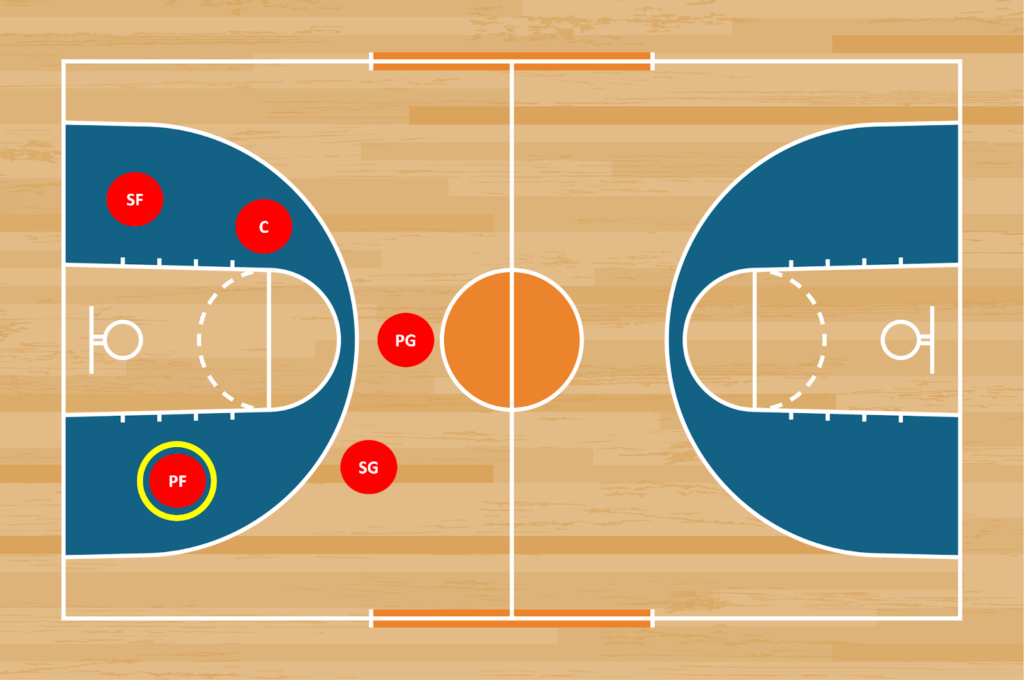
A no center lineup removes the conventional five-man—typically a tall, paint-bound player whose value lies in rim protection, rebounding, and screening.
Instead, teams deploy:
- Five shooters or playmakers
- Positionless defenders
- High-switch defensive schemes
The tallest player may be a wing rather than a big. Every player is expected to handle the ball, make reads, and defend across multiple positions.
This approach prioritizes mobility, spacing, and basketball IQ over height and strength.
How This Strategy Went From Risky to Revolutionary
The concept of playing small existed long before it became mainstream. But it wasn’t until championship success validated it that the league truly embraced the idea.
The turning point came when the Golden State Warriors, under Steve Kerr, consistently closed games with lineups that featured no traditional center. By sliding Draymond Green into the middle and surrounding him with shooters and defenders, they unlocked a style of basketball opponents struggled to solve.
The results were undeniable:
- Faster pace
- Elite spacing
- Switch-everything defense
- Multiple championships
Once winning followed, the rest of the league followed too.
Why Modern Basketball Punishes Traditional Centers
The rise of the no center lineup isn’t ideological—it’s a response to how the game is now played.
Today’s offenses relentlessly target weaknesses. Traditional centers often present two:
- Limited mobility in space
- Offensive predictability
Pick-and-roll actions pull big men away from the rim. Switches force them onto guards. If they can’t shoot, defenses sag off and clog driving lanes.
Meanwhile, a smaller lineup:
- Forces opposing centers to defend outside
- Stretches help defense thin
- Opens lanes for penetration and kick-outs
It’s not that size no longer matters—it’s that size without versatility has become a liability.
The Pace-and-Space Advantage Teams Can’t Ignore
Removing a center fundamentally changes tempo.
Without a big trailing the play:
- Transition offense accelerates
- Defensive rotations sharpen
- Ball movement becomes more fluid
Spacing improves instantly. With five players capable of shooting or attacking off the dribble, defenses are stretched to uncomfortable limits. Help rotations become longer. Mistakes are punished faster.
This constant pressure is why many teams turn to no center lineups when they need momentum.
Real-Life Impact: Games Are Being Decided This Way
This isn’t just a theory tested in practice gyms.
Across the NBA and international play:
- Playoff games are closed with small lineups
- Centers are benched in crunch time
- Wings and guards anchor defenses
Even teams built around elite big men often switch to smaller units late in games to survive defensively or unlock offense.
The message is clear: versatility wins when margins are thin.
Why Big Men Are Pushing Back
For many centers, this shift feels personal.
For decades, development pathways taught big men to:
- Dominate the paint
- Play with their back to the basket
- Focus on rebounding and rim protection
Suddenly, those skills alone are not enough.
Many centers now find themselves:
- Targeted defensively
- Ignored offensively if they can’t shoot
- Sitting during key stretches
Frustration follows naturally. Careers are shaped by systems, and the system has changed.
The Big Men Who Adapted—and Became Unstoppable
Not all centers are casualties of this evolution.
Some have thrived by expanding their games.
Players like Nikola Jokic prove that size paired with skill is still devastating. Modern elite bigs pass, shoot, handle, and defend beyond the paint.
They succeed because they:
- Make quick decisions
- Punish switches
- Fit seamlessly into fast offenses
The position isn’t disappearing—it’s transforming.
Is This the End of the Traditional Center?
Not entirely—but it is the end of the one-dimensional center.
Teams no longer ask:
“How tall is he?”
They ask:
“Can he survive when the game speeds up?”
Centers who can’t defend in space, stretch the floor, or process quickly are increasingly marginalized. Those who can do all three are more valuable than ever.
Why Coaches Love the No Center Lineup
From a coaching standpoint, small-ball simplifies complexity.
Key benefits include:
- Fewer defensive mismatches
- Easier switching schemes
- Cleaner offensive reads
Switch-everything defenses reduce breakdowns. Five-out spacing removes help defenders. Creativity increases.
For coaches managing high-pressure moments, flexibility often outweighs tradition.
The Hidden Weaknesses of Playing Without a Center
The strategy isn’t flawless.
No center lineups can struggle with:
- Defensive rebounding
- Rim protection
- Physical mismatches
Dominant post scorers can still punish smaller defenders. Offensive rebounds can swing games.
However, as fewer teams build offenses around the post, these weaknesses are often considered acceptable trade-offs.
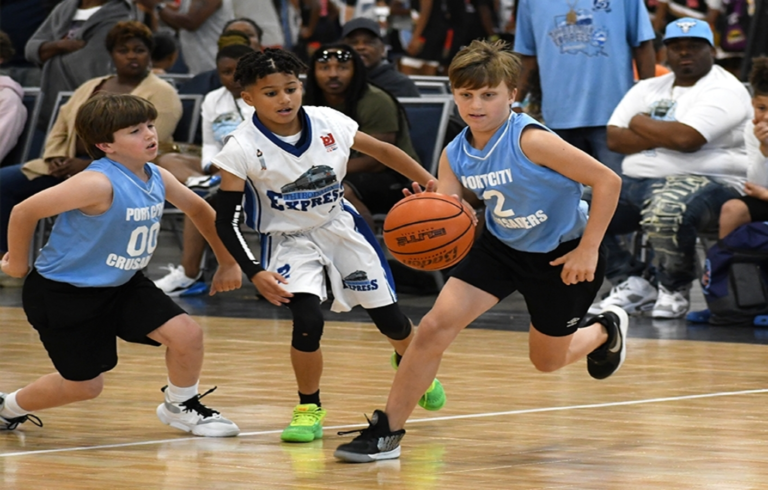
How This Trend Is Reshaping Youth Basketball
The impact goes far beyond the professional level.
Young players are now taught:
- Ball-handling regardless of size
- Shooting as a universal skill
- Defensive versatility
Position labels are fading. Skill sets matter more than height.
Today’s young big men are trained like wings, preparing for a future where adaptability defines success.
Is the No Center Lineup Here to Stay?
All signs point to yes.
As long as:
- Three-point shooting dominates
- Pace remains high
- Switching defenses prevail
The no center lineup will remain a powerful tool. It may not replace traditional lineups entirely, but it will always be part of winning basketball.
What This Evolution Really Means
This isn’t basketball abandoning its roots.
It’s basketball responding to reality.
The modern game rewards:
- Skill over size
- Speed over strength
- Adaptation over tradition
And that’s why the no center lineup isn’t a trend—it’s a transformation.
Frequently Asked Questions (FAQ)
1. What is a “no center” lineup in basketball?
Ans. It’s a lineup that removes a traditional big man and uses five skilled, versatile players to maximize spacing, speed, and switching.
2. Why are teams moving away from traditional centers?
Ans. Because slow, non-shooting centers are often exploited in modern pick-and-roll and spacing-heavy offenses.
3. Did the Golden State Warriors start this trend?
Ans. They popularized and validated it by winning championships using small-ball lineups in critical moments.
4. Are centers becoming obsolete in today’s game?
Ans. No. One-dimensional centers are declining, but versatile, skilled big men are more valuable than ever.
5. How does a no center lineup affect defense?
Ans. It allows switch-heavy schemes but can reduce rim protection and rebounding.
6. Why do coaches prefer small lineups late in games?
Ans. Because they reduce defensive liabilities and improve spacing under pressure.
7. Can teams win championships without traditional centers?
Ans. Yes. Several championship teams have relied heavily on small-ball lineups.
8. What skills must modern centers develop to stay relevant?
Ans. Shooting range, passing ability, perimeter defense, and fast decision-making.
9. Does the no center strategy work at lower levels?
Ans. It can, but physical mismatches matter more in youth and amateur basketball.
10. Will traditional centers ever make a comeback?
Ans. Only if the game’s emphasis on spacing and pace changes significantly, which is unlikely.
About the Author


 Alex Turner