 Marcus Reed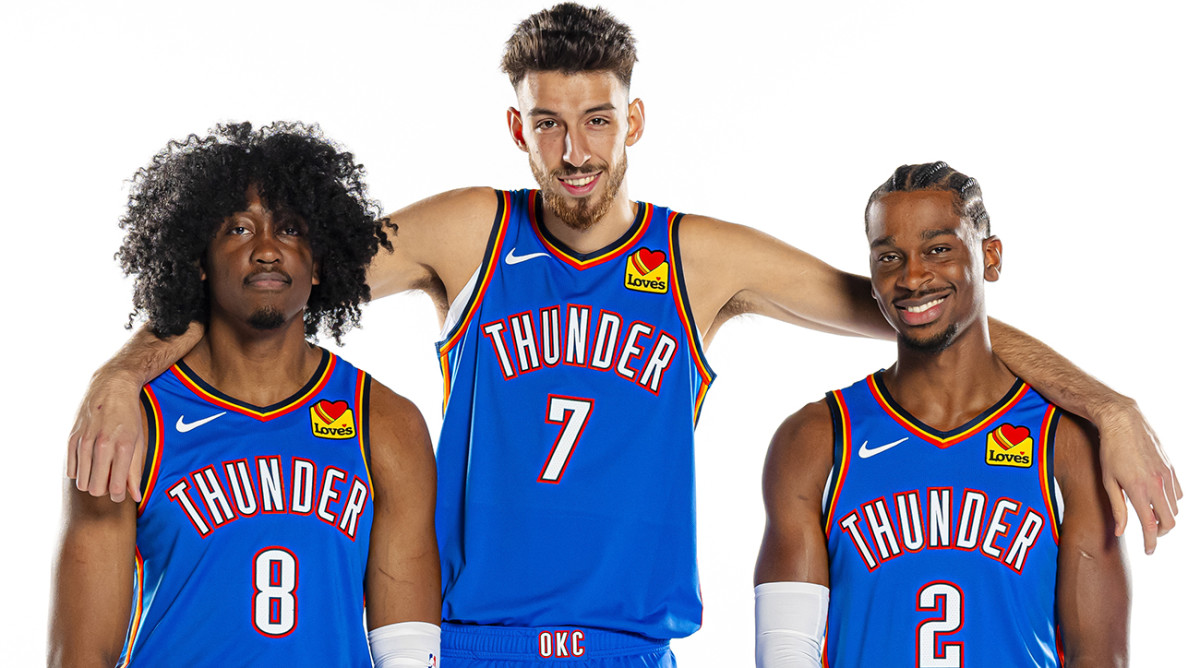
The Oklahoma City Thunder have transformed from a rebuilding franchise into one of the NBA’s most feared teams. Fueled by elite drafting, disciplined asset management, and the rise of a true superstar, Oklahoma City appears positioned for sustained dominance. This deep-dive explores whether the Thunder’s historic run is the foundation of the NBA’s next dynasty.
Why the Oklahoma City Thunder Are the NBA’s Most Talked-About Team
Just a few seasons ago, the Thunder were widely viewed as a team patiently waiting for the future. Today, they are the future. Oklahoma City has gone from rebuilding quietly to winning loudly—and doing it in a way that feels sustainable, intentional, and repeatable.
Across the league, fans and analysts are asking the same question: Is this simply a great season, or the early stages of a long-term NBA dynasty?
The excitement isn’t rooted in hype alone. It’s grounded in performance, structure, and a blueprint that most franchises spend decades chasing.
What Does an NBA Dynasty Look Like in Today’s League?
In the modern NBA, dynasties are no longer about monopolizing talent through sheer spending. Salary caps, player movement, and competitive balance make sustained dominance extremely difficult. That’s why when a team shows signs of repeatable excellence, the basketball world pays attention.
Historically, modern dynasties share several defining traits:
- A legitimate superstar capable of carrying playoff games
- A front office with a long-term, disciplined vision
- Elite drafting and player development
- Financial and roster flexibility
- A defensive identity that holds up in the postseason
The Thunder are checking these boxes earlier than almost anyone expected.
How the Thunder Engineered One of the Fastest Rebuilds in NBA History
Oklahoma City’s rebuild wasn’t accidental. It was methodical.
Instead of chasing short-term wins, the franchise committed to asset accumulation and player development. Draft picks were treated as currency. Cap space was used strategically. Veterans were moved at peak value. Young players were given real minutes—mistakes included.
A real-life analogy fits well here: the Thunder didn’t rush to open the store before it was stocked. They built the warehouse first. When the doors opened, they were ready.
This approach allowed Oklahoma City to accelerate once the core matured—without skipping steps.
Is Shai Gilgeous-Alexander the Superstar Every Dynasty Needs?
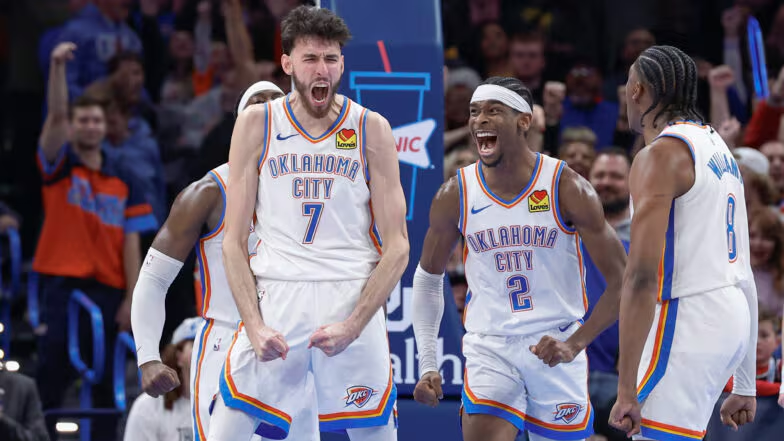
Every dynasty begins with a cornerstone, and for the Thunder, that player is Shai Gilgeous-Alexander.
Shai’s rise has been steady rather than explosive, which is part of what makes it so dangerous. His game is built on efficiency, control, and intelligence rather than highlight-driven athleticism.
What makes him special:
- Elite scoring efficiency under heavy defensive pressure
- Calm decision-making in late-game situations
- Two-way commitment on both ends of the floor
- Leadership that elevates teammates
In close games, the Thunder don’t look rushed. They look comfortable. That’s the hallmark of a team led by a true franchise player.
How Deep and Sustainable Is the Thunder’s Young Core?
Dynasties are never built on one player alone. Oklahoma City’s supporting cast is where the long-term optimism truly takes off.
At the center of it is Chet Holmgren, whose rim protection and floor spacing give the Thunder modern lineup flexibility. Alongside him, Jalen Williams has emerged as a reliable secondary creator capable of scoring, defending, and playmaking.
What stands out is not just talent—but fit.
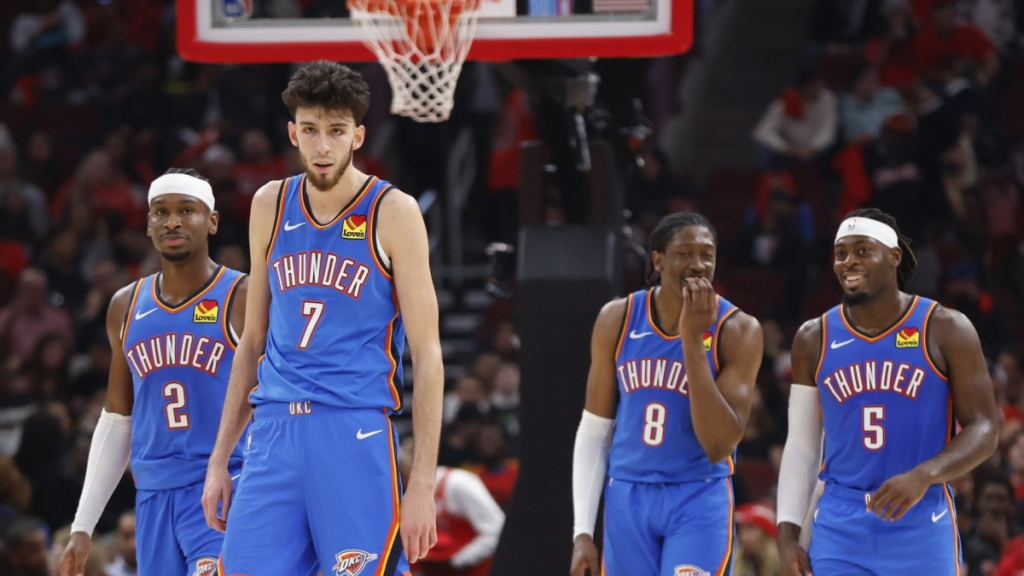
These players don’t overlap in ways that create redundancy. They complement each other, allowing Oklahoma City to adapt lineup combinations without losing identity.
Why Defense Is the Thunder’s Most Underrated Weapon
Offense grabs headlines, but defense builds champions.
Oklahoma City’s defensive system is built on length, anticipation, and discipline rather than one elite stopper. They pressure ball handlers, rotate quickly, and recover without overcommitting.
Their defensive strengths include:
- Versatile defenders across multiple positions
- High turnover generation without gambling excessively
- Strong rim deterrence without constant double teams
- Communication-driven team defense
This type of defense translates well to playoff basketball, where adaptability matters more than regular-season schemes.
The Draft Pick Advantage: Why the Thunder’s Window Is So Wide
One of the biggest reasons executives around the league are uneasy about Oklahoma City is their unprecedented collection of future draft picks.
These assets give the Thunder options that most contenders simply don’t have:
- The ability to trade for a missing superstar if needed
- Continued talent infusion without rebuilding again
- Insurance against injuries or unexpected regression
Most championship-level teams are asset-poor. The Thunder are elite and resource-rich—an extremely rare combination.
Can Oklahoma City Manage the Salary Cap Long-Term?
The salary cap has ended more dynasties than bad coaching ever has. Timing, however, matters.
Because Oklahoma City’s core players are still early in their careers:
- Several contributors remain on cost-controlled contracts
- Extensions can be staggered strategically
- Drafted talent can replace expensive role players
This gives the Thunder a multi-year competitive advantage where performance significantly outweighs payroll—something every championship team needs at least once.
How the Thunder Compare to Past NBA Dynasties
Comparisons are inevitable. Unlike the Golden State Warriors, the Thunder aren’t redefining three-point volume. Unlike the San Antonio Spurs, they aren’t anchored to one rigid system.
Instead, Oklahoma City represents a new model: flexible, data-informed, and player-centric. Their greatest strength is adaptability—being able to evolve without starting over.
What Could Prevent the Thunder From Becoming a Dynasty?
No future is guaranteed in professional sports. Several risks remain:
- Injuries to core players
- Unpredictable player movement across the league
- Western Conference competition intensifying
- Rushed decisions driven by early success
The difference is that Oklahoma City has built-in contingency plans. Even setbacks don’t force them into desperation.
What This Means for Thunder Fans—and the NBA
For fans who watched previous stars leave, this era feels different. It’s not fragile. It’s not rushed. It’s not dependent on a single magical run.
This version of the Thunder feels built to last.
The NBA thrives on cycles, but every once in a while, a team emerges that bends the cycle in its favor. Oklahoma City might be that team again—only this time, they’re better prepared to sustain it.
Key Takeaways
- The Thunder’s rise is structural, not accidental
- Their superstar is entering his prime
- Their young core fits both stylistically and financially
- Their asset flexibility extends the championship window
Dynasties aren’t declared—they’re proven over time. But the Thunder are closer than most teams ever get.
Frequently Asked Questions (Trending Searches)
1. Are the Oklahoma City Thunder real championship contenders?
Ans. Yes. Their efficiency metrics, defensive consistency, and late-game execution align with teams that legitimately compete for titles.
2. Is Shai Gilgeous-Alexander a top-five NBA player?
Ans. Many analysts place him firmly within the top 5–7 range based on scoring efficiency, two-way impact, and clutch performance.
3. How many draft picks do the Thunder still control?
Ans. Oklahoma City owns one of the largest collections of future first-round picks in the NBA, stretching several years ahead.
4. Can Chet Holmgren stay healthy long-term?
Ans. While early concerns existed, his current conditioning, usage, and performance suggest a sustainable long-term outlook.
5. Are the Thunder too young to win an NBA championship?
Ans. Youth is a risk, but structured development and playoff experience can offset age when paired with elite leadership.
6. Who is the Thunder’s second-best player?
Ans. Jalen Williams has emerged as the most consistent secondary option, though Oklahoma City emphasizes balance over hierarchy.
7. How strong is Oklahoma City’s defense compared to the league?
Ans. The Thunder regularly rank among the NBA’s top defensive teams, particularly in forced turnovers and shot quality allowed.
8. Will the Thunder trade for another superstar?
Ans. They could, but they don’t need to rush. Their current roster and assets allow patience rather than urgency.
9. How long is the Thunder’s championship window?
Ans. Realistically, five to seven years if managed well—longer than most contenders.
10. Are the Thunder the next NBA dynasty?
Ans. They have the clearest ingredients of any young team today. Postseason success will determine how far this run goes.
About the Author

 Alex Turner