Why NBA Coaches Are Copying European Basketball (And It’s Working)
 Marcus Reed
NBA coaches are increasingly adopting European basketball concepts because they solve modern NBA challenges: stagnant isolation play, elite switching defenses, and declining offensive efficiency in big moments. European-style systems emphasize ball movement, spacing, off-ball actions, and collective decision-making. When blended with NBA athleticism and analytics, these ideas are producing smarter offenses, better role-player production, and more sustainable winning.
Introduction: A Global Shift That’s Reshaping the NBA
For decades, the NBA viewed itself as the pinnacle of basketball innovation. European basketball was respected, but rarely copied. The NBA relied on athletic dominance, isolation scoring, and star-driven offense, while Europe focused on systems, discipline, and collective execution.
That dynamic has changed—dramatically.
Today, NBA coaches aren’t just borrowing ideas from Europe. They are actively rebuilding offenses around European principles, and the results are impossible to ignore. Teams that once relied heavily on isolation now rank among the league’s best in ball movement, assisted scoring, and offensive efficiency.
This shift isn’t about aesthetics. It’s about survival and winning in an era where defenses are smarter, switching is universal, and margins are razor thin.
What “European Basketball” Really Means (And What It Doesn’t)
European basketball is often misunderstood by American fans. It’s not slower, softer, or less creative. In many ways, it’s more demanding.
At its core, European basketball emphasizes:
- Continuous ball movement
- Multiple actions per possession
- Reading the defense instead of forcing plays
- Precision timing and spacing
- Collective responsibility over individual dominance
Instead of relying on a single star to bail out possessions, European systems generate advantages through movement, angles, and decision-making. Every player becomes a threat—not just the scorer.
NBA coaches have realized this approach scales perfectly against modern defenses.
Why NBA Coaches Are Turning to Europe Now
This shift didn’t happen overnight. It came from necessity.
Modern NBA defenses:
- Switch nearly everything
- Shrink the floor with help defenders
- Take away first options
- Force stars into tough shots
Traditional isolation-heavy offenses struggle under these conditions—especially in the playoffs. European basketball, however, was built to handle exactly this type of resistance.
By chaining actions together—screens into cuts, passes into re-screens—European offenses stay unpredictable. Defenses can stop one action, but stopping four in a row is nearly impossible.
NBA coaches noticed something crucial: systems age better than talent alone.
The International Stars Who Changed the Conversation
European concepts gained mainstream credibility in the NBA because international stars didn’t just succeed—they dominated.
Players like Nikola Jokic, Luka Doncic, and Giannis Antetokounmpo brought more than skill. They brought basketball intelligence shaped by European systems.
Jokic, in particular, represents the ultimate European basketball success story in the NBA:
- He reads defenses before they rotate
- He passes to space, not just players
- He punishes over-help instinctively
- He turns every possession into a decision tree
NBA coaches quickly realized that offenses built around these principles were nearly impossible to scheme against.
Ball Movement Over Isolation: Why It Works Better Now
Isolation basketball still has value—but it’s no longer enough.
In the regular season, talent can overwhelm opponents. In the playoffs, however, defenses load up, scouting intensifies, and isolation efficiency drops sharply.
European basketball attacks this problem by:
- Forcing multiple defensive rotations
- Creating advantages away from the ball
- Turning good shots into great shots
When the ball moves, the defense must move. And every defensive movement increases the chance of a breakdown.
NBA coaches have embraced this reality, especially when preparing for playoff basketball.
Why European Systems Unlock Role Players
One of the most underrated benefits of European basketball is how it elevates role players.
In European systems:
- Everyone touches the ball
- Everyone understands their role
- Shooters stay engaged
- Bigs are decision-makers, not just screeners
This leads to higher confidence and better execution. Role players who feel involved shoot better, defend harder, and make quicker reads.
NBA coaches learned that European-style systems raise the floor of the entire roster, not just the ceiling of stars.
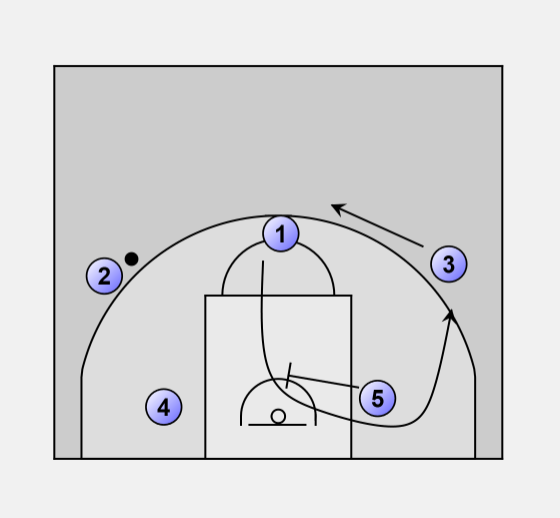
The Rise of Motion Offense in the NBA
Motion offense is one of the clearest European imports.
Instead of calling rigid set plays, coaches install principles:
- Pass and cut
- Screen away after movement
- Fill open space instinctively
- React to defensive mistakes
This approach removes predictability. Defenses can’t blow up a single action if the offense keeps flowing.
Teams that rely heavily on motion consistently rank near the top of offensive efficiency metrics—even without elite isolation scorers.
Coaching Influence: How European Ideas Entered the NBA
European basketball didn’t enter the NBA accidentally. It arrived through coaching trees, international tournaments, and player development pipelines.
Organizations like the San Antonio Spurs were early adopters, emphasizing unselfish play, ball movement, and spacing long before it became trendy.
As younger coaches entered the league—many with international exposure—the adoption accelerated. What began as experimentation became a competitive advantage.
Why European Basketball Fits the Modern NBA Rulebook
NBA rule changes over the last two decades quietly favored European-style play.
Key overlaps include:
- Freedom-of-movement rules
- Reduced off-ball physicality
- Defensive three-second violations
- Emphasis on spacing and shooting
European systems naturally exploit these rules by keeping defenders in constant motion, generating fouls, and creating open shots without relying on isolation whistles.
The rulebook didn’t just allow this evolution—it encouraged it.
Analytics Confirmed What Europe Already Knew
European basketball was ahead of its time analytically—even before analytics became mainstream.
Modern NBA data shows:
- Assisted shots are more efficient
- Ball movement improves shot quality
- Open threes and cuts outperform contested isolations
Analytics didn’t invent European concepts—it validated them. Once data confirmed these ideas, NBA coaches fully committed.
Why Younger NBA Players Adapt Faster
Today’s younger players are more prepared for European-style systems than ever before.
They’ve grown up with:
- Skill-focused development
- Positionless basketball
- International competition exposure
- Advanced training environments
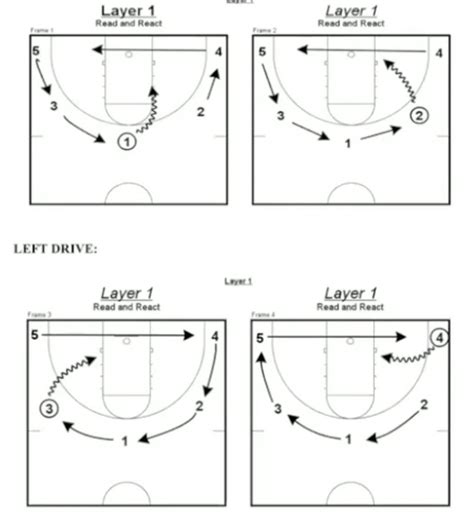
As a result, read-and-react offenses feel natural rather than restrictive. This generational shift has made European concepts easier to implement across the league.
Core European Basketball Concepts NBA Coaches Are Copying
- Continuous ball movement
- Off-ball screening and cutting
- Read-and-react decision-making
- Passing big men
- Positionless spacing
- Shared scoring responsibility
- Defensive communication and rotation
These principles don’t replace NBA talent—they amplify it.
What This Means for the Future of the NBA
The NBA isn’t becoming European. It’s becoming global.
The future of winning basketball blends:
- NBA athleticism
- European IQ
- Analytics-driven decision-making
- Positional versatility
Coaches who embrace this blend gain a sustainable advantage. Those who resist risk falling behind in a league that evolves every season.
Final Thoughts: Copying Europe Isn’t Optional Anymore
NBA coaches aren’t copying European basketball because it’s fashionable. They’re copying it because it works.
In a league where defenses are smarter and margins are thinner, systems that generate constant advantages matter more than ever.
European basketball offers that blueprint—and the NBA is stronger for embracing it.
Frequently Asked Questions (FAQs)
1. Why are NBA coaches copying European basketball?
Ans. Because European systems handle modern defenses better through ball movement, spacing, and decision-making.
2. What is the biggest difference between NBA and European basketball?
Ans. The NBA historically emphasized isolation, while Europe emphasizes systems and collective execution.
3. Does European basketball work with NBA athleticism?
Ans. Yes. NBA athleticism makes these systems even more effective.
4. Which NBA players best represent European-style basketball?
Ans. Nikola Jokic, Luka Doncic, and other international stars exemplify this approach.
5. Is isolation basketball disappearing from the NBA?
Ans. No, but it’s now used selectively rather than as the primary offense.
6. Why is ball movement so important today?
Ans. It forces defensive rotations and creates higher-quality shots.
7. Do European systems help role players more?
Ans. Yes. They keep everyone involved and maximize team-wide efficiency.
8. Is this style better for playoff basketball?
Ans. Absolutely. It thrives against elite, well-prepared defenses.
9. Are NBA teams abandoning American basketball identity?
Ans. No. They’re evolving by integrating the best global ideas.
10. Will youth basketball follow this trend?
Ans. Very likely. The global game is already shaping player development.
About the Author


 Alex Turner