Why the NBA’s New Generation Plays Less Defense but Wins More Games
 Jordan Ellis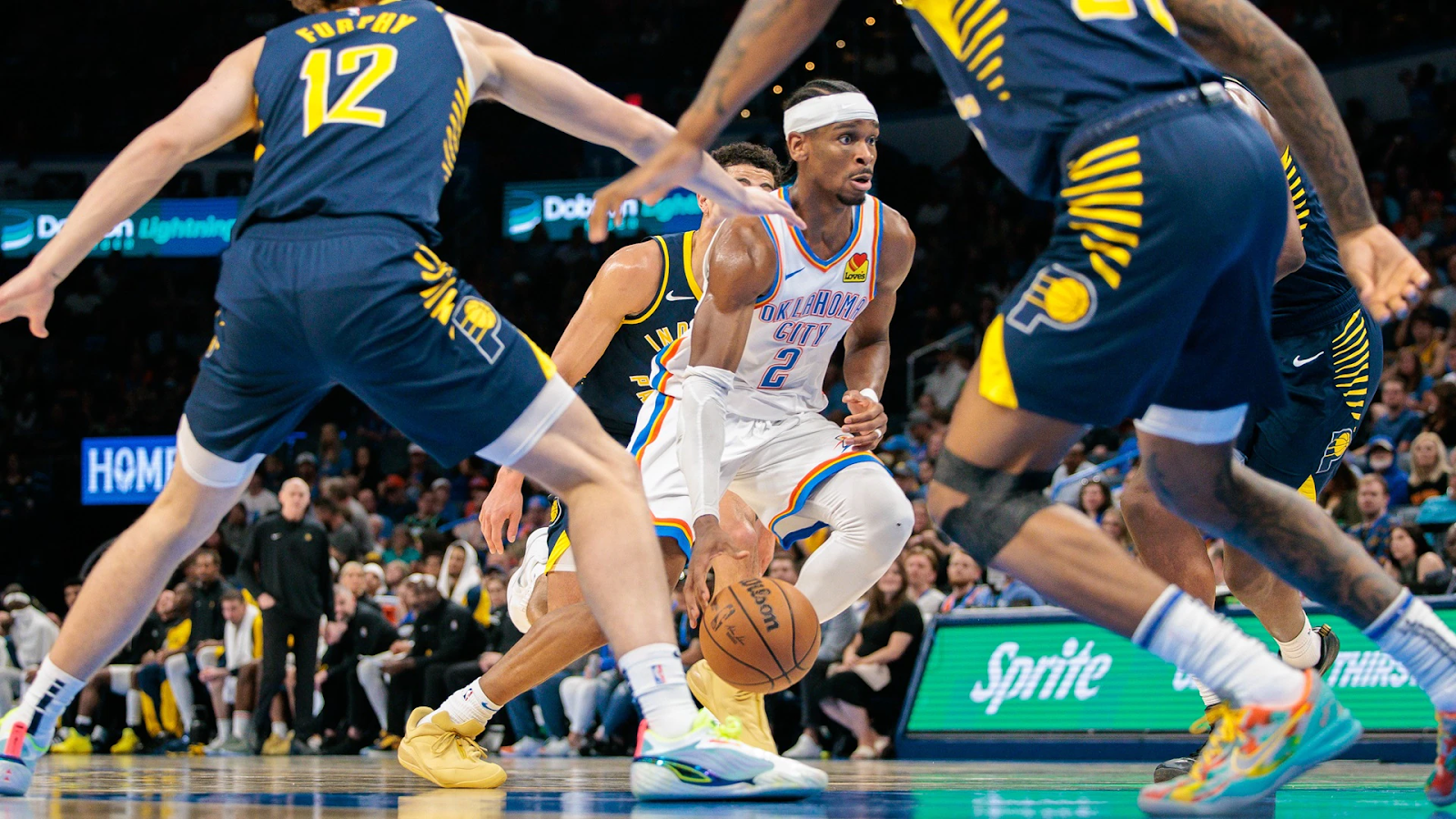
The NBA’s new generation appears to defend less, yet wins more games because the sport’s incentives have fundamentally shifted. Faster pace, three-point efficiency, offensive spacing, analytics-driven decision-making, and rule changes now reward elite offense over constant physical defense. Modern teams prioritize strategic, situational defense while maximizing scoring efficiency—an approach proven to win in today’s NBA.
Introduction: Why This Debate Won’t Go Away
If you’ve watched NBA basketball over the last decade, you’ve probably heard this complaint more times than you can count: “Nobody plays defense anymore.”
Final scores routinely cross 120 points. Role players drain three-pointers with ease. Superstars appear to coast through long stretches of games. To many fans—especially those raised on 1990s and early-2000s basketball—this feels like a decline in effort and toughness.
But here’s the truth that numbers, wins, and championships continue to prove: NBA defense isn’t disappearing—it’s being rationed.
The league’s new generation isn’t winning games despite playing less defense. They’re winning because they understand when defense truly matters and when elite offense delivers a better return.
This article explains why modern NBA teams give up more points yet win more games, how analytics and rules reshaped strategy, and why today’s style is not a downgrade—but an evolution.
Is NBA Defense Actually Worse Than in the Past?
The idea that defense has collapsed doesn’t hold up under scrutiny.
Modern NBA players are:
- Faster laterally
- Stronger physically
- Better conditioned
- More versatile across positions
So why do defenses look worse?
The answer lies in context. Today’s teams play at a faster pace, generate more possessions, and take far more three-point shots. When you increase possessions and shot value, scoring naturally explodes—even if defensive quality remains high.
In the early 2000s, a team averaging 95 points could win comfortably. Today, that same output likely results in a blowout loss.
Defense didn’t vanish. The scoreboard just changed its language.
How Pace and Space Redefined Winning Basketball
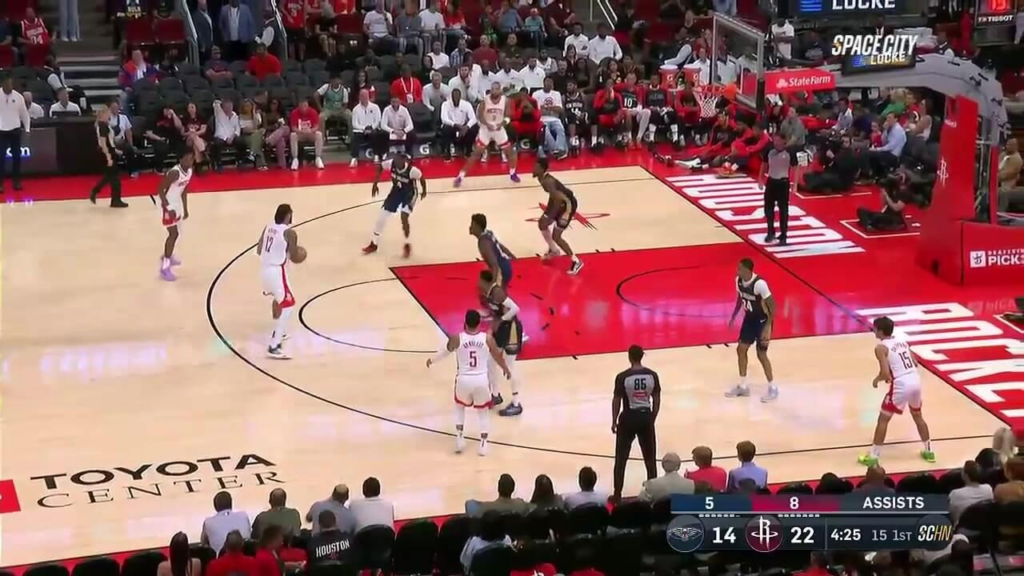
One of the most important shifts in NBA history is the rise of pace and space.
Teams now prioritize:
- Quick decision-making
- Early offense
- Five-out spacing
- Constant ball movement
This philosophy gained prominence with the Golden State Warriors, led by Stephen Curry. Curry’s unprecedented shooting range forced defenses to guard well beyond the three-point line, stretching help defense to its breaking point.
When defenders are spread thin:
- Driving lanes open
- Help rotations arrive late
- Open threes multiply
Defense becomes reactive rather than controlling. Even disciplined teams struggle to keep up.
The Three-Point Revolution: Why Math Beats Muscle
At the heart of modern NBA dominance is simple math.
A contested mid-range jumper—even at 45% accuracy—produces fewer points than a semi-open three at league-average efficiency. Over hundreds of possessions, that gap decides games.
As a result, defenses now:
- Protect the rim
- Defend corner threes
- Concede difficult mid-range shots
This doesn’t mean defenders are lazy. It means they’re obeying analytics that maximize long-term success.
Scoring 125 efficiently beats holding an opponent to 115 inefficiently—every time.
Why Modern Teams “Save” Defense Instead of Playing It Constantly
One of the biggest misunderstandings among fans is effort allocation.
NBA seasons are long. Playing lockdown defense for 48 minutes across 82 games is physically unrealistic—even for elite athletes.
Modern teams defend hardest:
- In the final 5–6 minutes
- After timeouts
- During playoff-style matchups
- In high-leverage possessions
Veterans like LeBron James mastered this approach years ago. Rather than exhausting themselves early, stars conserve energy to dominate when games are decided.
The result? More wins, healthier rosters, and better playoff readiness.
Offensive Skill Levels Are Higher Than Ever
Today’s players grow up training offense year-round. Big men handle like guards. Guards shoot from distances once considered reckless.
Consider players like Nikola Jokic. Jokic doesn’t overpower defenses—he dissects them with angles, timing, and decision-making. Even perfect defensive positioning often isn’t enough.
When:
- Centers pass like quarterbacks
- Forwards shoot like guards
- Guards finish through contact consistently
Defense becomes a game of damage control, not shutdowns.
How NBA Rules Quietly Favor Offense
The league’s rulebook has steadily shifted toward offense over the past two decades.
Key changes include:
- Hand-checking restrictions
- Freedom-of-movement enforcement
- Defensive three-second violations
- Increased foul calls on perimeter contact
These rules encourage:
- Continuous motion
- Cleaner driving lanes
- Fewer physical stoppages
The intent is clear: faster games, higher scoring, and more watchable basketball. Defenses must adapt within these boundaries—and they have.
Analytics Changed What “Good Defense” Means
In the past, good defense meant low points allowed. Today, it means low expected points per possession.
Teams evaluate:
- Shot quality allowed
- Defensive rotations
- Opponent efficiency zones
- Transition prevention
Allowing 118 points doesn’t matter if your offense scores 122 with better efficiency. This is why some top teams rank middle-of-the-pack defensively yet dominate the standings.
Winning basketball is about margins, not appearances.
Why Defense Still Decides Championships
Despite all this, defense hasn’t lost its importance—it has shifted its timing.
Every NBA postseason reveals the truth:
- Pace slows
- Rotations tighten
- Defensive effort spikes
- Physicality increases
Teams that can toggle between elite offense and elite defense survive. Those who rely on offense alone eventually collapse.
The regular season rewards efficiency. The playoffs reward adaptability.
Why Fans Romanticize Old-School Defense
There’s a cultural element to this debate.
Old-school defense was:
- Physical
- Obvious
- Emotional
Modern defense is:
- Rotational
- Scheme-based
- Less visible
It’s harder to appreciate what you can’t easily see. But just because defense looks different doesn’t mean it’s weaker.
Why the NBA’s New Generation Wins More Games (Key Factors)
- Faster pace creates scoring opportunities
- Three-point efficiency outweighs individual stops
- Energy conservation improves late-game execution
- Analytics optimize shot selection
- Rule changes protect offensive flow
- Player skill levels are historically high
- Defense is deployed strategically, not constantly
What This Means for the Future of the NBA
The NBA isn’t getting softer—it’s getting smarter.
Future stars will:
- Defend multiple positions
- Score efficiently at all levels
- Understand analytics instinctively
- Adjust effort based on game context
Winning will continue to favor teams that balance explosive offense with situational defense, not those clinging to outdated ideals.
Final Thoughts: Defense Isn’t Dead—It’s Evolved
The NBA’s new generation doesn’t play less defense because they don’t care. They play less unnecessary defense.
They understand that:
- Perfect offense beats perfect defense
- Efficiency beats effort
- Timing beats intensity
The scoreboard, standings, and championships all tell the same story.
Frequently Asked Questions (FAQs)
1. Is NBA defense really worse today than before?
Ans. No. Defense is more strategic and efficiency-based, not weaker. The higher scores are driven by pace and three-point shooting.
2. Why are NBA games so high-scoring now?
Ans. Faster pace, more possessions, increased three-point attempts, and offensive-friendly rules all contribute.
3. Do NBA players try less on defense?
Ans. Players conserve energy and focus defensive effort on high-impact moments rather than playing full-intensity all game.
4. Why don’t teams play lockdown defense for 48 minutes?
Ans. It’s physically unsustainable over an 82-game season and reduces offensive efficiency late in games.
5. Did analytics ruin NBA defense?
Ans. No. Analytics redefined good defense by focusing on shot quality and efficiency rather than raw point totals.
6. Why are three-pointers so hard to defend?
Ans. Floor spacing stretches defenses, making rotations longer and breakdowns more frequent.
7. Is modern NBA basketball worse to watch?
Ans. That’s subjective. Many fans enjoy the skill, pace, and creativity of today’s game.
8. Why does defense improve during the playoffs?
Ans. Slower pace, higher stakes, and shorter rotations force teams to lock in defensively.
9. Can defense still win championships?
Ans. Yes—but only when paired with elite offense and adaptable schemes.
10. Will the NBA ever return to low-scoring games?
Ans. Unlikely, unless rules or shot values change dramatically.
About the Author

 Marcus Reed
 Alex Turner