The 2026 NBA season is being shaped by more than star power and standings. A tighter salary-cap environment, second-apron roster limits, changing team-building timelines, the rise of younger contenders, and the league’s shifting balance between continuity and flexibility are all influencing what fans will see on the floor. For readers trying to understand where the season is really headed, the most important storylines are often the structural ones happening behind the highlights.
The NBA rarely changes through one single headline. More often, the league shifts because several quieter forces start pulling in the same direction at once. That is what makes the 2026 season especially interesting. Yes, there are the obvious attention-grabbers: blockbuster free-agency decisions, aging superstars trying to extend their windows, and title hopefuls trying to stay healthy. But underneath those daily news cycles, a deeper set of storylines is changing how teams are built, how contenders manage risk, and how front offices think about the next three years rather than the next three months.
For fans, bettors, fantasy players, and casual viewers, that matters. If you want to understand why a team is suddenly reluctant to make a splashy trade, why a contender is giving more minutes to a low-cost rookie, or why a franchise seems to be preserving cap flexibility instead of pushing all-in, the answer increasingly sits at the intersection of roster economics, player development, and the league’s new competitive math.
Why the 2026 season feels different from recent NBA years
The simplest explanation is that the league’s incentives have changed. Teams are no longer operating in a world where spending deep into the luxury tax is merely expensive but manageable. The NBA’s second-apron system has made it materially harder for expensive rosters to keep adding talent. For the 2025–26 season, the salary cap was set at $154.647 million, with the first apron at $195.945 million and the second apron at $207.824 million. The 2026–27 cap then rose to $164.961 million, with related tax thresholds increasing as well. Those figures matter because crossing apron lines does not just cost money; it also strips away flexibility in trades, free agency, and roster construction.
That shift has turned front offices into portfolio managers. The question is no longer just, “How do we get the best top six players?” It is also, “Can we still trade aggregate salaries next year? Can we use exceptions? Will this move freeze our future options?” Teams that once could justify keeping a very expensive core together are now weighing whether the penalties for doing so will make it harder to patch holes later. Boston’s recent salary-cap decisions are one of the clearest examples of this new environment, with public explanations explicitly tied to flexibility and second-apron consequences.
That is one of the quietest but most consequential NBA storylines of 2026: the season is not only about who has the best stars. It is also about which front offices have adapted fastest to the league’s new economic rules.
Storyline 1: The second apron is now a basketball storyline, not just a finance storyline
For years, salary-cap coverage often felt like a niche concern for dedicated fans. In 2026, it is central to understanding the standings.
The second apron affects what teams can do in trades, whether they can combine contracts, what exceptions they can use, and how aggressively they can respond when a roster flaw becomes obvious in February. In practical terms, that means expensive contenders have less room to fix mistakes. A bad bench signing, an injury to a starting wing, or a midseason need for more size can be harder to solve if a team’s payroll structure is already restrictive. ESPN and NBA reporting over the past two offseasons has repeatedly highlighted the same theme: teams are trying to stay competitive while avoiding the most punitive apron consequences.
For fans, the effect shows up in a few very visible ways:
- Contenders are more cautious about carrying too many mid-tier contracts.
- Teams are valuing cheap rotation players on rookie deals more than they did a few years ago.
- Deadline trades may increasingly look like “fit and flexibility” moves rather than dramatic talent grabs.
- Front offices are more willing to break up good teams a year early rather than pay a premium to keep a roster intact.
This is why the 2026 season can feel different even when the top names remain familiar. The rules are quietly steering behavior.
Storyline 2: Roster depth is becoming a bigger separator than star accumulation
A decade ago, the dominant NBA question was often whether a team had enough elite talent at the top. That still matters, but the 2026 season is reinforcing a different truth: in an apron-constrained league, depth is one of the most valuable forms of insurance.
The teams best positioned for a long season are not just the ones with two All-NBA players. They are the ones with eight or nine credible playoff pieces, at least one low-cost contributor who can scale up, and enough lineup versatility to survive injuries or matchup swings. That is partly a basketball reality and partly an economic one. If a team cannot easily trade for help later, it has to build more resilience into the roster from the start.
This is one reason player development has become so strategically important. A contender that can get 20 reliable minutes from a second-year wing or a late first-round big man is not just getting a nice surprise; it is solving a budget problem and a rotation problem at the same time. That changes how franchises think about summer league, the back half of the roster, and the G League pipeline.
A useful way to read the 2026 season, then, is to stop looking only at the top three names on a roster and start asking harder questions. Who is the ninth man in a playoff series? Which team can survive a two-week injury to its starting center? Which contender has enough two-way role players to avoid running stars into the ground by March? Those are the kinds of questions that will shape seeding and postseason readiness.
Storyline 3: The league is balancing two timelines at once—win now and stay solvent later
One of the most revealing things about the current NBA is how many franchises are trying to live in two timelines simultaneously.
The first timeline is obvious: compete right now. The second is more subtle: preserve enough flexibility so the current core does not become an immovable problem two seasons from now. That balancing act is showing up across the league. Teams with veteran stars still want to maximize the present, but they are also drafting for fit, keeping an eye on future extensions, and trying to avoid cap structures that close off options.
This is where the league’s middle class becomes fascinating. Not every team is a true title favorite, and not every team is rebuilding. Many franchises are somewhere in between: good enough to matter, but still deciding whether to invest heavily in the present or keep a pathway open for a bigger move later. Those decisions often determine whether a team becomes a durable contender or a short-lived one.
From a fan perspective, this explains why some offseasons feel quieter than expected. It is not always a lack of ambition. Sometimes it is discipline. A front office may believe that using an exception on the wrong veteran, or adding one more long-term salary, creates more risk than value. In 2026, restraint is often a competitive strategy.
Storyline 4: The aging-superstar question is no longer just sentimental—it is structural
Every NBA season includes a conversation about how long iconic players can keep producing. In 2026, that conversation carries extra weight because aging stars influence not only on-court ceilings but also team architecture.
When a franchise is built around a veteran superstar, every decision becomes more compressed. Minutes have to be managed. Supporting talent has to fit quickly. Draft picks may be used differently. And if the player’s future is uncertain—whether because of age, contract decisions, or shifting team direction—the organization has to plan for both continuity and transition at the same time.
That is why the league’s veteran-star situations are among the most consequential storylines of the season. They affect contenders, television interest, trade speculation, and even how younger teammates develop. A team trying to maximize one last run often makes different choices than a team quietly preparing for the post-superstar phase.
For readers following NBA news closely, the key is to look beyond the emotional framing. The real question is not simply whether an aging star still has enough left. It is whether the team around that player can remain flexible, defend at a high enough level, and distribute usage in a way that keeps the roster viable over 82 games and into May.
Storyline 5: The Knicks, Thunder, Wolves, and other new-era contenders are changing what a contender looks like
One of the healthiest developments for the league is that the contender map no longer feels confined to the same few brands. Over the last two seasons, the NBA has moved further into an era where well-built teams outside the old glamour centers can plausibly shape the championship picture.
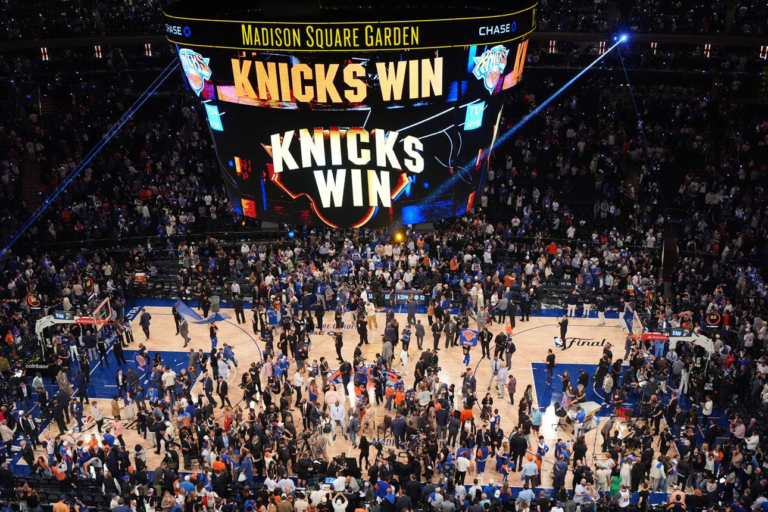
That matters because it changes the league’s competitive logic. Franchises like Oklahoma City and Minnesota have shown the value of drafting well, building patiently, and prioritizing lineup fit rather than forcing a superteam model. New York’s recent rise, meanwhile, has reflected the power of continuity, defense, rebounding, and targeted roster upgrades rather than chasing constant reinvention.
The quiet storyline here is philosophical: the NBA’s next wave of contenders is proving that there are multiple ways to build a real threat. You can draft and develop. You can win through defensive identity. You can build around size and versatility rather than just perimeter shot creation. You can become dangerous without having to mirror the exact roster template of the previous champion.
That is useful for fans because it broadens how the season can be read. Not every successful team has to look like the last successful team. In 2026, stylistic diversity among contenders is one of the most interesting things about the league.
Storyline 6: Health management is now a competitive edge, not just a medical issue
NBA fans have spent years debating rest, load management, and the frustration of buying tickets only to see a star sit out. But inside the league, the bigger conversation is more practical: health management is now one of the clearest differentiators between teams that peak in April and teams that fade by January.
The reason is simple. The modern season demands pace, switching, shot creation, and spacing from nearly every position. That workload is difficult on stars, but it also strains role players whose value depends on constant defensive activity. The result is that teams with coherent performance staffs, clear minute plans, and enough roster depth to reduce wear have a real advantage.
This also helps explain why the regular season can look uneven for some contenders. A team may be prioritizing April over November. Another may be experimenting with lineups because it knows a key player cannot carry a 37-minute burden all season. To a fan watching nightly scores, those decisions can look inconsistent. To a front office, they are often risk management.
When you evaluate the 2026 season, it is worth asking not only who is winning, but how those wins are being accumulated. Are stars playing sustainable minutes? Is a team leaning too heavily on one ball-handler? Are there enough credible bench options to absorb back-to-backs and travel fatigue? Those details are often a preview of which teams will still look whole in the spring.
Storyline 7: The three-point era is still here, but the most interesting teams are adding counters
The league is not moving away from threes. Spacing, shot value, and efficient offense remain central to winning basketball. But one of the more subtle tactical developments entering 2026 is that the best offenses increasingly need counters beyond simply generating more threes than the opponent.
That can mean a dominant offensive rebounder who punishes smaller lineups. It can mean a jumbo playmaker who forces help and creates easier shots in the paint. It can mean a post-up option against switching defenses, or a second-side creator who can attack once the first action is blown up. In short, the smartest teams are building offenses that can survive when the obvious looks are taken away.
This matters in the playoffs, but it matters in the regular season too. Teams that can win in multiple ways are better equipped for schedule fatigue, opponent scouting, and the inevitable cold-shooting stretches that can derail a one-dimensional offense. The 2026 season will likely continue rewarding spacing, but it may also reward teams that are slightly less predictable than the rest of the league.
Storyline 8: The rookie scale and young-cost-controlled talent are more valuable than ever
A few years ago, a late first-round pick who became a rotation player was a welcome bonus. In 2026, that kind of outcome can materially change a team’s competitive window.
Because the apron era makes veteran depth more expensive and inflexible, productive players on rookie contracts have become some of the best value in the league. A team that drafts well can fill two problems at once: it can lower costs and preserve lineup quality. That is a major reason draft development is no longer a separate lane from contention. It is part of contention.
Fans should expect more teams to make choices that reflect this reality. Young wings will get longer developmental runways. Teams may be more patient with athletic bigs who can defend multiple actions. Second-round picks and two-way players will matter more than they once did. Not every young player will help immediately, but the incentive to find even one low-cost contributor has never been stronger.
What fans should watch if they want to understand the 2026 season early
If you want to read the NBA season more intelligently in the first two months, a few signals tend to matter more than raw win-loss records.
- Watch closing lineups rather than just starting lineups. Coaches reveal trust late in games.
- Track which contenders can survive non-star minutes without falling apart.
- Pay attention to whether a team’s defense travels on the road; that is often a better indicator of sustainability than one hot shooting month.
- Look for second-unit creation. A bench that can produce competent offense without the primary star often becomes a postseason advantage.
- Notice how often a team changes its ninth and tenth men. Constant churn can indicate unresolved roster problems.
- Monitor contract and apron context around trade rumors. Not every rumor is actionable under current rules.
These habits will tell you more about a team’s real outlook than a week of hot takes after a nationally televised game.
What the 2026 season could mean for the NBA’s next phase
The biggest reason the 2026 season matters is that it may clarify what the NBA wants to be in the second-apron era. If the new system produces more parity, more disciplined roster building, and a wider pool of credible contenders, the league will likely view the current rules as a success. If, on the other hand, teams become too hesitant to spend or too boxed in to improve organically, pressure will grow around how those rules function in practice.
For now, though, the season looks like a test case in modern team building. Can smart drafting compete with aggressive spending? Can continuity outperform constant star-chasing? Can deep, adaptable rosters beat top-heavy ones over the long run? Those are not side questions anymore. They are central to where the league is headed.
And that is what makes this season so compelling. The NBA in 2026 is not just asking which team is best. It is asking which team model works best under the current rules.
FAQ: What fans are asking about the NBA in 2026
1) What is the biggest NBA storyline heading into the 2026 season?
The most important broad storyline is how the second-apron cap environment is reshaping team building. It is affecting trades, bench construction, free-agent decisions, and whether contenders can afford to keep expensive cores together.
2) What does the NBA second apron actually do?
The second apron is a payroll threshold above the luxury tax line that comes with extra roster-building restrictions. Teams above it face limitations in trades, exceptions, and other tools that previously helped expensive contenders stay flexible.
3) Why are teams valuing rookie-contract players more than before?
Young contributors on rookie deals provide production at a relatively low cost. In an apron-constrained league, that makes them especially valuable because they help teams maintain depth without adding expensive veteran salaries.
4) Are superteams still viable in the NBA?
They are harder to sustain than they were in the late 2010s. The new cap rules do not make star-heavy teams impossible, but they do make it more difficult to add supporting talent and correct roster weaknesses once payroll climbs too high.
5) Why do some good teams seem reluctant to make big trades?
Because the cost of a trade is no longer just the players involved. Teams also have to consider apron status, future flexibility, draft implications, and whether a move limits what they can do later.
6) Which type of team may have the biggest edge in 2026?
Teams with star power, depth, lineup versatility, and at least one or two productive low-cost rotation players are in a strong position. The sweet spot is having enough top-end talent without sacrificing roster resilience.
7) How much should fans read into early-season records?
Some, but not all. Early records matter, yet lineup health, road defense, bench competence, and closing-lineup stability often reveal more about long-term sustainability than a strong 10-game stretch.
8) Why is health management such a big story every year?
Because a team’s playoff ceiling depends on availability as much as talent. Managing minutes, travel stress, and cumulative wear is now a competitive edge, especially for veteran-led contenders.
9) Are the Knicks, Thunder, and Timberwolves examples of a new contender model?
In many ways, yes. They represent different versions of a modern contender: teams that blend star talent with development, depth, identity, and a clearer long-term roster plan rather than relying only on splashy star accumulation.
10) What should casual fans pay attention to if they want smarter NBA takes?
Watch how teams defend, who closes games, whether benches can survive without stars, and how front offices talk about flexibility. Those signals usually reveal more than one headline-grabbing scoring performance.
About the Author