NBA news feels different in 2026 because the league itself is operating differently. Front offices are building around harsh new apron rules, national TV distribution has shifted to NBC, Amazon, and ESPN, young stars are changing the balance of power, and fans are following the league through faster, more fragmented news cycles. The result is a season defined as much by structure and strategy as by box scores.
The NBA has always been a league that lives in conversation. Some seasons are driven by dynasties. Others revolve around free agency, superteams, or one transcendent player. But in 2026, NBA news feels different for a more structural reason: the league’s ecosystem has changed at nearly every level at once.
The game on the floor is still the product, but the story around the product now moves through new financial rules, new media partners, new roster-building constraints, new player timelines, and a fan base that consumes information across highlights, betting content, podcasts, cap sheets, trade explainers, and social clips all at the same time. The daily NBA news cycle no longer centers only on “Who won?” or “Who’s getting traded?” It increasingly centers on “How can teams build under the second apron?”, “Why did a contender let a useful veteran walk?”, “What does this media deal change for viewers?”, and “Which young core actually has a runway to contend?”
That is the central reason the 2026 season feels different. The NBA is still star-driven, but it is no longer only star-driven. It is increasingly system-driven.
This article breaks down why that shift matters, which storylines are driving it, and what fans should watch if they want to understand the 2026 NBA season beyond the headlines.
The biggest change in NBA news: roster building has become a front-page story
For years, salary-cap mechanics lived mostly on the edges of NBA coverage. Hardcore fans followed cap analysts, but the average fan could enjoy the league without learning the finer points of tax penalties, exceptions, or sign-and-trade rules.
That is no longer true.
The most important off-court change shaping NBA news in 2026 is the second-apron era. Under the league’s current collective bargaining framework, teams that spend deep into the luxury-tax structure face major restrictions on how they can improve. The 2026-27 salary cap is set at $164.961 million, with a first apron of $209.015 million and a second apron of $221.686 million. Those thresholds matter because they now directly shape what contenders can and cannot do.
In practical terms, that means NBA news increasingly sounds like this:
- Why did a playoff team choose depth over a splashy veteran?
- Why did a contender prioritize a rookie-scale contributor over a proven mid-career role player?
- Why are sign-and-trades harder for certain teams to pull off?
- Why does a seemingly reasonable contract become a problem two years later?
Those are not niche questions anymore. They are central to how the league works.
The second apron has changed the incentives for front offices. Teams can still spend, but the cost of spending badly is much higher. A roster mistake is no longer just expensive; it can remove pathways to fix the roster later. Teams above key apron lines face trade and acquisition restrictions that make it harder to aggregate salary, add buyout talent, or use certain exceptions. The result is a league where financial flexibility is part of competitive strategy, not just accounting.
That shift is one reason NBA news feels more technical in 2026. Fans are not imagining it. Front-office logic has become part of the mainstream story because it now affects every contender.
Why more teams are behaving cautiously, even when they want to win now
A useful way to understand the 2026 NBA landscape is to compare it with the all-in years of the late 2010s and early 2020s. Back then, many teams could talk themselves into one more expensive veteran, one more future pick outgoing, one more star-level gamble. The downside often felt manageable if ownership was willing to pay.
In 2026, the downside is more visible.
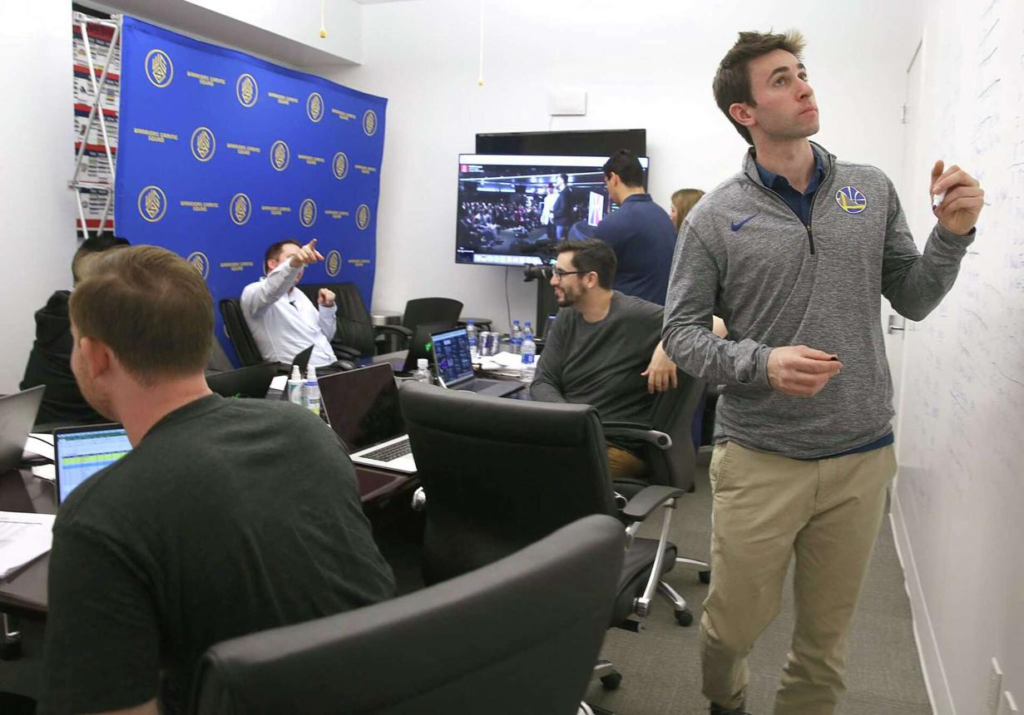
A team can still push its chips in, but the consequences of operating above apron thresholds now last longer and affect more decisions. That changes behavior in subtle ways. Front offices are more selective about mid-tier contracts. Rotation players on affordable deals have become more valuable. Second-round picks and low-cost development bets matter more than they used to. Veteran minimum signings are not filler; they are strategy.
This is why offseason coverage has become so dense with cap language. It is not media overkill. It reflects the reality that roster building is now less about collecting names and more about sequencing assets, preserving optionality, and knowing which players can outperform their contract slot.
That is also why certain teams feel more stable in 2026 than others. A franchise with a young core, a manageable payroll, and tradeable mid-sized contracts has more ways to adapt over the next 18 months than a team built around three huge salaries and a thin bench. The best front offices are no longer just asking, “Can this roster contend in April?” They are asking, “Can this roster survive the next three transaction windows without boxing us in?”
The 2026 season is also a young-star season, not just a veteran-superstar season
Another reason NBA news feels different is the changing center of gravity among players. For more than a decade, the league’s biggest news cycles were dominated by established megastars and their decisions: LeBron James, Stephen Curry, Kevin Durant, James Harden, Kawhi Leonard, and others. Those players still matter enormously, but the conversation in 2026 feels broader and younger.
The league is now in a transition phase where several timelines overlap:
- legacy stars are still driving ratings and title hopes
- prime-age stars are fighting for positioning in a crowded contender tier
- young franchise players are no longer “the future”; they are the present
That matters because NBA news is more compelling when the hierarchy is unsettled. A league with one obvious favorite and a small set of familiar powers creates a different media rhythm than a league with six or eight plausible contenders, several emerging stars, and a handful of young teams one move away from relevance.
In 2026, fans are not just checking whether veteran contenders can hold up. They are also tracking which younger teams are accelerating faster than expected, which recent draft picks can become playoff rotation pieces immediately, and which organizations have aligned their cap sheet with their development curve.
This creates a different tone in coverage. A 23-year-old All-NBA candidate on a rookie-max timeline can change the league’s balance of power faster than a 34-year-old star on a short competitive window. News around those players is not just about performance; it is about leverage, runway, and what kind of team-building choices their presence makes possible.
The media environment changed, and that changed the feeling of NBA news too
If NBA coverage feels more fragmented in 2026, that is because the viewing and distribution model changed with it.
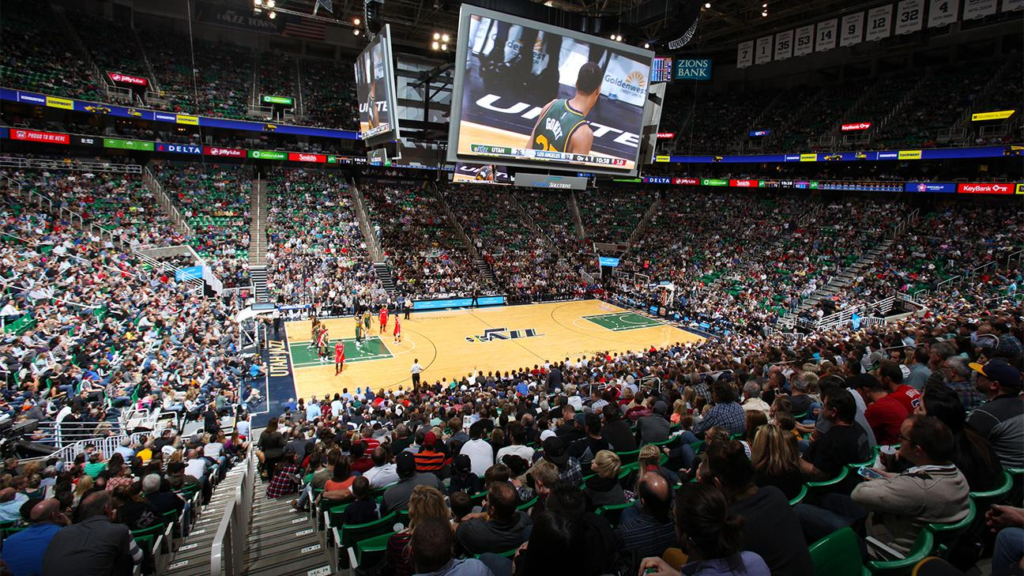
The league’s new media agreements with Disney/ESPN, NBCUniversal, and Amazon Prime Video began with the 2025-26 season, reshaping where national games live and how fans encounter the league during the week. The 11-year package is worth roughly $76 billion, and it does more than change channel listings. It changes the texture of the NBA conversation.
For fans, the shift means the NBA is now surfacing in more places and through more presentation styles:
- traditional broadcast windows on ABC and NBC
- streaming-first access on Peacock and Prime Video
- app-driven discovery across multiple platforms
- social clips and commentary that move almost instantly after a national game
- shoulder programming that treats roster building, betting angles, and player movement as core content
This matters because media distribution affects what becomes “news.” When the league is spread across multiple partners, every partner needs angles, personalities, pregame hooks, and postgame discussion. That naturally expands the news cycle beyond game results.
A Tuesday game is no longer just a Tuesday game. It is also a chance for a studio show to debate a contender’s second-unit defense, a podcast network to discuss trade options, a digital team to publish a cap explainer, and social feeds to circulate three clips that become the day’s NBA conversation.
In that environment, NBA news feels less like a newspaper sports page and more like a constantly updating information market.
Fans are consuming the league through context, not just highlights
One of the clearest signs of the 2026 shift is how much context fans now expect with every story. Ten years ago, a trade rumor might have been enough on its own. Today, many readers want the rumor, the cap implications, the draft-pick inventory, the playoff fit, and the long-term downside in one package.
That is partly because fans are more informed than they used to be. It is also because the league has trained them to think in systems. Every major transaction now raises secondary questions:
- Does the move push the team into apron trouble?
- Is this player a postseason fit or just a regular-season innings eater?
- Can the team still make another move in February?
- What does this mean for extension talks next summer?
- Does the team have enough two-way wings to survive a playoff series?
Those are sophisticated questions, but they are increasingly mainstream. Fans have learned that roster news cannot be understood in isolation.
You can see that in the way modern coverage treats bench depth, lineup versatility, and player archetypes. A backup center who can defend in space, a wing who can shoot without needing touches, or a guard who can survive playoff switching may matter more to a contender than a bigger-name scorer with a trickier contract. In 2026, that kind of nuance is no longer reserved for specialists. It is part of ordinary NBA discussion.
The standings matter, but the contender map matters more
Another reason NBA news feels different is that the season is being covered less like a linear race and more like a map of tiers.
That sounds abstract, but it is easy to see in practice. Rather than focusing only on conference standings, a lot of serious NBA coverage in 2026 is built around a different question: which teams actually have a believable championship pathway?
That question is more useful than raw standings because it forces analysts to consider playoff translation. A team can win 50-plus games and still have obvious postseason problems if it lacks size, half-court creation, lineup flexibility, or enough trustworthy defenders. Meanwhile, a lower-seeded team with elite shot creation and matchup versatility may be more dangerous in May than its regular-season record suggests.
This is one reason trade deadlines and free-agency periods feel so consequential. Teams are not just chasing wins. They are trying to solve specific playoff problems:
- adding one more playable wing
- finding a backup big who can stay on the floor in switching lineups
- reducing the creation burden on a lead guard
- getting younger around an aging star
- lowering payroll enough to preserve future flexibility
The more fans understand those goals, the more NBA news naturally shifts away from generic “winner/loser” framing and toward “What problem is this team actually trying to solve?”
Viewership and fan appetite suggest the league’s broader storytelling approach is working
The NBA’s changing media and news environment is not happening in a vacuum. The league has reason to lean into broader storytelling because fan engagement remains strong. The NBA reported multiple viewership highs during the 2025-26 regular season, including a Christmas Day average of 5.5 million viewers across a five-game slate, up 4% from the prior year, with total Christmas reach up 45%.
That does not mean every metric is perfect or every local-market issue is solved. It does mean the NBA has evidence that its ecosystem still works when it gives fans multiple entry points: marquee games, stars, trade intrigue, historical context, tactical analysis, and year-round roster conversation.
The league is especially well-suited for this because basketball lends itself to player-driven narratives and visible strategic change. One injury, one trade, one breakout scorer, or one lineup tweak can alter the feel of a team quickly. In 2026, the league’s media structure amplifies those shifts faster than ever.
What storylines matter most when following NBA news in 2026?
For fans trying to separate signal from noise, a few recurring storylines are worth prioritizing.
1) Which contenders are navigating the apron best?
The title race is no longer just about top-end talent. It is about whether a contender can preserve enough depth and flexibility to stay functional over a long season and into the playoffs.
2) Which young stars are accelerating their timeline?
The next wave of contenders will be built around players who are already outperforming their age curve. Watching how organizations support those stars is one of the most important leaguewide themes.
3) Which veterans still change playoff series?
Not every established star is in the same stage of decline or reinvention. Some older stars remain central engines. Others now need stronger roster scaffolding than they did three years ago.
4) Which teams are building for May rather than November?
A hot regular-season start matters, but roster composition matters more. Teams with size, shooting, perimeter resistance, and lineup versatility usually age better across the season.
5) How will the new media ecosystem shape fan habits?
As national windows spread across NBC, ESPN, Peacock, and Prime Video, fan routines will keep changing. That affects which games become cultural events and which storylines gain national momentum fastest.
So why does NBA news feel different in 2026?
Because it is covering a different league.
Not a different sport, and not a league that has abandoned star power. But a league where the infrastructure around winning has become far more visible. The 2026 NBA is a place where salary structure can decide a contender’s options, where media distribution changes how fans discover games, where younger stars are compressing the traditional timeline to relevance, and where front-office competence is often as important to the long-term story as a 40-point night.
That does not make NBA coverage worse or overcomplicated. In many ways, it makes it more honest. Teams do not win only because they have famous names. They win because their best players are healthy, their role players fit, their contracts are manageable, their development pipeline works, and their organization makes good decisions under pressure.
That is what 2026 NBA news is increasingly reflecting.
FAQ: NBA News in 2026
1) Why does NBA news seem more focused on salary cap rules now?
Because the apron system now has major competitive consequences. Teams that spend above key thresholds face restrictions that affect trades, signings, and roster flexibility, so cap management has become central to team-building coverage.
2) What is the NBA second apron in simple terms?
It is a high spending threshold above the luxury tax that triggers tougher roster-building restrictions for teams that exceed it. It does not just cost money; it can limit how teams add or move players.
3) Why are role players getting so much attention in NBA coverage?
Because role-player value has increased in a league where contenders need depth, lineup flexibility, and cost-controlled production. A good rotation wing or defensive big can be more important than a bigger name on a less workable contract.
4) How did the new TV deal change the NBA experience?
The NBA’s national package now includes Disney/ESPN, NBCUniversal, and Amazon, which spreads games across broadcast, cable, and streaming. That changes where fans watch, how games are promoted, and how the league’s daily conversation is shaped.
5) Is 2026 more about young stars than older superstars?
It is about both, but the balance is shifting. Veteran stars still anchor title races, yet more of the league’s momentum now comes from younger franchise players who are already impacting playoff seeding, team-building decisions, and long-term contender status.
6) Why does every NBA trade rumor now mention draft picks and flexibility?
Because roster construction is increasingly about preserving optionality. Teams want to stay competitive while also keeping enough assets, contracts, and financial room to make the next move.
7) Are NBA fans actually more interested in front-office strategy now?
Yes, in part because the league has made those decisions more visible and more consequential. Fans have also become more sophisticated about understanding how contracts, timelines, and team structure affect winning.
8) What should casual fans focus on if they want to understand the 2026 season?
Watch three things: which teams have real playoff-ready depth, which young stars are forcing their teams into the contender conversation, and which expensive rosters are running out of ways to improve.
9) Is NBA news more fragmented because of streaming?
Partly, yes. With games and analysis spread across more partners and platforms, the league’s conversation moves faster and appears in more places. That can feel fragmented, but it also gives fans more ways to follow the sport.
10) What is the smartest way to read NBA news in 2026?
Look beyond the headline. Ask what problem a move solves, what it costs financially, whether it improves playoff fit, and how it affects the team’s next two offseasons. That is where the most useful NBA analysis lives now.
About the Author