Summary
Basketball in America is changing in ways that go far beyond the box score. The sport is becoming more positionless, more data-driven, more women-led in viewership growth, and more influenced by youth development economics, streaming, and NIL. From how kids train to how leagues package games for fans, these shifts are quietly reshaping how basketball is played, watched, funded, and built across the country.
The Basketball Trends Quietly Reshaping How the Game Is Played, Watched, and Built in America
Basketball has always been one of the clearest mirrors of American sports culture. It reflects urban and suburban youth development, school and college athletics, media economics, fashion, technology, and changing ideas about who the sport is for. But the most important changes in basketball right now are not just about who wins the NBA Finals or which prospect goes first in the draft. They are structural. They are happening in coaching philosophies, youth pipelines, women’s basketball economics, fan viewing habits, recruiting incentives, and the business of sports media.
For players, coaches, parents, athletic directors, investors, and fans, the question is no longer simply whether basketball is growing. It is where the growth is happening, who benefits from it, and what kind of sport is being built as a result.
The answer is complicated. Some parts of the game are healthier than ever. Women’s basketball is drawing record audiences, the NBA continues to command massive reach, and analytics have helped raise the quality and efficiency of play. At the same time, youth basketball faces real pressure from cost, burnout, early specialization, and an increasingly commercial recruiting environment. High school participation remains substantial, but access and long-term development are not evenly distributed. In other words, basketball’s future in America looks strong, but not simple.
1) The style of play has become more positionless, more spaced, and more skill-heavy
The most visible trend in modern basketball is the shift away from rigid positions. The old labels of point guard, shooting guard, small forward, power forward, and center still exist on paper, but they no longer explain how many teams actually play. Across the NBA, high-level college basketball, and increasingly elite high school programs, coaches want lineups with interchangeable skills: bigs who can pass and shoot, wings who can initiate offense, and guards who can switch defensively and rebound their position.
That change has been building for years, but it now defines the developmental standard. A 6-foot-9 player who cannot handle the ball or make quick reads is at a disadvantage. A lead guard who cannot defend multiple actions or play off the ball is easier to scheme against. Teams are designing offenses around spacing, decision speed, and multiple ballhandlers rather than around a single traditional creator.
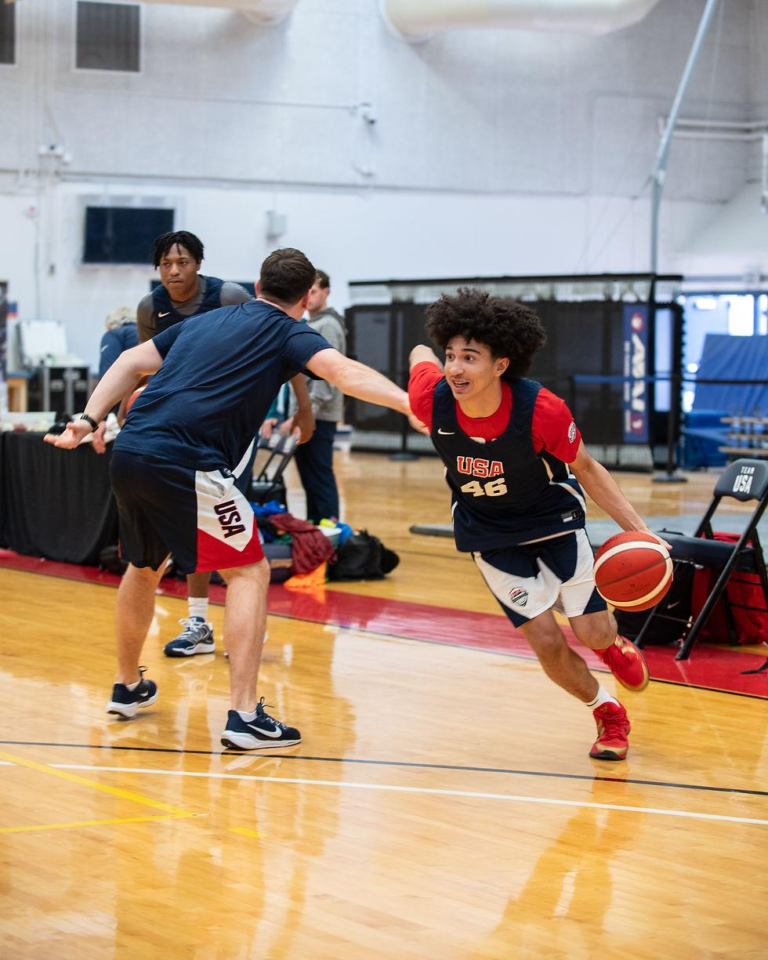
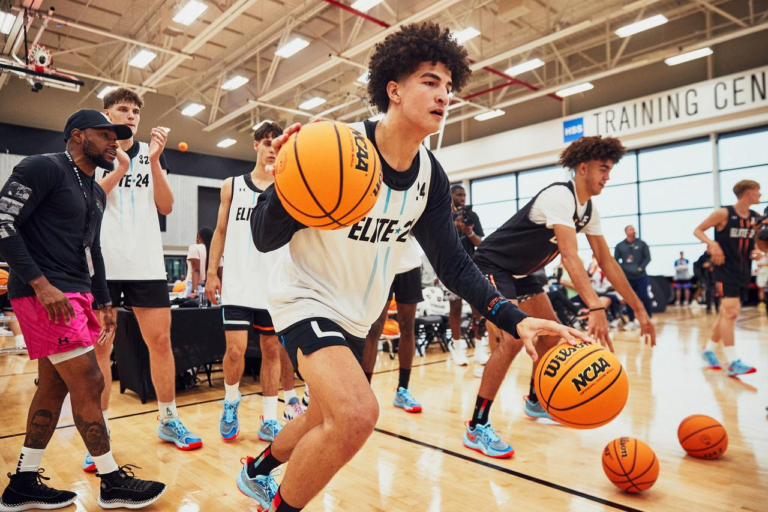
The effect reaches far beyond the pros. At the youth level, trainers and families increasingly prioritize all-around skill development over role-specific training. That can be positive when it means young players learn footwork, passing angles, finishing, and defensive movement regardless of size. It can be less helpful when every 12-year-old center is told to “play like a guard” without first mastering screening, rebounding, defensive positioning, or touch around the basket.
The better takeaway is not that every player should imitate an NBA star. It is that the modern game rewards versatility more than ever. The most successful development environments now teach players to read advantage, play in space, and contribute in multiple phases of a possession rather than specialize too early into narrow identities.
2) Three-point math still matters, but the next edge is decision-making under pressure
The “basketball has become all threes and layups” conversation is familiar by now, and there is truth in it. Shot profile optimization has changed how teams hunt efficient offense. Coaches at nearly every level are more conscious of corner threes, rim attempts, free-throw rate, and transition opportunities than they were a decade ago.
But the more interesting trend is what comes after the shot chart. The next competitive edge is not merely taking more threes. It is creating better decisions before the shot ever happens.
That means teaching players to process weak-side help, understand when a closeout is actually an advantage, recognize second-side actions, and make quick reads without over-dribbling. The most sophisticated teams are not simply “analytics teams.” They are decision-speed teams. They use spacing and data to simplify reads, then rely on players who can execute them in real time.
You can see this in the language coaches use. More youth and college programs talk about paint touches, advantage creation, expected shot quality, and possession value. Video platforms and lower-cost analytics tools have made that language more accessible beyond the NBA. Even high school staffs now use shot charts, lineup combinations, and possession breakdowns in ways that once would have been reserved for professional organizations.
For players and parents, this matters because basketball IQ is no longer a vague compliment. It is increasingly measurable through film, decision consistency, turnover profile, defensive rotations, and the ability to create quality looks without monopolizing the ball.
3) Women’s basketball is no longer a niche growth story. It is a central business story in American sports.
One of the biggest shifts in basketball is that women’s basketball is no longer being discussed as a side category or future possibility. It is already a major audience and revenue story, and it is changing the broader basketball ecosystem in the process.
The WNBA has posted major audience and attendance gains in the past two seasons, and women’s college basketball has also sustained meaningful viewership momentum. Through nationally televised games in 2025, the WNBA averaged roughly 794,000 viewers across 56 games, up 21% from the prior season average according to Nielsen-reported figures cited by Yahoo Sports. ESPN and other outlets also reported that the 2025 season became the most-watched WNBA regular season in decades, with postseason numbers remaining strong. Industry reporting and market analysis have also pointed to attendance gains and increasing sponsor interest as the league expands its footprint.
This matters for more than headlines. It changes media negotiations, arena strategy, player compensation conversations, youth participation incentives, and sponsor behavior. It also changes what young athletes see as possible. A generation of girls and young women can now point to a more visible, more commercially valuable pathway in basketball than the one available even five years ago.
At the college level, the women’s game has also become a stronger television property rather than a seasonal novelty. That gives schools, conferences, and brands more reason to invest in scheduling, facilities, coaching support, and year-round storytelling.
The deeper trend is cultural and economic at once: women’s basketball is not just adding fans; it is broadening what the American basketball market looks like.
4) The NBA’s audience is being rebuilt through distribution, stars, and event packaging
There has been a tendency in recent years to talk about the NBA only through the lens of ratings anxiety. That misses the bigger picture. The league’s audience is being reconfigured rather than simply shrinking or growing in a straight line.
By spring 2026, the NBA reported that 170 million people in the U.S. had watched games across ABC/ESPN, Amazon Prime Video, NBC/Peacock, and NBA TV during the regular season, the most in 24 years and an 86% increase versus the previous season according to league-released figures covered by NBA.com and ESPN. The same reporting highlighted strong performance around Christmas games, the NBA Cup, and marquee rivalry windows.
That matters because it reflects a broader sports-media trend: basketball is increasingly an event-packaged, platform-flexible product. Viewership is no longer about one cable number alone. It is about whether the sport can succeed across broadcast television, streaming bundles, social clips, short-form highlights, betting-adjacent content, and star-driven narratives.
The NBA’s challenge is not only to maintain reach but to make regular-season basketball feel consequential in a crowded sports calendar. Its solution has been to lean into windows, rivalries, tournament-style events, player storytelling, and broader platform distribution. For fans, this means the experience of following basketball is more fragmented but also more accessible. A younger fan may watch live on streaming, follow clips on social platforms, listen to breakdowns on podcasts, and use betting or fantasy content as a secondary engagement layer.
That changes how teams market themselves and how media companies value rights. It also changes what “basketball fandom” looks like in practical terms. Watching every full game is no longer the only form of loyalty.
5) Youth basketball is facing a participation and access problem, not a passion problem
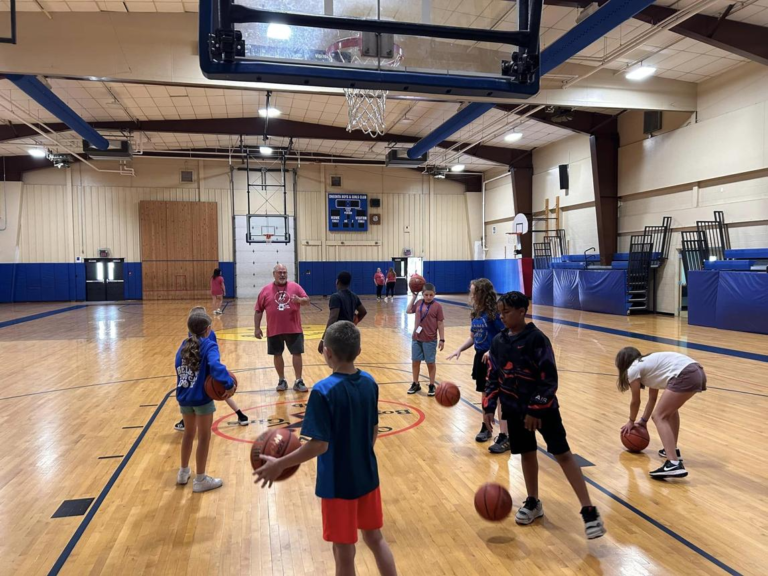
There is no shortage of American kids who love basketball. The problem is that the systems surrounding them can make sustained participation harder than it should be.
Project Play reported that in 2023, about 27.3 million U.S. children ages 6–17 participated in organized sports or sports lessons, representing 55.4% of kids, still below the long-term public-health goal of 63.3% by 2030. More specifically for basketball, the NFHS has documented long-run pressure in participation trends, including a significant decline in girls’ basketball participation since 2000. In a 2025 NFHS report, girls’ participation had fallen by at least 21% nationally over that period, from roughly 451,600 athletes to 356,240.
That decline does not mean basketball has become unpopular. It means the environment around participation has changed. Several forces are at work:
- Cost creep: Club fees, travel, private training, and showcase circuits can turn a relatively accessible sport into an expensive one.
- Time intensity: Year-round expectations make it harder for multi-sport athletes and families with limited time or transportation flexibility.
- Roster concentration: Stronger travel teams can pull top players away from local school and community ecosystems.
- Burnout and identity pressure: Young athletes are often asked to define their basketball future before they have built a healthy relationship with the game.
Parents often ask a practical question: Does my child need year-round basketball to stay competitive? For most young players, the answer is no. Consistent skill work, quality coaching, strength and movement development, and real game reps matter more than constant exposure. The healthiest long-term development plans usually include rest, some athletic diversity, and an age-appropriate balance between competition and fundamentals.
6) NIL has changed how families think about basketball development, even below college
Name, image, and likeness rules transformed college athletics, but the ripple effects in basketball extend well beyond the college campus. NIL has changed the psychology of the pipeline. Families, trainers, AAU programs, and even younger athletes now think differently about visibility, branding, school choice, social media, and recruiting timelines.
That does not mean every serious basketball family is chasing endorsement money. It means the economics of aspiration have changed. A high-level prospect’s decisions about tournaments, transfers, content creation, and college fit are now shaped by a market that can reward both performance and attention.
This has created opportunities, especially for players in women’s basketball and for athletes with strong personal brands. It has also created distortions. Some families now evaluate basketball environments less by development quality and more by exposure promises. Social media clips can begin to stand in for honest skill assessment. Programs may feel pressure to market themselves as gateways to recruitment rather than as places to learn the game well.
The smartest response is not to ignore NIL but to treat it as one factor rather than the whole strategy. For a serious player, the best questions are still basketball questions:
- Will this coach help me improve?
- Will I actually play meaningful minutes?
- Is the competition level appropriate for my development?
- Does the school or program have a credible track record of helping players grow?
If NIL becomes the first lens instead of the fourth or fifth, families can end up making short-term decisions that hurt long-term development.
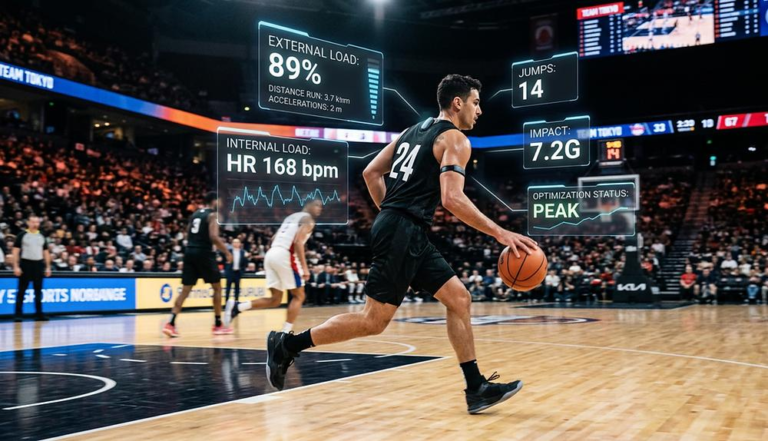
7) Data and film are no longer luxury tools. They are part of everyday basketball literacy.
Another quiet trend reshaping the game is the normalization of analytics and video review far below the professional level. Ten years ago, many youth and high school players encountered advanced breakdowns only if they were in elite programs. Now, coaches routinely use clips, shot charts, lineup data, and tagged possessions to teach decision-making and defensive habits.
This is one of the healthiest trends in basketball if it is used well. Good film study helps players see patterns they miss in real time. It shows where a late rotation began, why a screen angle failed, or how a rushed drive ignored a better pass. For coaches, it creates a clearer bridge between instruction and accountability.
But there is also a caution here. More data does not automatically produce better coaching. Young players do not need an NBA front-office vocabulary thrown at them after every game. They need clarity. The best staffs use data to simplify the game, not to overwhelm players with jargon.
A useful model for modern development looks something like this:
- Film for habits: show 4–6 clips that reinforce a teachable point, not 40 clips that blur together.
- Analytics for context: use shot selection, turnover rate, rebounding percentage, and defensive possessions to identify patterns.
- Skill work tied to game situations: if the film shows trouble against physical closeouts, the workout should include that decision under pressure.
- Communication that fits the player’s age: a middle-school guard and a college wing do not need the same language.
In practical terms, basketball is becoming more teachable and more explainable. That is good news for programs willing to invest in instruction rather than just exposure.
8) The grassroots basketball map is becoming more regional, more fragmented, and more commercial
AAU and grassroots basketball remain powerful engines in American player development, but the ecosystem is also more fragmented than many outsiders realize. Shoe-circuit teams, independent programs, school ball, prep schools, training businesses, and showcase events all compete for time, talent, and legitimacy.
For some players, that system creates opportunity. A prospect in a smaller market can get in front of college coaches through regional events and digital exposure in ways that were harder a generation ago. For others, it creates confusion and financial strain. Families are often forced to evaluate competing claims from programs that all promise visibility, competition, and recruitment support.
What parents increasingly need is not just access but discernment. A quality basketball environment is not defined by the loudest branding or the most social media graphics. It is defined by whether the player is improving, competing in the right role, staying healthy, and being coached honestly.
That is why one of the most important trends in grassroots basketball is the rise of more informed consumer behavior. Families are asking tougher questions about schedule load, injury management, coach-player ratios, college placement history, and the actual value of expensive tournament travel. That skepticism is healthy. Basketball development is too important and too expensive to run on vague promises.
9) Basketball culture is increasingly built around women’s stars, creator media, and community identity
American basketball culture is also changing in who drives attention. The traditional model centered almost entirely on NBA stars and men’s college blue bloods. That still matters, but it is no longer the full picture.
Women’s college stars and WNBA players now move culture in more visible ways, from apparel and social engagement to ticket demand and youth identification. Creator-led basketball media, independent film breakdown channels, player podcasts, and team-specific digital communities have also become part of the sport’s infrastructure. Fans do not only consume basketball through national broadcasts anymore. They consume it through analysis clips, personality-driven commentary, and community-driven conversation.
This has two consequences. First, basketball storytelling is broader than it used to be. A fan can follow tactical breakdowns, salary-cap analysis, recruiting news, sneaker culture, and women’s basketball all in the same ecosystem. Second, reputation now travels faster. A coach, player, or program can build a strong following through smart digital storytelling, but poor decisions and empty hype also get exposed more quickly.
For the sport, that is mostly healthy. It makes basketball more participatory and less dependent on a few gatekeepers. It also raises the standard for authenticity. Fans have more ways to verify whether a story around a team or player actually holds up.
10) The most important basketball question in America is no longer “Where is the game going?” It’s “Who gets to go with it?”
When people ask where basketball is headed, they often mean strategy or business. Will teams keep taking more threes? Will the WNBA add more franchises? Will streaming change the regular season? Those questions matter, but the bigger one is about inclusion and infrastructure.
Who gets access to quality coaching without paying elite travel costs? Who gets seen if they are not attached to a major grassroots brand? Who stays in the sport long enough to benefit from the women’s basketball boom? Which high schools can still sustain meaningful local programs? Which communities are building safe, affordable, year-round places to play?
Basketball’s future in America will not be determined only by the NBA’s media package or by the next viral prospect. It will be determined by whether the sport can balance excellence with access, commercialization with development, and visibility with actual opportunity.
That is why the most meaningful basketball trends right now are “quiet” only if you are looking at highlights alone. Underneath the daily noise, the game is being rebuilt through coaching choices, media rights, youth economics, women’s sports growth, and the decisions families make every weekend in gyms across the country.
FAQ: What Americans Are Asking About Basketball Trends Right Now
1) Is basketball still growing in America?
Yes, but growth is uneven. The NBA continues to draw huge national reach, and women’s basketball has posted major gains in viewership and attendance. At the same time, youth participation faces pressure from cost, burnout, and access barriers rather than a lack of interest.
2) Why does modern basketball look so different from 15 years ago?
The biggest reasons are spacing, three-point efficiency, positionless lineups, and faster decision-making. Teams now prioritize players who can handle, pass, defend, and shoot across multiple roles rather than fit one rigid position.
3) Is women’s basketball really becoming a major business force?
Yes. Recent WNBA and women’s college basketball audience growth has changed sponsorship, media, and attendance conversations in a serious way. The shift is no longer theoretical; it is affecting rights deals, expansion, and player visibility now.
4) Does my child need to play AAU basketball to reach college basketball?
Not always. AAU can provide competition and exposure, but the right fit matters more than simply joining a travel program. Skill development, health, coach quality, and role fit are often more important than constant tournament volume.
5) Has NIL changed youth basketball?
Indirectly, yes. NIL has influenced how families think about recruiting, visibility, social media, and long-term basketball value. It has not replaced player development, but it has changed the incentives around exposure and branding.
6) Is basketball becoming too dependent on analytics?
Analytics are most useful when they clarify the game rather than complicate it. Good programs use data to improve shot selection, lineup decisions, and player development. Bad use of analytics usually comes from overloading players with information that does not help them perform.
7) Why is girls’ basketball participation under pressure in some areas?
The issue is usually structural, not cultural. Cost, school size, year-round sports demands, and roster pipeline challenges can all affect participation. The growth in women’s basketball viewership does not automatically solve local participation barriers.
8) Are NBA ratings up or down?
The answer depends on the season, platform, and metric. Traditional television narratives often miss the broader picture. The NBA’s recent audience performance has been shaped by streaming distribution, event packaging, and cross-platform reach rather than one single ratings number.
9) What should parents look for in a basketball program?
Look for honest coaching, appropriate competition level, skill development structure, playing opportunity, and a sustainable schedule. A strong program should improve the player’s game and experience, not just promise exposure.
10) What trend will matter most over the next five years?
The most consequential trend may be whether basketball can expand opportunity while becoming more commercial. The leagues can grow, but the sport’s long-term health will depend on whether youth players, school programs, and women’s pathways grow with them.
About the Author