USA Basketball is no longer just the organization behind Olympic gold medals. It has become a powerful influence on how American players are developed, how coaches are trained, how youth basketball is structured, and how the sport’s future talent pipeline is evaluated. From grassroots standards to elite international competition, its decisions increasingly shape what the next era of American basketball looks like.
Why USA Basketball matters far beyond the Olympics
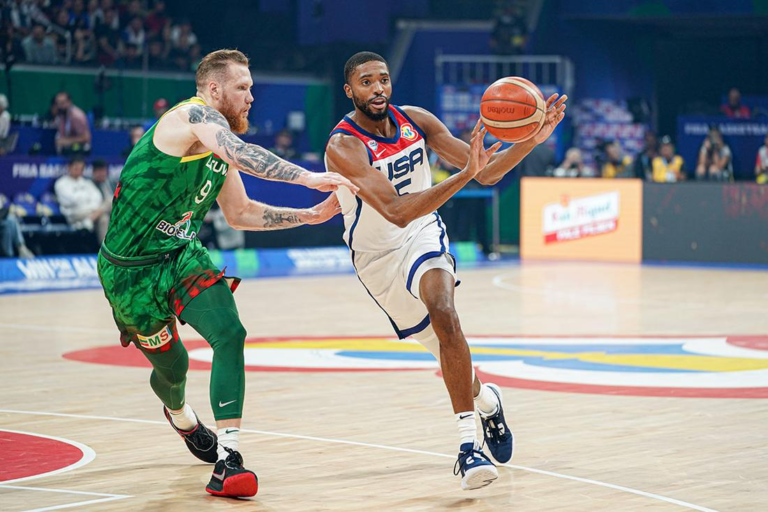
When many fans hear “USA Basketball,” they think of the senior men’s and women’s national teams: Olympic runs, FIBA World Cups, and rosters packed with NBA and WNBA stars. That picture is accurate, but incomplete. In practice, USA Basketball functions as something larger: a national development system, a coaching-education platform, a youth competition organizer, a standards-setting body, and an important bridge between grassroots basketball and the highest levels of the sport.
That matters because the future of American hoops is being shaped by more than what happens in the NBA Finals or at March Madness. It is being shaped by who gets identified early, what kind of coaching young players receive, how often prospects face international styles of play, how 3×3 and women’s pathways are supported, and whether basketball remains accessible to families at all income levels.
USA Basketball sits in the middle of those questions. Its role is not absolute—AAU circuits, high school programs, NCAA teams, club organizations, private trainers, the NBA, the WNBA, shoe-company events, and local rec leagues all have major influence—but USA Basketball is one of the few organizations with visibility across nearly the entire ecosystem. That makes it a useful lens for understanding where American basketball is heading next.
The biggest shift: USA Basketball now influences the pipeline, not just the podium
The clearest way to understand USA Basketball’s modern importance is to stop viewing it as a tournament-only brand and start viewing it as a pipeline institution.
Historically, Team USA’s public image was tied to international results. Did the men win Olympic gold? Did the women continue their dominance? Which NBA stars committed? Those questions still matter, but they no longer tell the whole story. USA Basketball’s influence now extends much further down the ladder, especially through youth national teams, minicamps, coaching programs, development standards, and the broader junior national team ecosystem.
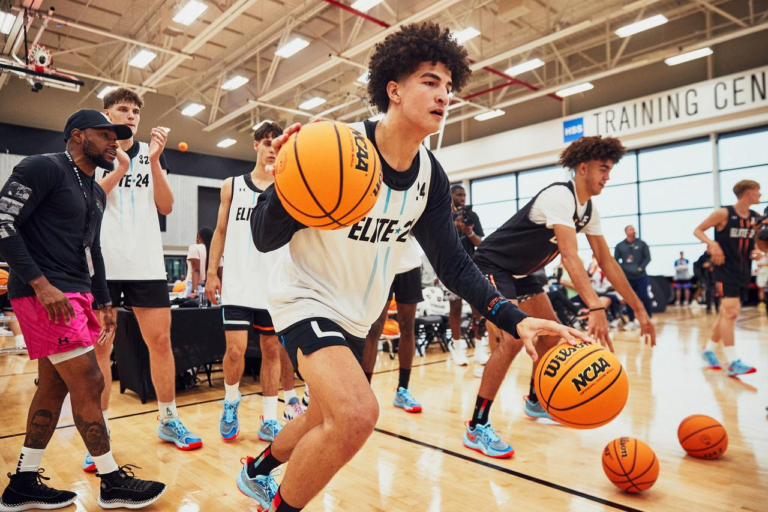
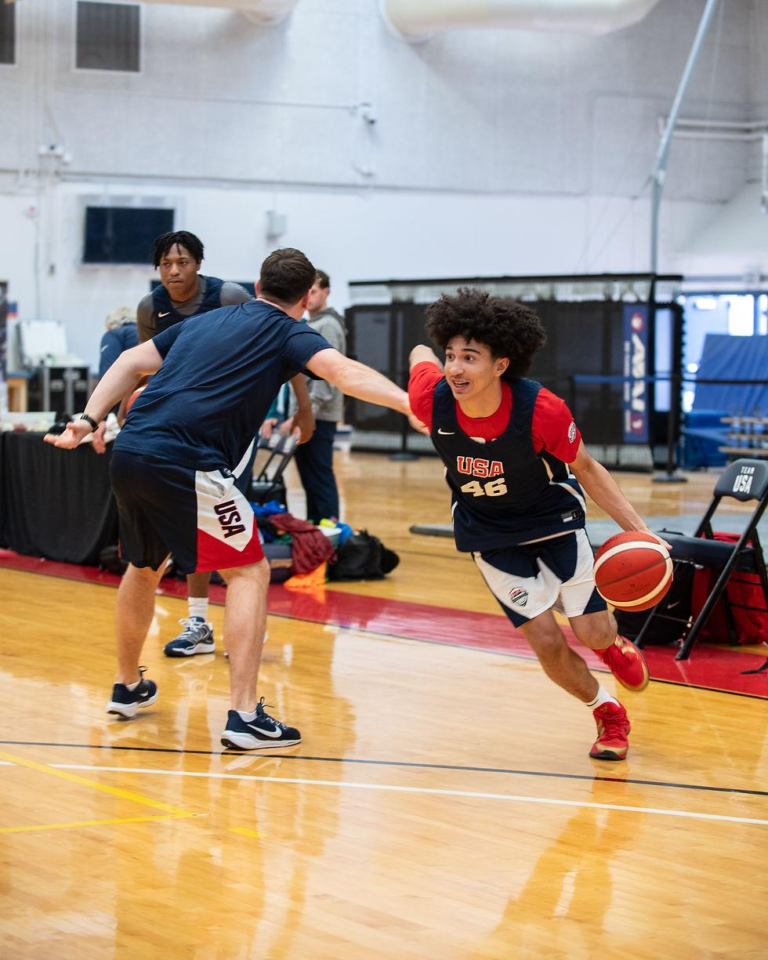
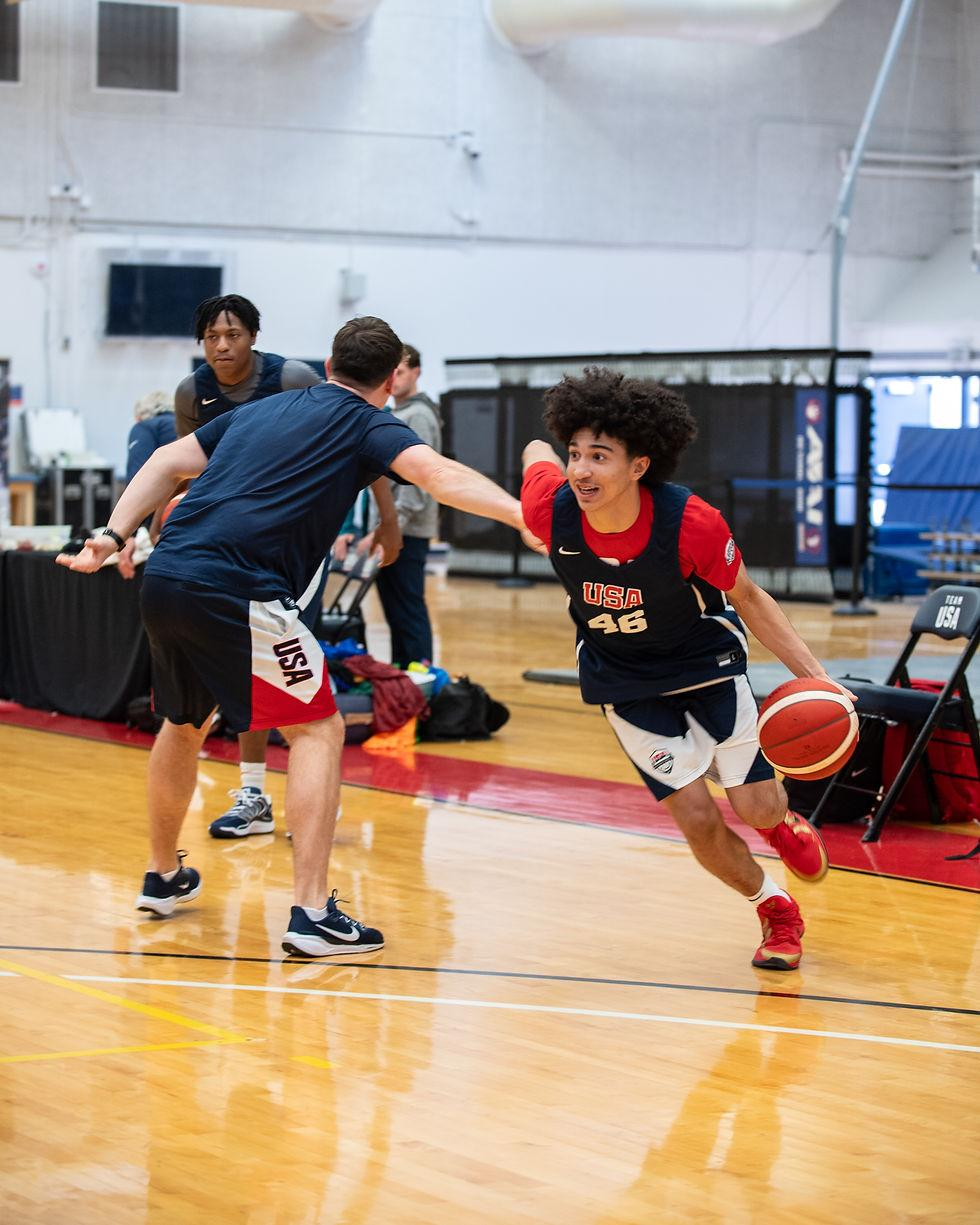
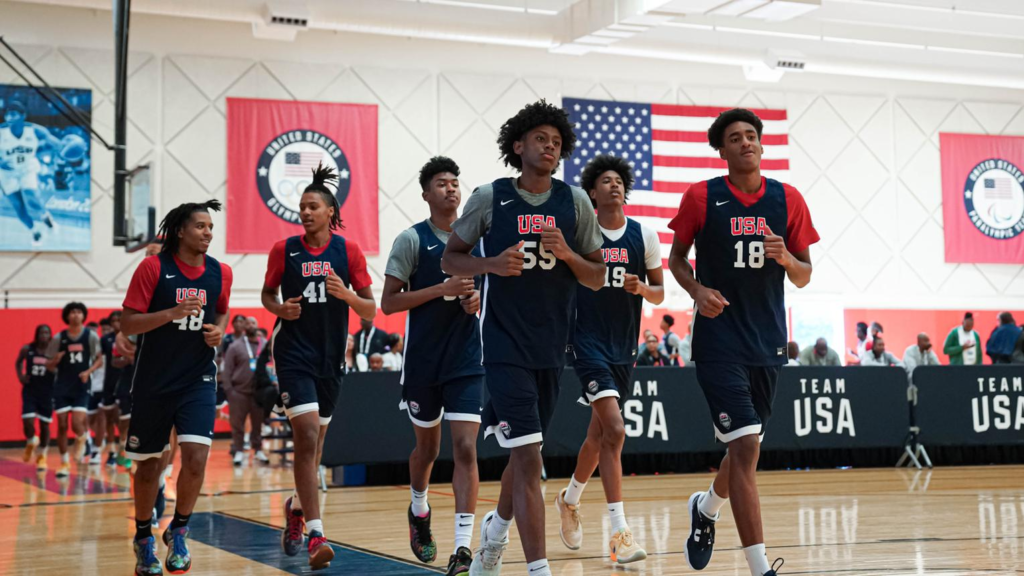
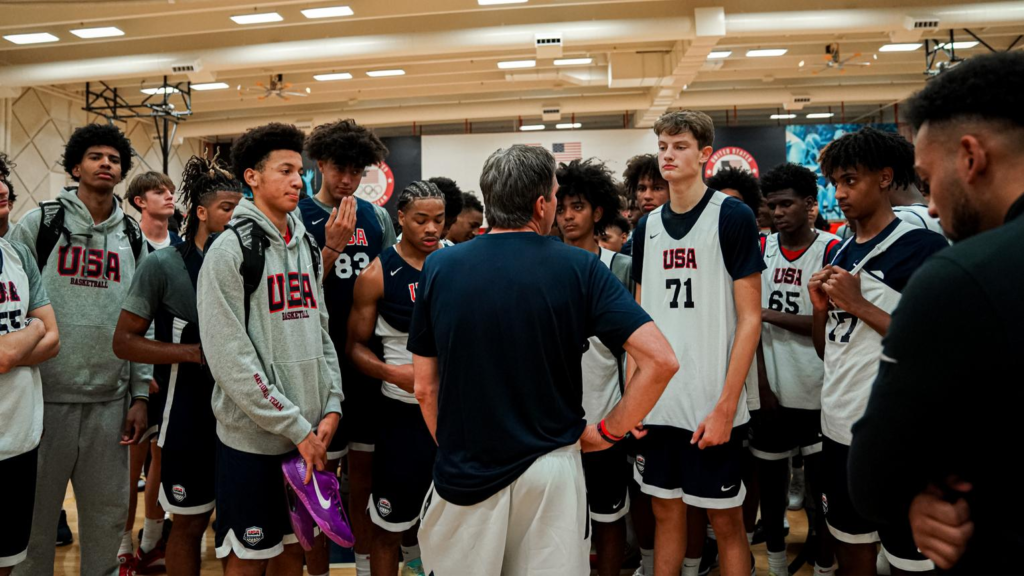
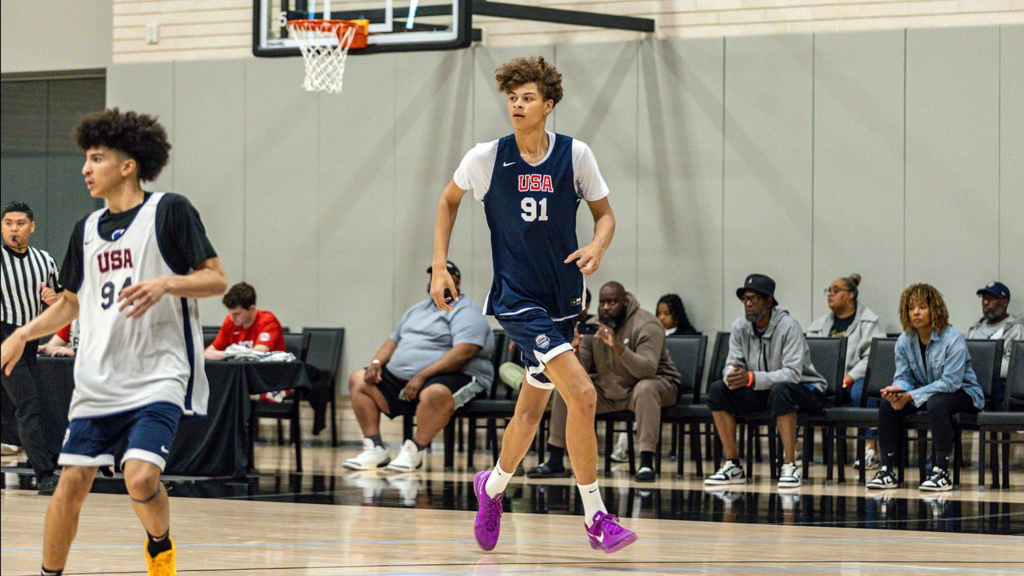
In 2026, for example, USA Basketball announced a 35-player men’s U18 national team training camp, one more example of how the organization continues to gather top high-school-age talent into a centralized evaluation and development environment. The point of these camps is not just to choose a roster for a specific tournament. It is also to expose elite prospects to international rules, team concepts, defensive expectations, and a level of scouting and accountability that differs from the normal grassroots circuit.
That pipeline function matters because the modern American prospect is developing in a far more fragmented environment than previous generations. A top teenager may move among high school ball, AAU tournaments, private skills training, NIL-related obligations, national showcases, and social-media-driven exposure cycles. USA Basketball offers one of the few settings where those players are asked to operate inside a more traditional national-team structure: role clarity, short preparation windows, less isolation basketball, and more tactical discipline.
For elite players, that experience can be formative. For the broader basketball system, it helps establish what kinds of skills and habits still translate when the game gets more physical, more tactical, and less centered on personal branding.
What USA Basketball is teaching young players that the domestic system sometimes doesn’t
One of the most important questions parents, coaches, and fans ask is simple: What does a player actually gain from the USA Basketball environment? The answer is not only prestige. It is often basketball education.
International basketball tends to expose weaknesses that can stay hidden in domestic youth settings. The floor can feel tighter. Defenses rotate earlier. Teams punish careless ball movement. Physicality is different. Help defense is often sharper. Off-ball cutting matters more. Decision-making under time pressure matters more. Players who are used to dominating with athleticism alone often discover that they need better screening angles, cleaner reads, more disciplined closeouts, and a stronger feel for pace.
That is one reason USA Basketball experience is often valued by NBA and college evaluators. It offers a more compressed, more demanding version of team basketball than many showcase environments provide.
Several developmental habits tend to get reinforced in that setting:
- Playing without the ball rather than waiting to create every possession off the dribble
- Defending within a scheme instead of freelancing for steals or blocks
- Making quicker decisions against organized help defense
- Accepting smaller roles on talented rosters
- Competing under scouting pressure against top peers and international opponents
- Adjusting to FIBA officiating and spacing rather than assuming NBA-style whistle patterns
Those lessons matter because the next era of American hoops will likely demand more complete players, not just more skilled scorers. The NBA’s current style rewards versatility, but it also punishes weak processing speed, poor defensive discipline, and one-dimensional offensive games. USA Basketball’s best developmental contribution may be that it exposes young Americans to those realities earlier.
Coaching may be the most underrated part of USA Basketball’s influence
It is easy to focus on players because they are the visible part of the system. But if the question is how USA Basketball shapes the next era of hoops, coaching may be the more consequential answer.
The organization has spent years building out its coaching-education infrastructure through its Coach License program, coach academies, and youth-development resources. The USA Basketball Coach License is not just an administrative credential; it is part of a broader attempt to create shared standards around safety, ethics, age-appropriate teaching, and basketball instruction. USA Basketball also continues to run Coach Academies around the country, expanding direct education opportunities for coaches working at different levels of the game.
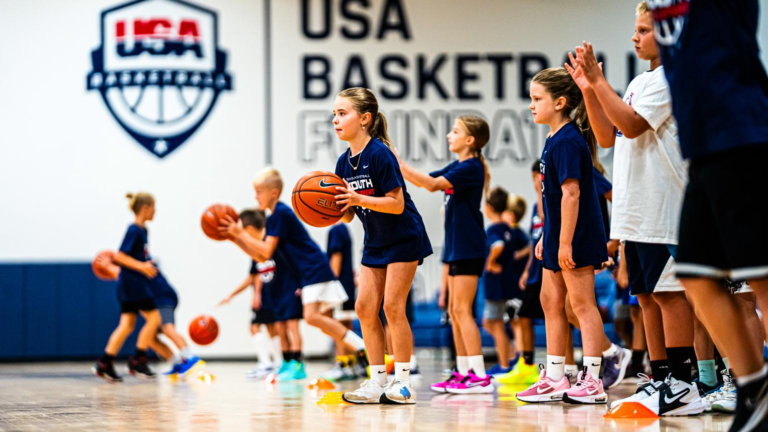
Why does that matter so much? Because the quality of the next generation of players depends heavily on the quality of the adults teaching them between ages 8 and 17. That is where shooting habits form, decision-making habits form, injury risks rise or fall, and burnout either accelerates or gets avoided.
In the United States, basketball coaching quality is inconsistent. Some players learn from outstanding teachers with a long-term developmental mindset. Others spend years in environments that prioritize wins, highlights, or tournament volume over skill progression and physical health. USA Basketball cannot solve that entire problem on its own, but it can influence the baseline by offering a common framework for coach education.
Its coaching resources increasingly emphasize principles that are especially relevant to the sport’s future:
- age-appropriate training instead of treating every child like a miniature pro
- long-term athlete development rather than early specialization alone
- safer practice structures and better conduct expectations
- teaching concepts, spacing, and decision-making, not just drills
- balancing competition with retention, enjoyment, and sustainable growth
That last point deserves more attention than it gets. American basketball’s future is not only about producing the next All-NBA wing. It is also about whether enough kids stay in the sport long enough to become high-level high school players, college contributors, informed fans, and future coaches themselves.
Youth participation, access, and the real battle for basketball’s future
If USA Basketball wants to shape the next era of American hoops, it cannot think only about elite talent. It also has to care about the base of the pyramid.
That is where the broader youth sports landscape becomes important. According to Project Play, 55.4% of U.S. kids ages 6–17 participated in organized sports in 2023, representing 27.3 million children. Morning Consult has also reported that basketball remains the most popular youth sport in the country, with roughly 29% of children playing it at some point between August 2024 and August 2025.
Those numbers are encouraging in one sense: basketball remains deeply embedded in American life. But they also raise a harder question. If basketball is so popular, why do so many families still struggle with cost, travel, access to quality coaching, and pressure to specialize early?
This is where USA Basketball’s influence could become even more important over the next decade. The organization is well positioned to push a version of the sport that is more development-focused and less distorted by the commercial excesses of the youth sports economy.
Some of the practical issues shaping the future of youth hoops include:
- rising travel and tournament costs for families
- uneven access to qualified coaches and safe gyms
- pressure to play year-round with limited rest
- confusion around the role of AAU, school ball, camps, and private training
- growing NIL-related anxiety filtering down into high school recruiting conversations
- disparities between affluent suburban pathways and under-resourced urban or rural programs
USA Basketball does not control all of those pressures, but it can influence the norms around them. When a national governing body emphasizes coach education, youth guidelines, and development standards, it helps counter the idea that basketball success depends only on chasing exposure at every possible event.
USA Basketball is also helping redefine what “elite” means
For years, American basketball culture has often equated elite status with a familiar formula: high scoring totals, highlight plays, top recruiting rankings, and eventually NBA or major-conference projection. That formula still matters, but it is less complete than it once was.
The modern game is asking different questions. Can a 6-foot-6 wing defend three positions? Can a guard play on and off the ball? Can a big make quick reads from the elbow? Can a player scale down usage and still impact winning? Can they handle international physicality, short preparation windows, and roster role changes?
USA Basketball has become one of the places where those questions are tested early. A player who dominates in a high-volume domestic role may have to become a connector, stopper, or secondary creator in a USA Basketball setting. That is valuable because it reveals traits that matter in college, the NBA, the WNBA, and FIBA play.
It also broadens the definition of basketball success. The next era of American hoops will not be built only by heliocentric stars. It will be built by versatile role players, elite defenders, movement shooters, playmaking forwards, adaptable bigs, and guards who can process the game at speed. USA Basketball environments can surface those archetypes earlier than traditional box-score culture often does.
The women’s side may be one of the clearest examples of long-term planning
If you want a model for how sustained player development can reinforce a national program, the women’s side of USA Basketball offers a strong example.
The U.S. women’s national team has maintained extraordinary international success over multiple generations, but that continuity does not happen by accident. It depends on repeated youth-team experience, careful succession planning, and a development culture that introduces players to USA Basketball long before they reach the senior level. Reports around the women’s senior camp cycle have highlighted how emerging stars such as Paige Bueckers moved into the senior-team orbit after years of youth national team experience, giving the program continuity rather than abrupt transition.
That matters for the broader future of hoops in at least three ways.
First, it reinforces the value of a true national-team ladder rather than a one-off selection process. Second, it keeps women’s basketball visible within the American talent conversation rather than treating it as a side product of the men’s game. Third, it offers a roadmap for how development, identity, and winning culture can be connected over time.
As women’s basketball continues to grow commercially and culturally in the United States, USA Basketball’s role in sustaining that talent pipeline could become even more consequential.
Why 3×3 basketball and alternative pathways deserve more attention
The next era of American hoops will not be defined solely by the 5-on-5 NBA-to-Olympics path. It will also include 3×3, overseas development routes, post-college alternatives, and new ways for players—especially women—to stay visible and competitive.
That is one reason USA Basketball’s 3×3 involvement matters. The growth of U.S.-based 3×3 opportunities has created another competitive lane for players who may not fit neatly into a traditional WNBA or NBA development path. Coverage of leagues such as 3XBA has framed 3×3 as both a professional opportunity and an Olympic pathway, especially for women trying to remain in the national-team ecosystem.
This matters strategically because American basketball is too deep, and too commercially layered, to rely on one narrow development route. A healthier system offers multiple ways to stay in the game:
- high school to college to pro
- youth national teams to senior national-team consideration
- 5-on-5 and 3×3 specialization
- domestic and international professional opportunities
- coaching, officiating, and player-development careers after playing
The more USA Basketball supports those branches, the more resilient the sport’s future becomes.
What this means for NBA and college basketball in the next decade
So how does all of this translate to the game fans watch every week?
At the NBA level, expect the imprint of USA Basketball to show up less in slogans and more in player habits. Players who have spent years in youth national-team settings often arrive with more exposure to structured team defense, more comfort in role adaptation, and a stronger sense of what high-level international competition demands. That does not guarantee NBA success, but it can accelerate readiness.
At the college level, the effect may be even more visible. Coaches increasingly want prospects who can play within systems, defend multiple actions, and process quickly rather than simply dominate the ball. USA Basketball experience can help identify those players because it places them in smaller-margin environments where basketball IQ becomes more obvious.
And at the cultural level, USA Basketball may help push the sport back toward a healthier balance between individual ambition and collective play. American basketball will always celebrate stars. It should. But the next era of the sport may depend just as much on whether the system produces adaptable, durable, well-taught players who can thrive in different contexts.
Where USA Basketball still faces real challenges
A balanced analysis also has to acknowledge the limits of USA Basketball’s reach.
The organization is influential, but it is not all-powerful. It does not control the youth tournament economy. It cannot single-handedly solve access inequities. It cannot prevent overuse injuries, fix every bad coaching environment, or eliminate the pressure families feel around recruiting. In men’s basketball especially, the top end of the talent system remains shaped by many competing institutions, from shoe circuits to prep schools to private trainers to NIL-era college incentives.
There is also a perception challenge. For casual fans, USA Basketball still often appears only during Olympic cycles. For many families and coaches, its developmental role is less visible than its star-driven brand. If USA Basketball wants to shape the next era of American hoops more fully, part of the job is communication: making its coaching tools, youth standards, and development philosophy easier for ordinary basketball families to find and trust.
That may be one of the most important tasks ahead. The best long-term basketball systems do not simply identify talent; they make good information travel.
The real legacy question for the next era of hoops
In the end, the most important question is not whether USA Basketball keeps winning medals. It is whether it helps improve the quality, accessibility, intelligence, and sustainability of American basketball as a whole.
If it succeeds, its legacy will look bigger than banners. It will look like better-trained youth coaches. It will look like more players staying in the sport longer. It will look like teenage stars learning how to win without monopolizing the ball. It will look like women’s basketball pathways becoming stronger, 3×3 becoming more legitimate, and elite development becoming a little less chaotic and a little more coherent.
That is the deeper story of USA Basketball right now. It is not merely representing American hoops. In increasingly practical ways, it is helping define what American hoops becomes next.
What to watch as the next generation arrives
For parents, coaches, players, and fans, the smartest way to follow USA Basketball is not only to watch the Olympic roster announcement. It is to watch the system underneath it.
Pay attention to who gets invited to youth camps, how those players are used, which coaches are shaping the environment, how women’s and 3×3 pathways are supported, and whether developmental messaging reaches the local level. Those are the quieter signals that reveal where the sport is heading.
If the next era of American basketball becomes more skilled, more versatile, more tactically mature, and more sustainable for young athletes, USA Basketball will deserve part of the credit—not because it acted alone, but because it helped align a sprawling sport around better habits.
FAQ: What people are asking about USA Basketball and the future of hoops
1) What does USA Basketball actually do besides field Olympic teams?
USA Basketball is the national governing body for basketball in the United States. In addition to senior national teams, it oversees youth national teams, coaching education, youth development initiatives, some national events, and pathways connected to FIBA competition and Olympic participation.
2) How does USA Basketball help young players develop?
It gives selected players exposure to elite camps, international competition, team-based systems, and coaching environments that emphasize decision-making, defense, adaptability, and role acceptance rather than just individual scoring.
3) Is USA Basketball only for elite prospects?
Its national teams are highly selective, but its broader impact reaches further through coaching resources, youth-development standards, licensing, academies, and educational materials that affect players and coaches outside the national-team pool.
4) Why do college and NBA scouts value USA Basketball experience?
Because it can reveal how a player functions in a structured, high-talent environment against top competition. Scouts often learn more about a prospect’s decision-making, defensive discipline, and ability to play a role in those settings.
5) How important is USA Basketball for women’s basketball?
Very important. It helps create continuity between youth national teams and the senior women’s program, supports long-term player development, and reinforces a high-level competitive pathway that has contributed to sustained international success.
6) What is the USA Basketball Coach License?
It is a coach education and credentialing program that includes standards around conduct, education, and safety. It is part of USA Basketball’s effort to improve coaching quality and establish development-focused norms across the sport.
7) Does USA Basketball influence the NBA style of play?
Indirectly, yes. It helps shape the development of prospects who later enter college and pro systems, especially by emphasizing versatility, team concepts, international adaptability, and more complete skill sets.
8) How is USA Basketball connected to 3×3 basketball?
USA Basketball supports U.S. participation in 3×3 international competition and helps maintain pathways for players interested in that format, including Olympic opportunities and alternative professional development routes.
9) Can USA Basketball solve the problems in youth basketball?
No single organization can. But USA Basketball can improve coaching standards, promote healthier development models, support more inclusive pathways, and push back against some of the worst incentives in the youth sports marketplace.
10) What should parents and coaches pay attention to most?
Focus on development quality over branding: coaching, skill progression, physical health, decision-making, role adaptability, and whether a player is actually learning how to play winning basketball over time.
About the Author