USA Basketball is doing more than selecting national teams for international tournaments. It is increasingly acting as a connector between youth development, college basketball, pro readiness, women’s basketball growth, 3×3 expansion, and modern coaching standards. Its camps, coaching curriculum, and national-team pipeline are helping define how American players are trained, evaluated, and prepared for a game that is now faster, more global, and more interconnected than at any point in recent memory.
Why USA Basketball Matters More Than Ever
For many fans, USA Basketball is easiest to think about during the Olympics: a star-heavy men’s roster, a dominant women’s program, and the pressure of international expectations. But that view misses the organization’s larger role in American basketball.
USA Basketball sits at a crossroads. It governs the U.S. national teams that compete in FIBA and Olympic events, but it also influences youth coaching, player development standards, age-group national team selection, 3×3 development, and the transition from grassroots basketball to elite competition. On paper, that sounds administrative. In practice, it has become one of the clearest windows into where American basketball is heading next.
That matters because the sport’s development model in the United States is changing quickly. High-level prospects now grow up in a world shaped by NIL, transfer portal movement, specialized trainers, social-media visibility, year-round competition, and increasingly professionalized girls’ and boys’ youth circuits. In that environment, one of the hardest questions for families, coaches, and even college staffs is no longer simply “Who has talent?” It is “Which environments actually prepare players to succeed at the next level?”
USA Basketball’s answer has been to build a more deliberate system around long-term development, international-style play, coaching education, and national-team evaluation. The organization’s player development curriculum is built around age-appropriate skill development and long-term athlete development principles, while its youth guidelines—developed with the NBA—promote healthier competition structures and training priorities for younger players. Its broader youth initiatives also include coach licensing, regional camps, clinics, and development programming rather than only elite national-team selection.
The Big Shift: USA Basketball Is Becoming a Development System, Not Just a Team Selector
One of the most important changes in American hoops is that USA Basketball is no longer just a finishing-school brand for already famous prospects. It is increasingly functioning as a development system that helps shape players before they become college stars, lottery picks, or Olympians.
That shift shows up in several ways:
- Expanded junior national team camps and trials that bring together many of the top teenage players in the country
- A more visible player development curriculum tied to skill progression rather than only exposure
- A growing emphasis on women’s basketball, including youth identification and senior national team succession planning
- Stronger integration of 3×3 as a meaningful development and Olympic pathway
- A coaching and standards framework that can influence basketball environments beyond the national team
This is a subtle but important difference. In an older model, the national team often felt like a reward for being one of the best players in your class. In the newer model, the USA Basketball experience itself is part of how players learn to become more complete.
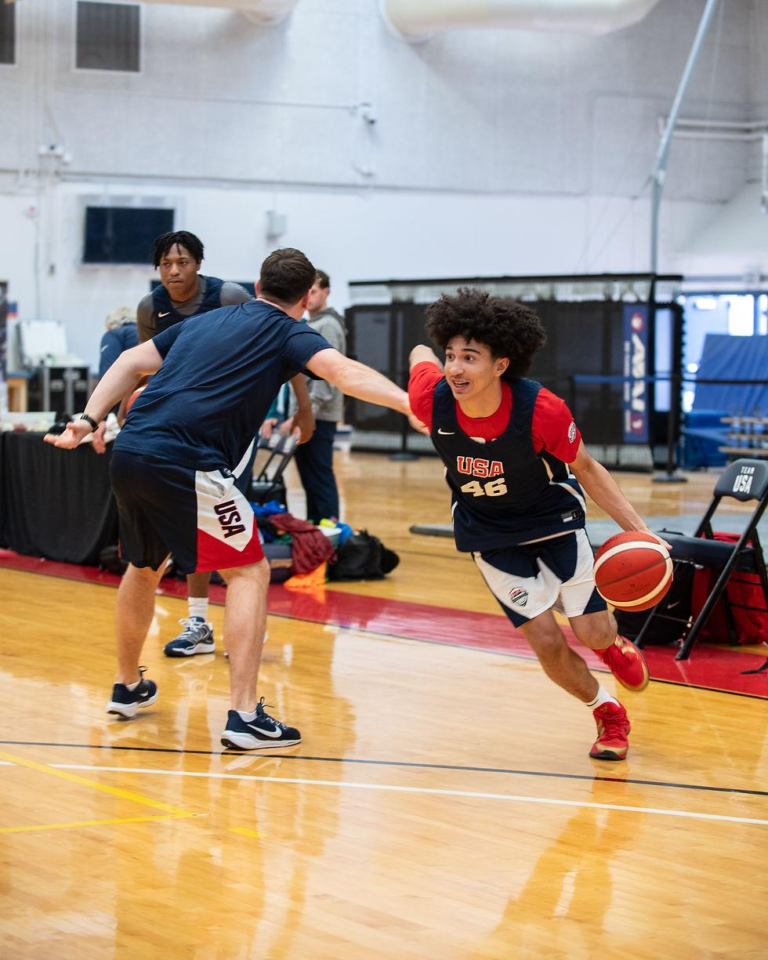
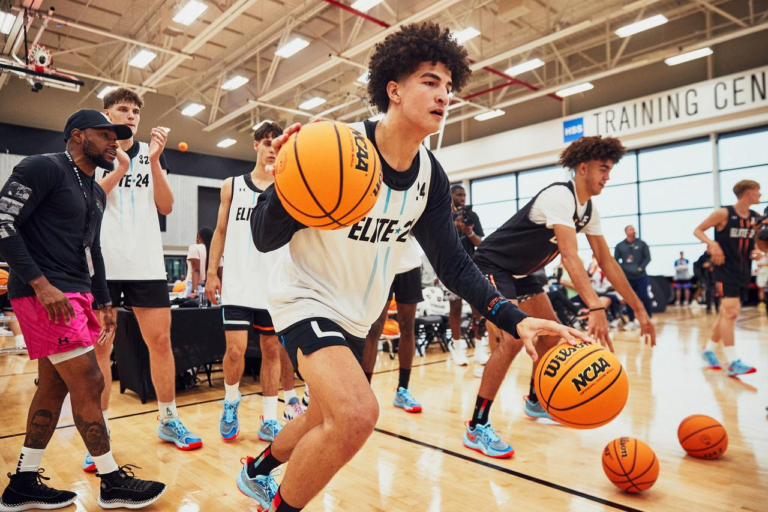
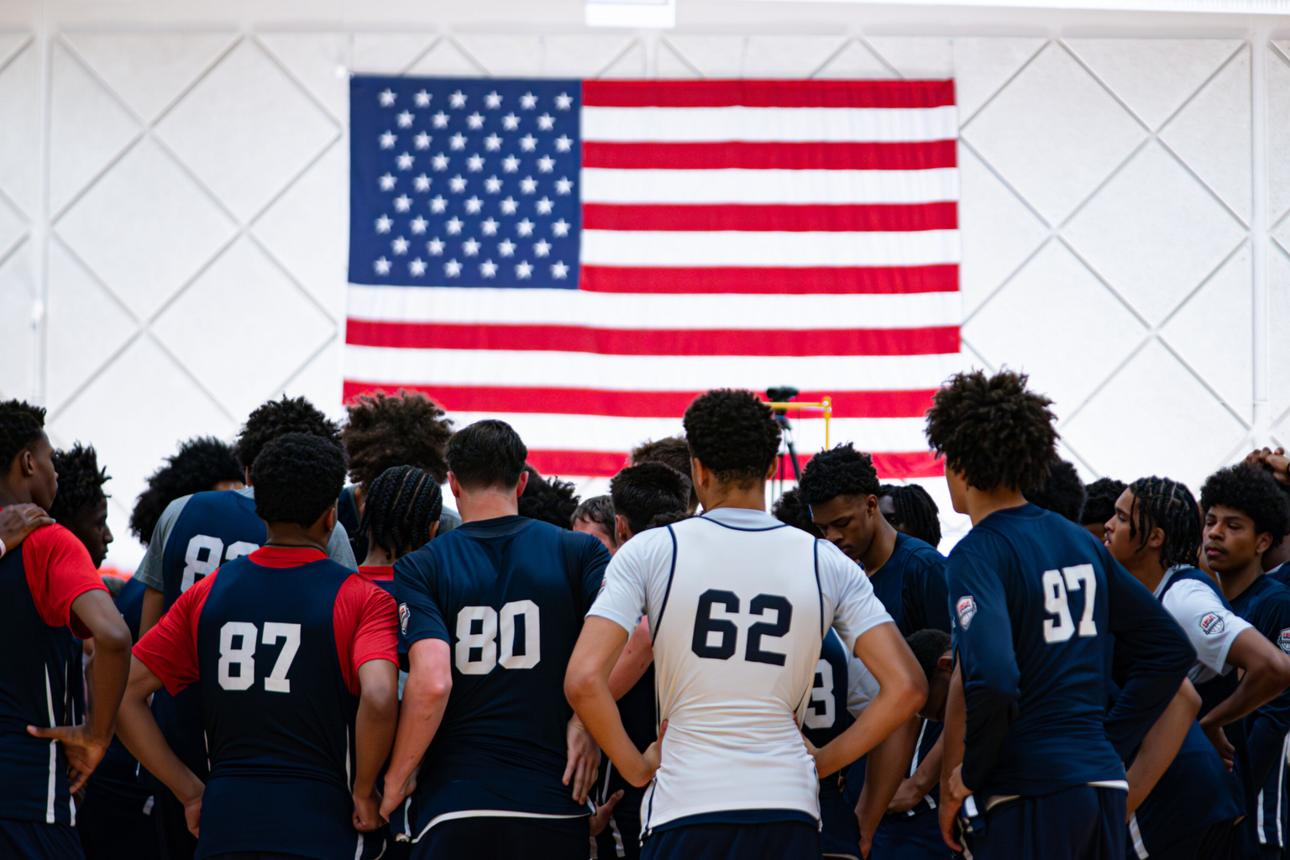
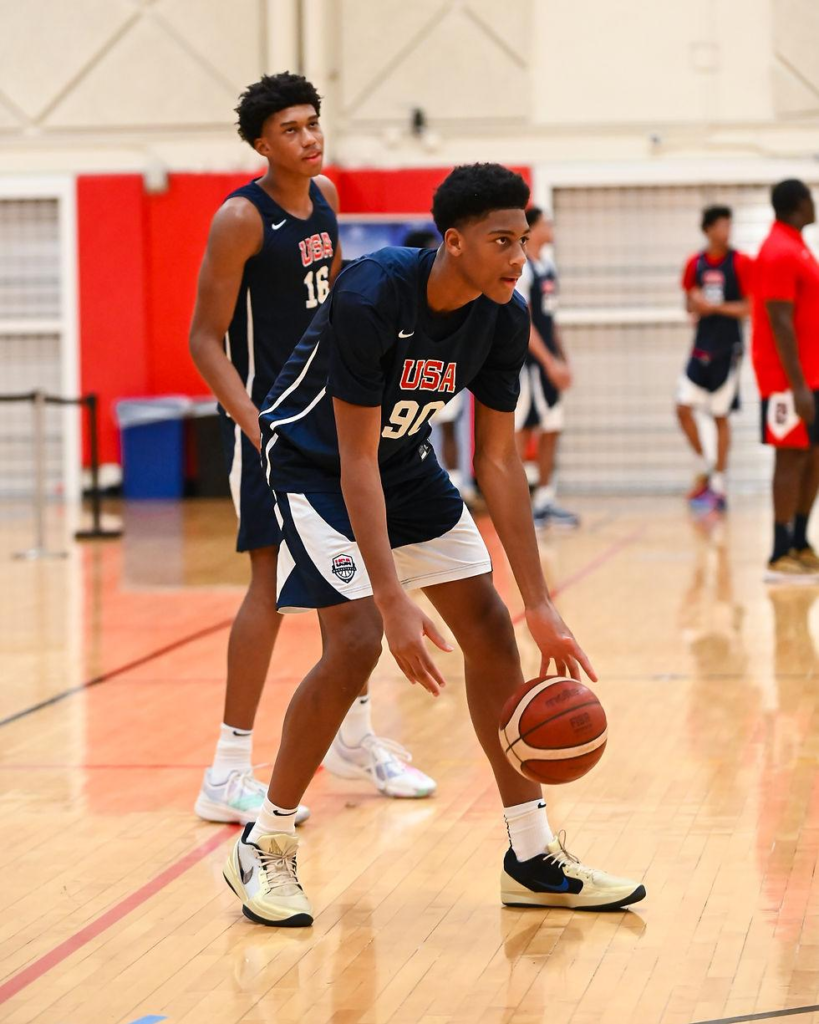
The organization’s 2026 men’s and women’s youth announcements illustrate the scale of that pipeline. USA Basketball announced 35 athletes for its 2026 men’s U18 national team training camp and 46 athletes for its 2026 women’s U17 national team trials, both drawing from elite high school talent pools around the country. Those rosters matter not just because they identify future stars, but because they create a concentrated environment where prospects are evaluated under FIBA rules, coached by high-level staffs, and tested against peers who are also expected to play at the highest levels.
What USA Basketball Teaches That the American System Sometimes Doesn’t
If you talk to coaches who have spent time in USA Basketball environments, one theme comes up repeatedly: the international game exposes habits that domestic basketball can hide.
The American talent pipeline remains incredibly strong, but it also has blind spots. Youth and high school basketball can reward athletic dominance, isolation scoring, and pace without discipline. College basketball sharpens some of those edges, but the transfer portal and compressed roster cycles can make long-term player development more difficult for some programs. The NBA and WNBA, meanwhile, are not built to teach foundational habits from scratch.
That leaves a developmental gap. USA Basketball helps fill it by forcing players into a different basketball language.
1) It prioritizes decision-making over reputation
A McDonald’s All-American or top-ranked recruit does not automatically get to play “their game” in a USA Basketball setting. The court is smaller in spirit, even if the dimensions are the same. Possessions are more valuable. Help defense is tighter. Ball movement matters more. Weak-side recognition matters more. Screening angles matter more. FIBA opponents punish lazy transition defense and overhelping in ways many American players don’t consistently see until later.
For a young guard who has spent years being the best scorer on the floor, that can be uncomfortable. But it is also useful. It teaches a player how to operate when the athletic advantage narrows and the game becomes more about processing speed.
2) It introduces players to role acceptance earlier
This is one of the least glamorous but most important pieces of the national-team pipeline. Most elite American prospects grow up as primary options. USA Basketball often asks them to become a connector, stopper, spacer, secondary creator, or rebound-first big. That matters because most future NBA and WNBA careers are built on exactly those skills.
A high school wing who learns to defend multiple positions, cut hard, move the ball, and guard the point of attack in a U17 or U19 setting may be better prepared for a high-major college role than a more decorated scorer who has never had to adapt.
3) It reinforces international spacing, physicality, and pace
International basketball has a different rhythm from much of the American game. The ball often moves faster than the dribble. Teams are more comfortable playing through advantage creation, short-roll reads, and off-ball action. Bigs are often asked to screen, pass, and defend in space rather than simply post.
Players who learn those habits early tend to transition more smoothly into modern pro basketball, where decision-making and versatility matter as much as raw production.
The Youth Pipeline Is Becoming More Strategic
The next era of American hoops will not be defined only by five-star rankings or draft position. It will be shaped by who can navigate the developmental maze between ages 14 and 22 without losing key habits along the way. USA Basketball’s growing influence is especially visible here.
Its youth model increasingly reflects a broader principle: not every young player needs more games; many need better coaching, smarter progression, and clearer role-based development.
That may sound obvious, but it runs against some of the economic incentives in youth basketball. Families often pay for travel teams, showcase events, and private training because those opportunities can produce exposure. Exposure matters. But exposure without structure can create players who are visible before they are fully built.
USA Basketball’s curriculum and youth guidelines push in a different direction. The organization has publicly emphasized age-appropriate teaching, skill development, rest and recovery considerations, and standards that improve the playing experience rather than simply maximizing competition volume.
For parents and coaches, the practical lesson is straightforward: the best development environments usually look less chaotic than the market around them. They are organized around repeatable habits, quality instruction, and a plan for how a player’s role should evolve over time.
A real-world example of what that looks like
Consider two 15-year-old guards with similar scoring ability.
- Player A plays nearly every weekend, takes 20 shots a game, and is known locally as a “bucket.”
- Player B plays a slightly lighter event schedule, but spends more time in film work, pick-and-roll reads, closeout decisions, finishing through contact, and on-ball defense.
At 15, Player A may look more accomplished. At 19, Player B often looks more college-ready. At 23, Player B may be the better pro prospect.
USA Basketball’s development philosophy tends to favor the second path.
Women’s Basketball May Be the Clearest Example of the Future
If you want to see where USA Basketball’s influence is most obvious right now, start with the women’s side.
The women’s program has long been one of the most successful organizations in American sports, but the current moment is bigger than medal count. It is about succession planning during a period of explosive interest in women’s basketball. The rise of stars such as Caitlin Clark, Paige Bueckers, Angel Reese, Cameron Brink, JuJu Watkins, and others has changed the economics and visibility of the women’s game. USA Basketball now has to do two things at once: preserve elite international standards and manage a generational handoff in public view.
That handoff is already underway. Reuters and other outlets highlighted the youth movement at the women’s senior national team camp under head coach Kara Lawson, where a wave of younger stars joined established veterans as the program began laying groundwork toward the 2028 Los Angeles Olympics. USA Basketball’s own 2025 women’s national team training camp announcement similarly reflected a roster mix designed to integrate the next generation into the senior program rather than waiting for a hard reset after one Olympic cycle.
This matters beyond Team USA. The women’s side is showing what a modern national-team pipeline can look like when it is aligned with college popularity, WNBA growth, and long-term brand building.
Why this is strategically important
Women’s basketball in the U.S. is no longer operating as a niche side project attached to the men’s game. It is a major growth engine. That changes how national-team development works.
USA Basketball’s women’s structure now influences:
- Which college stars gain early exposure to international systems
- How WNBA-ready players are evaluated beyond box-score production
- How the sport markets continuity between college fandom and Team USA fandom
- How 3×3 and 5-on-5 pathways can coexist for elite women players
- How coaches build a succession plan before veteran retirements force one
For the broader sport, that is a healthy sign. It means the national program is not just chasing the next gold medal. It is helping build a more durable women’s basketball ecosystem.
3×3 Is No Longer a Side Story
One of the easiest mistakes in basketball coverage is treating 3×3 as a novelty. For USA Basketball, that is increasingly outdated.
Olympic 3×3 has created a parallel pathway that matters for player development, roster opportunities, and international competition strategy. It also fits the realities of the current basketball economy. Not every high-level women’s player will land or keep a stable WNBA roster spot immediately. Not every fringe pro on the men’s side will fit the traditional 5-on-5 ladder. 3×3 creates another serious lane for development, exposure, and national-team participation.
The growth of U.S.-based 3×3 opportunities reflects that shift. Coverage of the 3XBA, for example, has framed the league as a developmental bridge for women players seeking professional reps and a pathway toward Olympic 3×3 competition.
For USA Basketball, 3×3 is useful for at least three reasons:
- It expands the pool of players who can contribute internationally
- It rewards decision-making, conditioning, and versatility in ways that complement 5-on-5 development
- It gives the U.S. another meaningful competitive lane in a sport where the rest of the world has invested aggressively
In practical terms, it also means “future Team USA player” no longer has a single definition.
Coaching Standards May Be the Most Underrated Part of the Whole System
Fans naturally focus on players, but the coaching side may be where USA Basketball leaves its deepest long-term imprint.
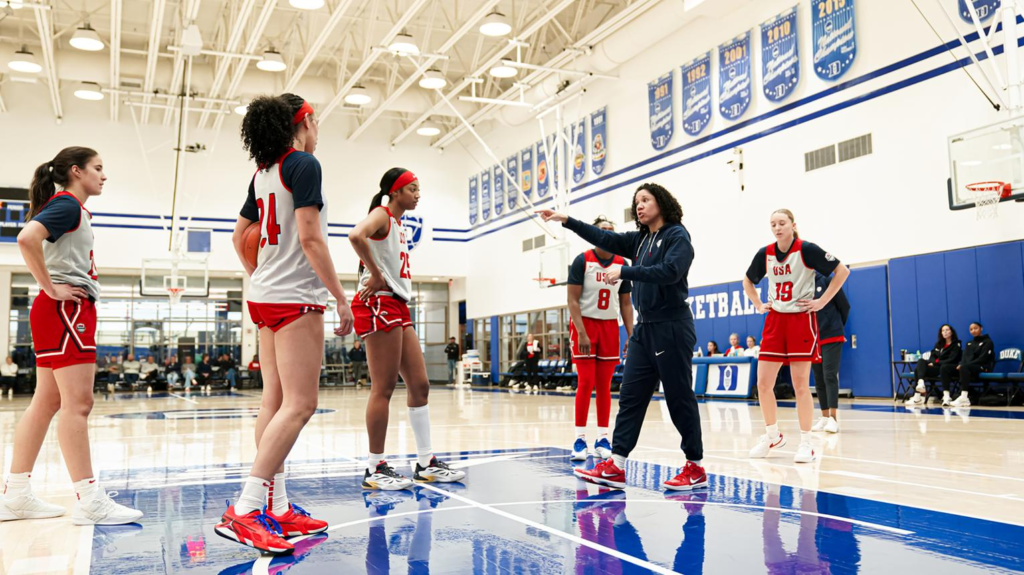
USA Basketball has spent years building a coach-education ecosystem that includes licensing, curriculum, and standards around player development and safety. Its public materials emphasize long-term athlete development, age-appropriate teaching, and structured skill progression rather than random drill accumulation. Coach licensing also includes screening requirements and education expectations, which may seem administrative but matter for trust and professionalism in youth environments.
Why does this matter for the future of American hoops?
Because the U.S. development system is fragmented. A top prospect may play for a high school coach, an AAU program, a private trainer, a prep school staff, and a college coach in a span of a few years. The quality of those environments varies widely. A national body cannot control all of them, but it can create a common language around what good development looks like.
That common language matters for:
- Parents trying to evaluate whether a program is healthy
- Young coaches who want a better framework than “what my old coach used to do”
- Local clubs seeking credibility and structure
- Players who need consistent developmental priorities across different teams
In other words, USA Basketball’s coaching footprint may help American basketball become less dependent on luck—less dependent on whether a talented 13-year-old just happens to land with the right adult at the right time.
The Pressure Points USA Basketball Still Has to Solve
None of this means the system is complete. If USA Basketball is helping shape the next era of hoops, it is also operating inside a messy basketball economy that creates real tensions.
NIL, transfer movement, and calendar congestion
Elite teenagers and college players now make decisions in a marketplace shaped by NIL, brand building, and increasingly aggressive roster movement. That can make national-team commitments harder to coordinate, especially in summers when players are balancing recovery, pro preparation, transfer transitions, endorsement obligations, and personal training plans. Reporting around the NCAA’s new revenue-sharing era has raised direct questions about whether Team USA participation could become harder to fit into the calendar for some athletes.
The men’s side still has to answer style questions
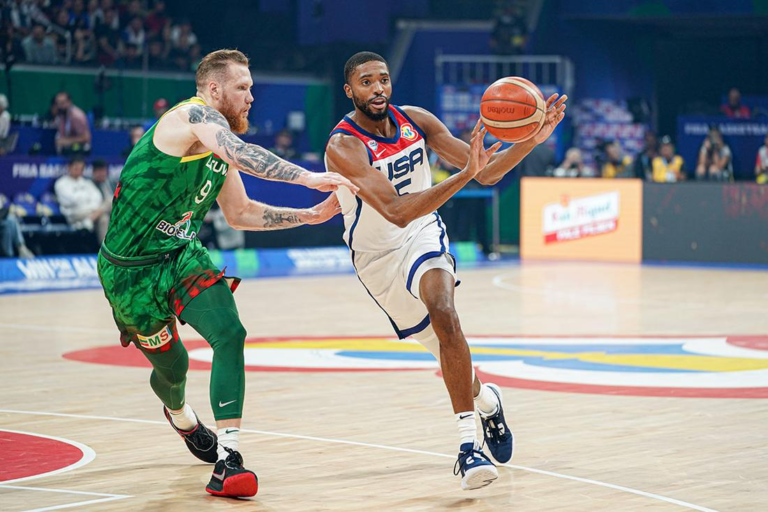
The United States remains stacked with talent, but international men’s basketball is no longer a talent-only contest. Serbia, Germany, Canada, France, and others have stable systems, continuity, and a clear style of play. USA Basketball has to keep finding ways to get elite American players comfortable with role clarity, physical defense, and shorter preparation windows.
The pipeline cannot become too exclusive
National-team camps are valuable, but American basketball development cannot be limited to the players already in the spotlight. If USA Basketball wants to shape the next era well, it has to keep making coaching education and developmental standards useful for ordinary high school programs, local clubs, and younger age groups—not only for the top 1 percent of prospects.
What This Means for Players, Parents, Coaches, and Fans
The most useful way to think about USA Basketball right now is not as a brand attached to stars, but as a signal about where the sport itself is moving.
If you are a player, the message is that versatility, decision-making, and role adaptability are becoming more valuable than highlight culture.
If you are a parent, the message is that the best pathway is not always the loudest one. A development environment that teaches reads, habits, and discipline may be worth more than a packed schedule and a social-media reel.
If you are a coach, the message is that the modern game demands more than effort and motivation. It demands a framework for how players grow over time.
If you are a fan, the message is that Team USA’s future will not be determined only by which stars say yes to an Olympic roster. It will be shaped much earlier—at youth camps, in coaching education, in women’s development systems, in 3×3 experimentation, and in the less glamorous work of teaching players how to win in more than one style of basketball.
Where the Next Era of American Hoops Is Likely Headed
The next era of American basketball will probably look different from the one many fans grew up with.
It will likely be more positionless, more international in style, and more dependent on skill versatility than on rigid positional labels. It will likely feature stronger women’s basketball infrastructure, more crossover between youth stardom and national-team visibility, and a larger role for alternative pathways such as 3×3. It will also demand better coaching and smarter load management at younger ages, because the old “just play more” model is showing its limits.
USA Basketball is not the only force driving those changes. The NBA, WNBA, NCAA, grassroots circuits, private training businesses, and media economy all matter too. But USA Basketball occupies a unique place among them. It is one of the few institutions that can see the whole board at once: youth development, coaching, international competition, women’s growth, and Olympic planning.
That does not make it perfect. It does make it important.
The Real Legacy Will Be Built Long Before the Next Olympic Gold
The easiest way to judge USA Basketball is by medals. That will always be part of the story, and for obvious reasons. But the more revealing question is whether the organization is helping American basketball produce players and coaches who are better prepared for the sport that actually exists now—not the one the country dominated twenty years ago.
On that question, the signs are meaningful. The youth pipeline is more visible. The women’s succession plan is more intentional. The coaching framework is more public. The 3×3 lane is more legitimate. And the organization’s development philosophy is increasingly aligned with the realities of a faster, more global, more tactical game.
If that continues, USA Basketball’s biggest contribution to the next era of American hoops may not be a single roster or tournament. It may be the quieter work of making the American basketball pipeline a little smarter, a little healthier, and a little more prepared for what the sport has become.
What to Watch Over the Next Three Years
- Whether USA Basketball can keep top men’s and women’s players engaged through the 2027–2028 cycle despite packed pro and college calendars
- How aggressively the women’s national team continues integrating younger stars before the 2028 Los Angeles Olympics
- Whether 3×3 becomes a more recognized development lane for U.S. players, especially on the women’s side
- How widely USA Basketball’s coaching and player-development standards are adopted outside elite national-team settings
- Whether international-style skill development becomes more visible in American high school and grassroots basketball
FAQ: What Readers Commonly Ask About USA Basketball’s Role in the Future of Hoops
1) What does USA Basketball actually do besides send teams to the Olympics?
USA Basketball governs U.S. national teams for international competition, but it also runs youth national team camps and trials, supports coaching education, publishes player development guidance, and helps shape 3×3 and long-term athlete development standards.
2) Is USA Basketball important for players who never make a national team?
Yes. Its influence extends beyond elite roster selection through youth guidelines, coach licensing, player-development resources, and standards that can affect school, club, and grassroots basketball environments.
3) Why do USA Basketball camps matter so much for top high school players?
They expose players to FIBA rules, high-level coaching, role-based basketball, and elite peer competition. That can reveal which prospects are most adaptable and best prepared for college and pro basketball.
4) How is USA Basketball affecting women’s basketball right now?
It is helping manage a generational transition by integrating younger stars into senior national-team environments while continuing to strengthen the youth pipeline. That supports both Olympic success and the broader growth of the women’s game.
5) What is the connection between USA Basketball and the WNBA pipeline?
USA Basketball gives elite women players exposure to international competition, pro-style roles, and national-team coaching environments. That can accelerate readiness for the WNBA and future Olympic cycles.
6) Why does international basketball help American players develop?
International play places a premium on spacing, ball movement, role discipline, help defense, and decision-making. It can challenge American players to sharpen habits that domestic competition sometimes allows them to avoid.
7) Is 3×3 really part of the future for USA Basketball?
Yes. 3×3 is now an Olympic discipline and a legitimate development path. It offers players another route to international competition and rewards skills that translate well to the modern game.
8) How should parents use USA Basketball’s development ideas?
Parents can use them as a filter when evaluating teams, trainers, and youth programs. Look for environments that emphasize skill progression, decision-making, rest, teaching quality, and long-term growth rather than constant travel and exposure alone.
9) Does USA Basketball have influence over high school and AAU basketball?
Not direct control, but it does have influence. Its coaching resources, youth guidelines, and national-team pipeline help shape what many programs consider best practice.
10) What is the biggest challenge USA Basketball faces over the next few years?
Balancing player development and national-team continuity in a basketball ecosystem shaped by NIL, transfer movement, crowded calendars, rising women’s basketball visibility, and tougher international competition.
About the Author