The NBA enters the 2026-27 season after an unusually consequential offseason, with superstar movement, major roster changes, new coaches and a rising salary cap reshaping the competitive landscape. From Giannis Antetokounmpo joining Miami to Jaylen Brown moving to Philadelphia, these developments could alter playoff races, player roles, team-building strategies and how fans evaluate contenders throughout the season ahead.
A Different NBA Landscape Is Taking Shape
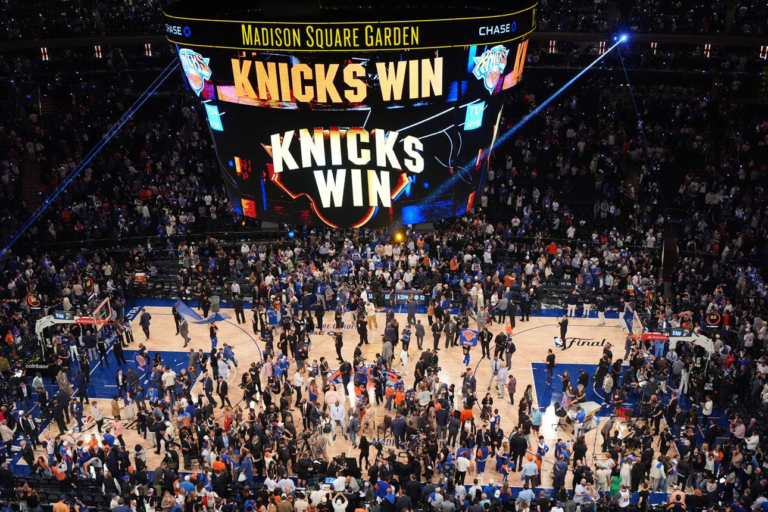
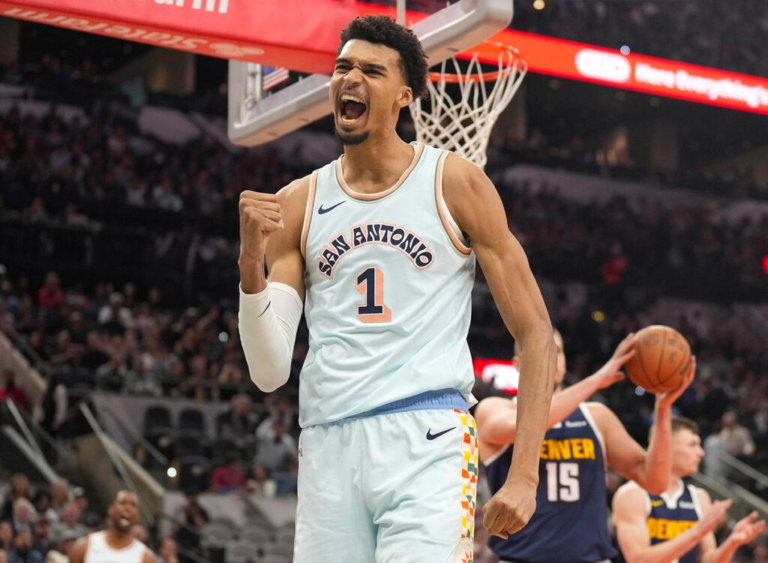
The 2026-27 NBA season will begin with a league that looks meaningfully different from the one that finished just a few months ago. The New York Knicks enter the season as defending champions after beating the San Antonio Spurs 4-1 in the 2026 NBA Finals, ending a 53-year championship drought.
But the most important developments of the summer have happened after the championship was decided.
Several high-profile players changed teams, including Giannis Antetokounmpo, Jaylen Brown and Ja Morant. At the same time, six franchises hired new head coaches, while the NBA’s salary cap increased substantially for the 2026-27 season.
Taken together, those changes create a season in which established contenders may have less certainty than usual. Teams that appeared close to contention last year may have new opportunities, while organizations that made aggressive moves will have to prove that individual talent can translate into effective team basketball.
For fans, that makes the coming season less about simply identifying the biggest names and more about understanding how those names fit into new systems, rotations and competitive environments.
The Biggest Roster Changes Could Redraw the Contenders
The most obvious storyline is superstar movement.
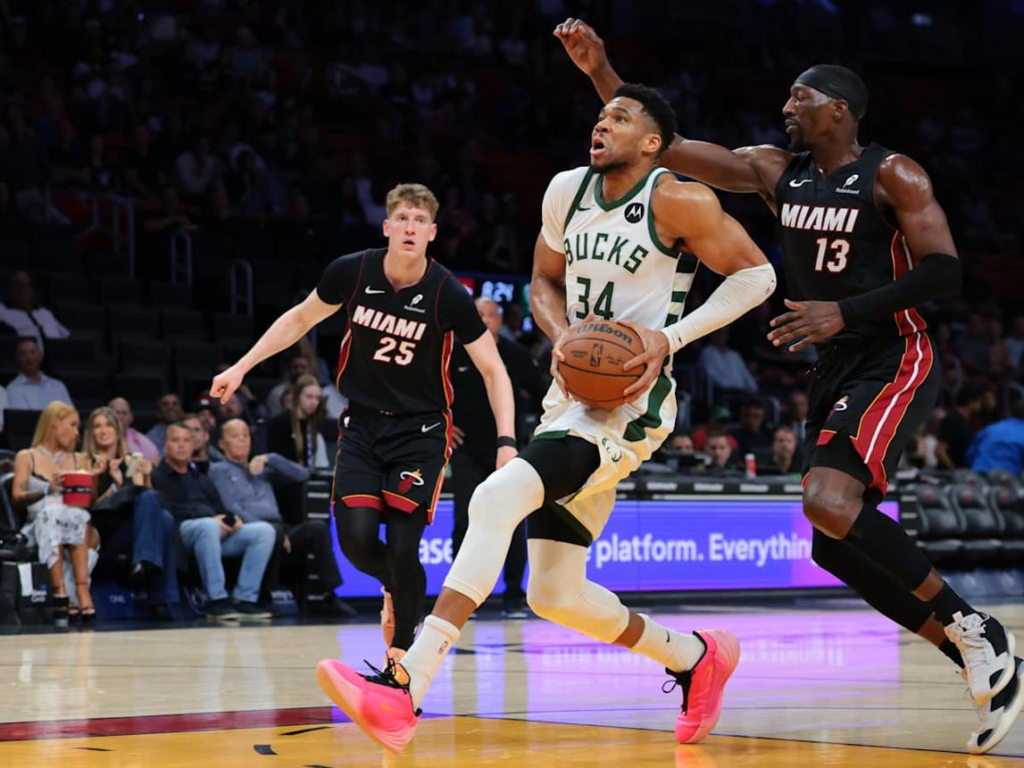
Giannis Antetokounmpo’s move from Milwaukee to Miami is one of the most consequential transactions of the offseason. The Heat acquired Antetokounmpo and Bobby Portis in exchange for Tyler Herro, Jaime Jaquez Jr., Kel’el Ware, Kasparas Jakučionis and significant draft compensation.
The basketball question is straightforward but difficult to answer: How quickly can Miami build a championship-level structure around Giannis?
Adding a player of his caliber changes defensive game plans immediately. Opponents must account for his transition ability, interior scoring, passing and defensive versatility. Yet acquiring a superstar does not automatically solve every roster problem. Miami still has to establish reliable shooting, spacing, lineup balance and late-game execution.
The same principle applies to Philadelphia, where Jaylen Brown now joins a roster after Boston traded him to the 76ers for Paul George and multiple draft assets. Brown’s decade in Boston included an NBA championship and a long period in which the Celtics were among the league’s most successful regular-season and playoff teams.
That trade creates an intriguing question for both organizations. Philadelphia gains a proven two-way wing entering a different stage of his career, while Boston receives an established veteran and additional future draft capital. The immediate winner may look obvious on paper, but the real evaluation will take place over an 82-game season.
Ja Morant’s move to Portland represents another interesting case. The Trail Blazers acquired the former All-Star guard from Memphis in exchange for Jerami Grant and Kris Murray.
For Portland, the challenge will be building a team structure that maximizes Morant’s strengths while maintaining defensive discipline and consistent half-court offense.
These moves demonstrate an important reality of modern NBA roster construction: the value of a trade is determined less by the headline and more by what happens after the transaction.
Why Team Fit May Matter More Than Star Power
One of the easiest mistakes for fans is assuming that adding the most talented player automatically creates the best team.
NBA history offers plenty of examples showing otherwise. A superstar needs teammates who complement his strengths, a coaching system that creates appropriate opportunities and enough depth to survive injuries and difficult stretches.
Consider a hypothetical team that acquires an elite interior scorer but already lacks perimeter shooting. The player’s individual production could remain excellent while the team’s offense becomes easier to defend because opponents can pack the paint.
Another team might add a high-level ball handler but lack dependable secondary creators. That could increase the new star’s workload rather than making the overall offense more efficient.
The most useful questions for evaluating a newly constructed roster include:
- Who handles primary creation duties?
- Does the team have enough shooting around its stars?
- Who defends the opponent’s best perimeter player?
- What happens when the leading scorer sits?
- Does the bench provide reliable two-way production?
- Can the roster function effectively in playoff-style half-court possessions?
Those questions often tell fans more than preseason power rankings.
The Salary Cap Will Influence What Teams Can Do Next
Another major development is financial rather than purely basketball-related.
The NBA set the 2026-27 salary cap at $164.961 million, compared with $154.647 million for the previous season. The tax level is $200.428 million, while the first apron is $209.015 million and the second apron is $221.686 million.
That increase gives some teams additional room, but the league’s apron system means organizations still have to make complicated financial decisions.
The second apron is particularly important because teams operating above it face significant transaction restrictions. The NBA’s collective bargaining agreement is designed to limit some of the advantages available to the highest-spending teams and encourage greater competitive balance.
A useful example is Denver’s decision to match Oklahoma City’s offer sheet for Spencer Jones. By retaining Jones, Denver reportedly moved into the second apron and faced a substantial increase in luxury-tax costs.
For casual fans, this can seem like accounting. For front offices, it can determine whether a team can make another trade, use a particular exception or maintain flexibility in future seasons.
The practical lesson is simple: NBA roster building is increasingly a long-term financial exercise as well as a basketball exercise.
Six New Coaches Add Another Layer of Uncertainty
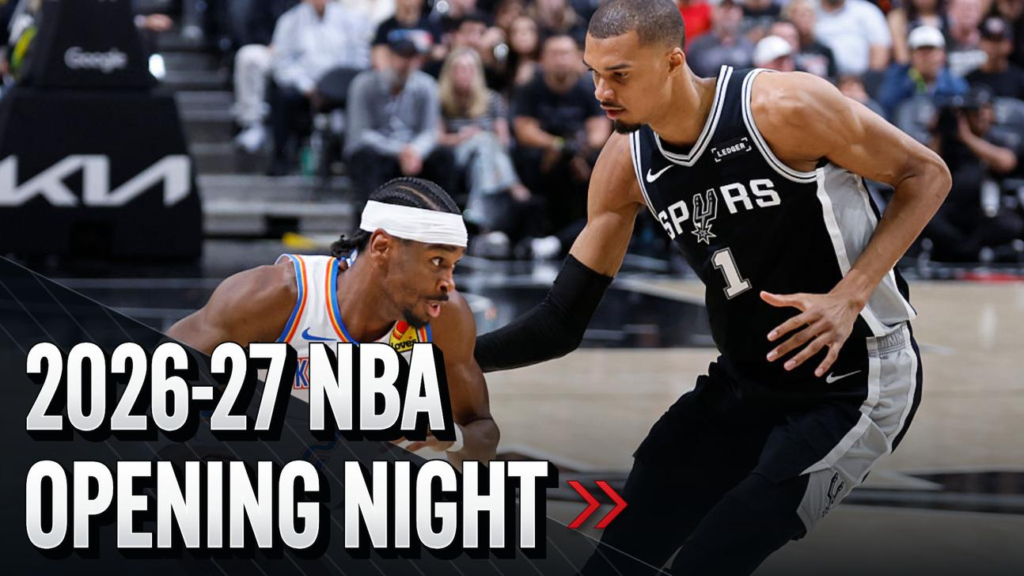
The 2026-27 season will also feature six teams with new head coaches: Chicago, Dallas, Orlando, Milwaukee, New Orleans and Portland.
That matters because coaching changes can affect everything from offensive pace and defensive coverage to player development and rotation patterns.
Dallas, for example, hired Dusty May after his success at Michigan, giving him the task of developing a Mavericks roster that includes Cooper Flagg. Milwaukee hired Taylor Jenkins, while Miami’s conference rival Boston enters a new phase following its roster changes.
A new coach does not necessarily mean a dramatic tactical transformation on opening night. Coaches often need months to establish terminology, defensive habits and rotation preferences.
That makes the first 20 or 30 games particularly informative.
Instead of judging a new coach solely by wins and losses, fans can watch for measurable changes in areas such as defensive communication, turnover rates, shot selection, transition frequency and how effectively role players are being used.
A team that starts slowly but shows clear structural improvement may be in a healthier position than a team that wins early through unsustainable shooting.
Player Roles Could Change More Than Expected
Trades also create opportunities for players who were previously secondary options.
When a superstar leaves, another player usually inherits additional possessions. That can create a significant statistical opportunity, but increased usage also brings greater defensive attention.
For example, Milwaukee’s post-Giannis era will require a different offensive hierarchy. Boston’s decision to move Brown also means other Celtics players will have to absorb responsibilities that were previously shared with him.
The same principle applies to younger players.
A veteran departure can give a 22-year-old player an extra five or eight minutes per game, more ball-handling opportunities or more defensive assignments. Those changes can have a larger developmental impact than a modest increase in scoring average.
For players entering their second or third seasons, role stability may be particularly important. Consistent minutes allow them to learn from mistakes, develop decision-making skills and understand what coaches expect.
That is why offseason transactions should be evaluated partly through the lens of opportunity creation, not just star acquisition.
The New Season Could Reward Depth
The NBA remains an 82-game league, and roster depth becomes especially important as injuries, travel and workload accumulate.
A team with three outstanding players but limited depth can look dominant in October and vulnerable by April. Conversely, a balanced roster can survive stretches when one starter is unavailable.
This is particularly relevant for teams that have invested heavily in top-end talent.
The modern NBA requires organizations to think about:
- Starting-lineup quality
- Bench scoring
- Backup ball-handling
- Defensive versatility
- Frontcourt depth
- Shooting around primary creators
- Young-player development
A strong bench does not guarantee postseason success, but it can reduce the pressure on stars during the regular season.
For fans evaluating teams in November, this is one of the more useful indicators to watch.
The Knicks’ Championship Changes the Conversation
The Knicks’ 2026 championship also provides an important counterpoint to the superstar-trade narrative.
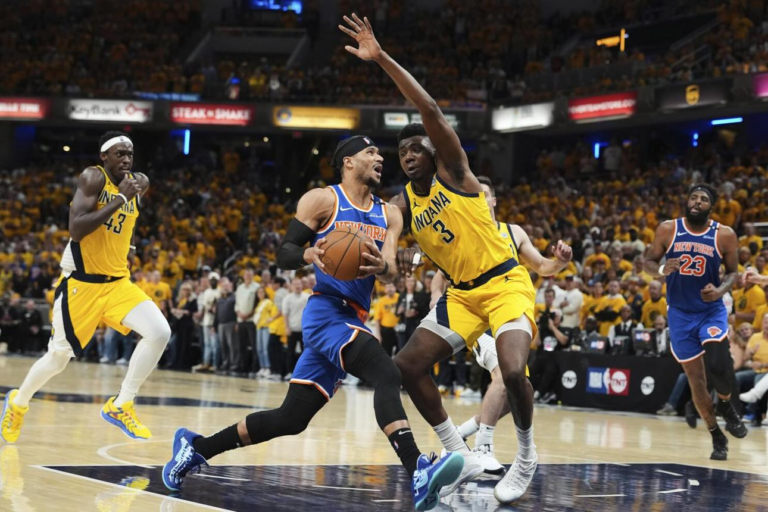
New York won its first title since 1973 and did so with a roster built around Jalen Brunson, Mikal Bridges, Josh Hart, Karl-Anthony Towns and OG Anunoby. The Knicks also won the NBA Cup earlier in the season, completing an unusual domestic double.
Their championship demonstrates that elite talent can be assembled without relying on a single transformative offseason acquisition.
The Knicks also showed the importance of continuity. Players who understand one another’s tendencies can make faster decisions, particularly in playoff environments when defenses become more aggressive.
That gives returning contenders an important advantage over newly assembled teams.
Miami may have the most recognizable addition. Philadelphia may have dramatically changed its identity. Portland may have a new offensive centerpiece. But New York begins the season with something valuable: an established championship-level foundation.
The NBA’s Audience Is Also Changing
The business side of the league is another development worth watching.
The 2025-26 regular season attracted 170 million U.S. viewers across ABC/ESPN, Amazon Prime Video, NBC/Peacock and NBA TV, according to NBA figures. That represented the league’s highest U.S. reach in 24 years and an 86% increase from the previous season.
The 2026 Finals continued that momentum. The Knicks-Spurs series averaged 20.6 million viewers, making it the most-watched NBA Finals since 1998.
The implication for teams and players is significant.
NBA exposure increasingly exists across television, streaming platforms, social media and short-form video. A player can build an audience through game performances, interviews, behind-the-scenes content and digital platforms rather than relying exclusively on traditional broadcasts.
The league also reported 228 billion social-media views during the 2025-26 regular season.
That means players have more opportunities to build individual brands, while teams have more ways to connect with younger and digitally oriented fans.
What Fans Should Watch During the First Month
The opening weeks of the season will reveal which offseason moves actually work.
Rather than focusing exclusively on standings, fans can track several early indicators.
A newly assembled team should be evaluated for chemistry and role clarity. If players consistently hesitate over who initiates offense or who takes late-clock shots, the adjustment period may be longer than expected.
Teams with new coaches should be judged on whether their systems become clearer from week to week.
Young players should be evaluated based on decision-making and defensive reliability rather than scoring alone.
And contenders should be monitored for depth. A championship-caliber team should be capable of surviving ordinary regular-season adversity without dramatically changing its identity.
The first month will not provide definitive answers, but it can reveal which teams have genuine structural advantages and which ones still have significant questions to resolve.
What the 2026-27 Season Could Ultimately Reveal
The most interesting feature of the upcoming NBA season may be the number of teams entering it with legitimate questions.
Can Miami immediately turn Giannis Antetokounmpo’s arrival into a championship-caliber system? Can Philadelphia’s new core maximize Jaylen Brown? Can Boston remain elite after changing a major part of its identity? Can Portland turn Morant’s talent into sustainable team success?
Meanwhile, the defending champion Knicks will attempt to demonstrate that their 2026 title was the beginning of a sustained era rather than a one-season breakthrough.
The answers will depend on factors that are difficult to predict from an offseason transaction list: health, chemistry, coaching, shooting variance, defensive execution and playoff adaptability.
That uncertainty is precisely what makes the new season worth following.
When the Offseason Moves Become Real Basketball
The NBA offseason is often measured in transactions, contract values and headlines. The regular season measures something much more demanding: whether those decisions actually work on the court.
The biggest acquisitions will attract the most attention, but the most important developments may come from less obvious places. A young player earning a larger role, a new coach finding the right defensive system, or a veteran adapting to a reduced workload can influence a team’s season just as significantly as a blockbuster trade.
The 2026-27 season therefore begins as a test of roster construction as much as individual talent. The teams that succeed will likely be those capable of turning offseason decisions into coherent basketball, maintaining depth and adapting when the original plan inevitably encounters problems.
Key NBA Developments to Keep in View
- Giannis Antetokounmpo has moved from Milwaukee to Miami, dramatically changing the Eastern Conference landscape.
- Jaylen Brown is now with Philadelphia after Boston acquired Paul George and future draft assets.
- Ja Morant has joined Portland after a trade with Memphis.
- Six NBA teams enter 2026-27 with new head coaches.
- The 2026-27 salary cap is $164.961 million, with new financial thresholds affecting roster decisions.
- The Knicks enter the season as defending NBA champions.
- NBA viewership reached a 24-year high during the 2025-26 regular season.
- The most useful early-season indicators will include team chemistry, depth, defensive consistency and role clarity.
Frequently Asked Questions About the 2026-27 NBA Season
1. What are the biggest NBA developments heading into 2026-27?
The biggest developments include Giannis Antetokounmpo moving to Miami, Jaylen Brown joining Philadelphia, Ja Morant moving to Portland, six coaching changes and a higher salary cap.
2. Which team won the 2026 NBA championship?
The New York Knicks won the 2026 NBA championship by defeating the San Antonio Spurs 4-1 in the Finals. It was New York’s first championship since 1973.
3. Why is Giannis’ move to Miami so important?
Giannis gives Miami an elite two-way superstar and changes how opponents must defend the Heat. The larger question is whether Miami can build sufficient shooting, depth and offensive structure around him.
4. What happened to Jaylen Brown?
Boston traded Jaylen Brown to Philadelphia in exchange for Paul George and multiple future draft assets. The move represents a major change for both franchises.
5. Which NBA teams have new coaches in 2026-27?
Chicago, Dallas, Orlando, Milwaukee, New Orleans and Portland have new head coaches entering the season.
6. What is the NBA salary cap for 2026-27?
The NBA’s 2026-27 salary cap is $164.961 million. The tax level is $200.428 million, while the first and second apron levels are $209.015 million and $221.686 million.
7. Why does the second apron matter?
The second apron imposes additional financial and roster-building restrictions on high-spending teams. It can limit transaction flexibility and make retaining certain players considerably more expensive.
8. What should fans watch early in the NBA season?
Look for lineup consistency, defensive communication, bench production, shooting quality, turnover rates and whether new players understand their roles. These indicators often provide more context than the standings alone.
9. Will new NBA coaches immediately change their teams?
Not necessarily. Coaching systems take time to implement, particularly when a roster also contains new players. Early improvement in execution may be more meaningful than immediate wins.
10. Why could the 2026-27 NBA season be unpredictable?
Several major teams have changed their rosters or coaching staffs, while the defending champion Knicks enter with continuity. That creates a wide range of possible outcomes across both conferences.
About the Author