The NBA enters every season with evolving storylines that influence championship races, player development, front-office decisions, and fan expectations. From superstar movement and rising young talent to coaching strategies, salary cap management, and emerging contenders, understanding these trends helps explain why teams succeed or struggle. This guide examines the league’s most significant storylines and what they could mean throughout the season.
Why NBA Storylines Matter Beyond Headlines
The NBA is more than a collection of individual games. Every season unfolds as a long narrative shaped by roster decisions, player health, coaching adjustments, financial planning, and competitive balance. While headlines often focus on blockbuster trades or superstar performances, the deeper stories usually determine how the season ultimately develops.
Fans frequently ask questions such as:
- Which teams are legitimate championship contenders?
- Can young stars become franchise leaders?
- How much do injuries change playoff expectations?
- Which offseason moves are already paying off?
- What trends are changing the way basketball is played?
These are practical questions because today’s storyline often becomes tomorrow’s playoff reality.
According to league data and historical trends from the NBA and Basketball Reference, championship teams generally rank among the league leaders in both offensive and defensive efficiency while maintaining relatively stable player availability throughout the season. That combination—not just star power—often separates contenders from pretenders.
Championship Windows Continue to Shift
Few topics receive more attention than the changing landscape of championship contention.
Several franchises continue to operate within narrow championship windows built around experienced stars. Others are entering entirely new competitive cycles led by younger cores.
Success increasingly depends on balancing immediate competitiveness with long-term flexibility.
Organizations now evaluate:
- Age of core players
- Contract timelines
- Salary cap flexibility
- Future draft assets
- Bench production
- Coaching continuity
The league has become increasingly unpredictable because multiple franchises possess legitimate postseason ambitions.
Rather than relying on one dominant dynasty, today’s NBA features several teams capable of making deep playoff runs if health and chemistry align.
The Rise of the NBA’s Next Generation
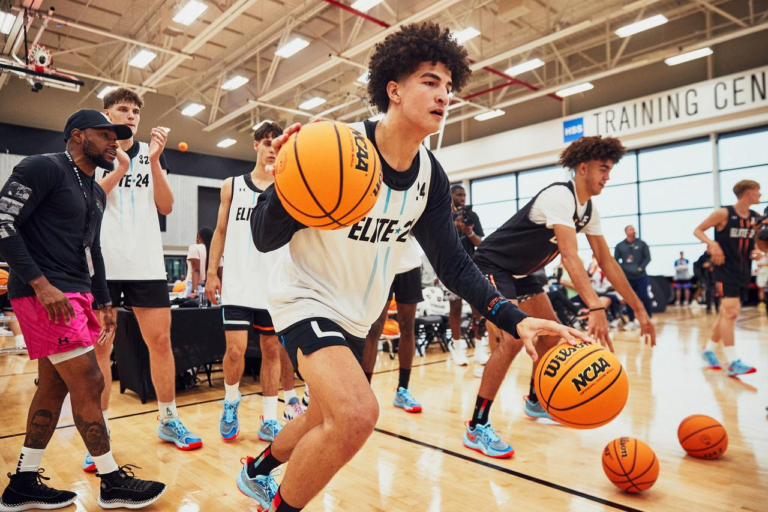
One of the league’s most compelling developments is the emergence of young stars capable of becoming franchise cornerstones.
Players entering their third through sixth seasons are increasingly expected to assume leadership responsibilities much earlier than previous generations.
Teams now invest heavily in:
- Player development staffs
- Performance science
- Nutrition
- Mental skills coaching
- Advanced analytics
- Skill specialization
As a result, younger players often reach All-Star level production sooner than ever before.
For example, many organizations no longer wait five or six seasons before building offenses around developing stars. Instead, franchises frequently redesign offensive systems around promising players almost immediately after they establish consistent production.
This accelerated development cycle has reshaped rebuilding strategies across the league.
Load Management Continues to Evolve
Few NBA discussions generate as much debate as player availability.
Over recent years, teams have increasingly prioritized long-term health over maximizing regular-season appearances.
Medical staffs now rely on extensive performance data that includes:
- Workload monitoring
- Recovery metrics
- Travel impact
- Biomechanical analysis
- Fatigue measurements
While some fans remain frustrated when star players miss nationally televised games, organizations generally view injury prevention as essential to postseason success.
The NBA has also introduced participation policies designed to encourage greater availability among marquee players.
The ongoing challenge is balancing entertainment value with protecting athletes during an 82-game regular season.

Three-Point Shooting Continues to Shape Modern Basketball
The modern NBA looks dramatically different than it did just fifteen years ago.
Three-point volume has steadily increased while offenses emphasize spacing, pace, and efficient shot selection.
Today’s successful offenses often prioritize:
- Corner three-pointers
- Transition opportunities
- Rim attacks
- Free throws
- Ball movement
- Positionless lineups
Meanwhile, defenses continue adapting through switching schemes, versatile defenders, and improved perimeter coverage.
The strategic chess match between evolving offenses and increasingly sophisticated defenses remains one of basketball’s most fascinating developments.
Defense Is Quietly Becoming a Competitive Advantage
Although offensive highlights dominate social media, defense often determines playoff success.
Elite defensive teams consistently demonstrate:
- Communication
- Rebounding discipline
- Rim protection
- Transition defense
- Perimeter versatility
- Consistent effort
History repeatedly shows that balanced teams capable of defending multiple styles perform better in seven-game playoff series.
Even high-powered offenses often struggle when facing disciplined defensive systems that limit second-chance opportunities and force difficult shot selection.
Coaching Has Never Been More Influential
Modern NBA coaches perform far more responsibilities than drawing up plays.
Today’s coaching staffs oversee:
- Analytics integration
- Rotation management
- Player development
- Communication strategies
- Opponent scouting
- In-game adjustments
Many successful teams employ large coaching staffs that include specialists in offense, defense, player development, shooting mechanics, and performance analytics.
A single strategic adjustment—such as changing defensive coverages or altering substitution patterns—can influence multiple games across a playoff series.
This strategic complexity has elevated coaching into one of the league’s most valuable competitive advantages.
Salary Cap Decisions Shape the Future
Many fans focus primarily on player performance while overlooking the financial decisions occurring behind the scenes.
Every roster move influences future flexibility.
Front offices constantly balance:
- Maximum contracts
- Luxury tax implications
- Rookie-scale contracts
- Veteran minimum deals
- Trade exceptions
- Draft capital
The NBA’s collective bargaining agreement has introduced additional financial considerations that reward careful roster construction.
Teams that manage payroll efficiently often maintain competitive depth even while paying multiple star players.
The Importance of Team Chemistry
Talent alone rarely guarantees success.
Championship-caliber organizations consistently demonstrate:
- Strong communication
- Defined player roles
- Veteran leadership
- Coaching trust
- Defensive accountability
- Shared offensive responsibilities
Experience shows that teams improving together throughout the season frequently outperform more talented rosters that struggle with consistency.
For example, players who understand rotational expectations generally produce better defensive effort and fewer mental mistakes during high-pressure playoff moments.
Chemistry often becomes visible only after months of regular-season competition.
International Talent Continues Transforming the NBA
The NBA has become one of the world’s most international professional sports leagues.
Elite players now arrive from Europe, Africa, Australia, Canada, Latin America, and Asia.
This global talent pipeline has expanded playing styles while introducing new developmental philosophies.
International influence has contributed to:
- Improved passing
- Position versatility
- Fundamental skill development
- Basketball IQ
- Creative offensive systems
The diversity of playing backgrounds enriches the league while strengthening global fan engagement.
The Growing Role of Analytics
Basketball analytics now influence nearly every organizational decision.
Teams analyze:
- Shot efficiency
- Lineup combinations
- Defensive matchups
- Player workload
- Transition opportunities
- Offensive spacing
Analytics rarely replace coaching instincts.
Instead, they provide additional context that helps decision-makers evaluate performance more accurately.
The most successful organizations blend statistical insight with traditional scouting.
What Fans Should Watch During the Season
Instead of focusing exclusively on nightly scores, experienced observers often monitor broader trends.
Important indicators include:
- Defensive consistency
- Bench production
- Injury reports
- Fourth-quarter execution
- Road performance
- Turnover differential
- Rebounding margins
- Player development
- Coaching adjustments
- Trade deadline strategy
These factors usually become increasingly important as playoff races tighten.
Could This Be One of the Most Competitive NBA Seasons Yet?
Competitive balance has improved considerably.
Unlike eras dominated by one or two overwhelming favorites, today’s league features numerous teams capable of making meaningful postseason runs.
Parity creates greater uncertainty while increasing the importance of:
- Health
- Midseason adjustments
- Player development
- Deadline acquisitions
- Coaching adaptability
For fans, this often produces a more engaging regular season because playoff positioning remains fluid for much longer.

Frequently Asked Questions
1. What is the biggest storyline entering the NBA season?
The balance between established contenders and emerging young teams remains one of the league’s defining narratives.
2. Why is load management still discussed?
Teams continue balancing player health with regular-season participation in hopes of maximizing postseason success.
3. How important are analytics today?
Analytics influence roster construction, player development, game planning, and strategic decision-making across the league.
4. Why do salary cap rules matter?
Financial flexibility affects roster depth, future trades, contract extensions, and long-term competitiveness.
5. Are young players reaching star status faster?
Improved development systems have accelerated player growth, allowing many young athletes to contribute earlier.
6. Does defense still win championships?
While elite offense is essential, balanced teams with strong defenses historically perform better during the playoffs.
7. Why is team chemistry so valuable?
Clear communication, defined roles, and trust often improve consistency throughout a long season.
8. How has international talent changed the NBA?
Global player development has introduced diverse skill sets, greater versatility, and innovative styles of play.
9. What statistics should fans watch besides points per game?
Efficiency ratings, rebounding, turnovers, defensive metrics, lineup performance, and availability provide valuable context.
10. What usually determines playoff success?
Health, depth, coaching adjustments, defensive execution, and consistent team chemistry often prove decisive.
About the Author