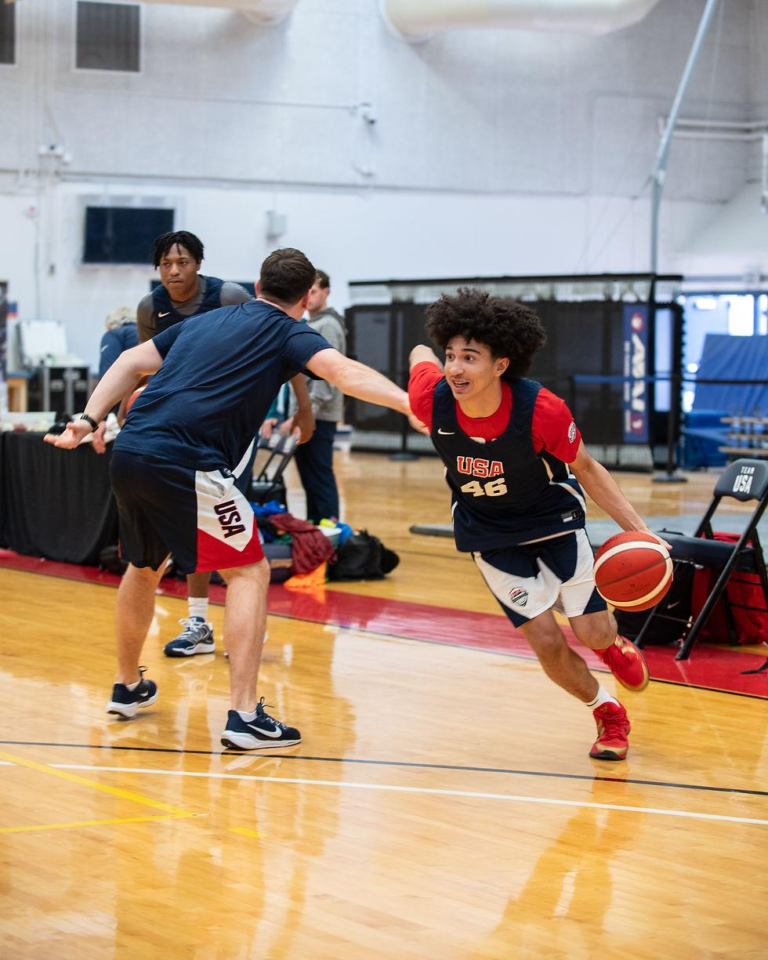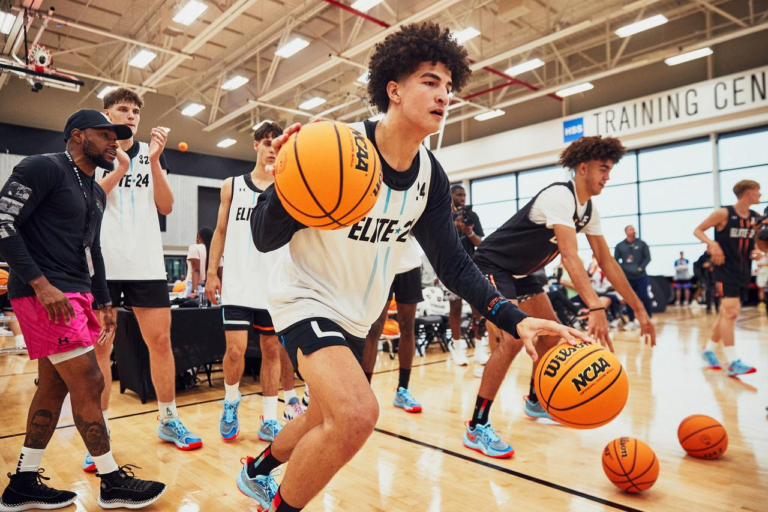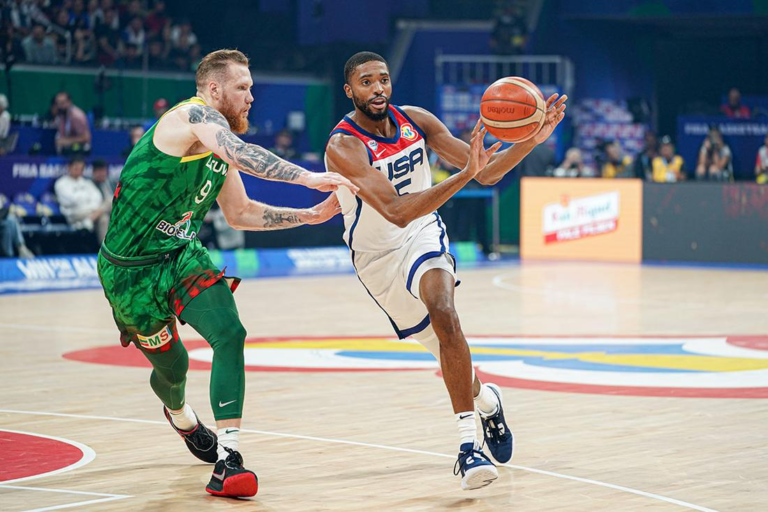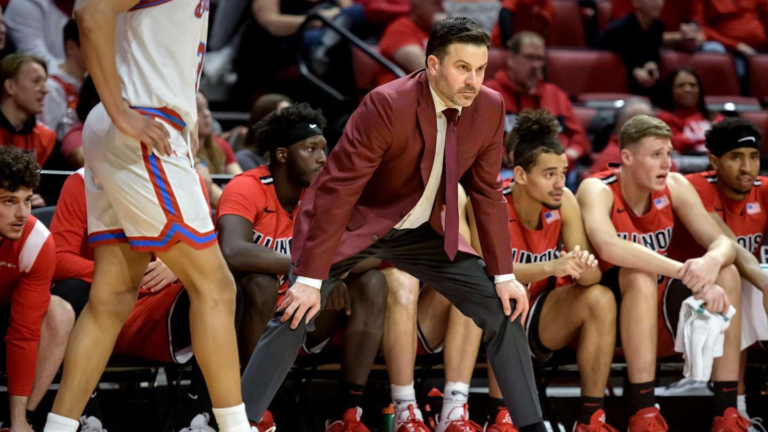

USA Basketball remains one of the most successful programs in sports history, but the environment around the game is changing rapidly. International talent development systems are improving, American player pathways are evolving, and technology is reshaping training methods. As global competition intensifies, the future of USA Basketball will depend not only on athletic talent but also on innovation, adaptability, and long-term player development strategies.
The Changing Landscape of American Basketball
For decades, basketball in the United States operated with a clear advantage. The country possessed the deepest talent pool, the strongest professional league, and an extensive grassroots infrastructure that consistently produced elite players.
Today, that advantage remains significant, but it is no longer uncontested.
The growth of basketball around the world has created a far more competitive environment. International federations have invested heavily in youth development, coaching education, sports science, and professional leagues. As a result, countries that once struggled to compete with American teams are now producing world-class players capable of dominating at the highest levels.
The emergence of international stars in the NBA reflects this shift. Recent MVP races and All-NBA selections have increasingly featured players from outside the United States. This trend is not an anomaly—it is evidence of a broader transformation in global basketball development.
At the same time, American basketball is undergoing its own evolution. New training technologies, changing youth sports structures, and increased specialization are reshaping how future players are identified and developed.
The result is a new era where success depends on much more than natural talent.
Why Global Competition Is Stronger Than Ever
One of the biggest changes facing USA Basketball is the dramatic improvement of international programs.
Many countries have adopted long-term athlete development models that emphasize skill acquisition from an early age. Instead of focusing primarily on athleticism, these systems often prioritize:
- Decision-making
- Ball handling
- Shooting fundamentals
- Team concepts
- Basketball IQ
- Position versatility
This approach has produced players capable of competing immediately against elite American athletes.
International teams are also benefiting from continuity. National team players often spend years playing together within the same system. By contrast, Team USA rosters frequently change between major tournaments.
Recent international competitions have demonstrated that talent alone is no longer enough. Teams with strong chemistry, disciplined execution, and experienced coaching staffs can challenge even the most talented American rosters.
The global gap has narrowed—not because American basketball is declining, but because the rest of the world has improved dramatically.
The Evolution of Youth Basketball in America
The traditional pathway for American players once followed a relatively predictable route:
- Local youth leagues
- High school basketball
- College basketball
- Professional basketball
Today, that pathway has become significantly more complex.
Elite prospects now have access to numerous developmental opportunities, including:
- Elite camps
- Travel circuits
- National showcases
- Basketball academies
- Professional development programs
- Alternative professional pathways
These opportunities create more exposure but also present new challenges.
Young athletes often play year-round schedules, participate in multiple leagues, and face increased pressure to specialize early. While this can accelerate skill development, it may also increase burnout and injury risks.
Many coaches are now encouraging a more balanced approach that combines competition with deliberate skill development.
The most successful youth programs increasingly focus on long-term growth rather than short-term tournament success.

How Technology Is Transforming Talent Development
Modern basketball training looks very different from what previous generations experienced.
Technology now plays a major role in player development at every level.
Video Analysis
Players can review game footage instantly and receive detailed breakdowns of:
- Shooting mechanics
- Defensive positioning
- Decision-making
- Offensive efficiency
This allows athletes to identify weaknesses much faster than in previous eras.
Performance Tracking
Wearable technology provides valuable insights into:
- Workload management
- Recovery status
- Movement patterns
- Injury prevention
Organizations can monitor player development with far greater precision.
Data Analytics
Advanced analytics have become a fundamental part of player evaluation.
Teams now assess prospects using a combination of traditional scouting and data-driven metrics. This approach helps identify strengths that may not be obvious through observation alone.
Virtual Learning
Players can access coaching resources, training programs, and film study tools from virtually anywhere.
As a result, high-quality basketball education is no longer limited to major basketball markets.
The Rise of Positionless Basketball
One of the most important developments in modern basketball is the decline of rigid positional roles.
Historically, players were categorized as:
- Point guards
- Shooting guards
- Small forwards
- Power forwards
- Centers
Today’s game demands far greater versatility.
Coaches increasingly value players who can:
- Handle the ball
- Pass effectively
- Defend multiple positions
- Shoot from long range
- Make decisions in transition
This shift has influenced how American players are trained from an early age.
Instead of developing narrow skill sets, many youth programs now encourage players to become complete basketball players.
A young center may spend significant time working on ball handling. A guard may train in post play and rebounding.
This versatility has become essential for success at the international level, where adaptable players often create matchup advantages.
Why Basketball IQ Matters More Than Ever
Athleticism remains an important part of basketball, but intelligence is becoming increasingly valuable.
The modern game moves quickly and requires constant decision-making.
Elite players must process information in real time while reacting to:
- Defensive schemes
- Offensive spacing
- Matchup changes
- Shot clock pressure
- Transition opportunities
Many development programs now place greater emphasis on understanding the game rather than simply mastering physical skills.
Film study has become a core component of player development.
Coaches increasingly teach athletes how to:
- Read defenses
- Anticipate actions
- Understand spacing
- Recognize tendencies
- Adapt strategies during games
International teams have long emphasized these areas, and American programs are increasingly doing the same.
The Impact of Alternative Development Pathways
College basketball remains a major developmental platform, but it is no longer the only route to professional success.
Prospects now have multiple options, including developmental leagues, professional academies, and international opportunities.
These alternatives provide athletes with greater flexibility when choosing developmental environments.
Some players benefit from traditional college experiences.
Others may thrive in professional settings where they can focus entirely on basketball development.
The expanding range of options is forcing organizations to think more strategically about player growth.
The future of talent development will likely involve increasingly individualized pathways tailored to specific player needs.

How Coaching Is Evolving
Modern coaching extends far beyond designing plays and managing games.
Today’s coaches are expected to be educators, mentors, analysts, and communicators.
Successful coaches increasingly incorporate:
- Sports science
- Psychology
- Analytics
- Leadership development
- Skill acquisition research
The emphasis on coach education has become particularly important as global competition intensifies.
Countries that consistently produce elite talent often invest heavily in coaching development.
American basketball organizations are responding by expanding certification programs and emphasizing continuing education.
The quality of coaching may ultimately become one of the most important competitive advantages in the future.
The Importance of Team Chemistry in International Competition
One misconception about international basketball is that assembling the most talented roster guarantees success.
Recent tournaments have shown otherwise.
International competitions reward:
- Continuity
- Communication
- Role acceptance
- Tactical discipline
Teams that spend years developing chemistry often perform better than collections of individual stars.
This reality has influenced how USA Basketball approaches roster construction and player preparation.
Developing stronger continuity between international events may become increasingly important as competition continues to improve worldwide.
What the Future May Look Like
The next decade could produce some of the most competitive international basketball tournaments in history.
Several trends are likely to shape the future:
Increased Global Talent
More countries will continue producing NBA-caliber players.
Greater Use of Analytics
Data-driven development will become even more sophisticated.
Expanded International Influence
Coaching concepts and developmental strategies will continue crossing borders.
Personalized Development Models
Training programs will increasingly reflect individual player needs.
Enhanced Sports Science
Recovery, injury prevention, and performance optimization will become more advanced.
For USA Basketball, these developments represent both challenges and opportunities.
The country still possesses extraordinary resources, infrastructure, and talent depth. However, maintaining leadership will require continuous innovation rather than reliance on historical advantages.
Frequently Asked Questions
Why is international basketball becoming more competitive?
Many countries have invested heavily in youth development, coaching education, and professional leagues, creating stronger player pipelines and more experienced national teams.
Does the United States still produce the most basketball talent?
Yes. The United States continues to produce the largest number of elite basketball players, but other countries are developing talent at a faster rate than ever before.
What is positionless basketball?
Positionless basketball emphasizes versatility, allowing players to contribute in multiple roles rather than being restricted to traditional positions.
How is technology changing basketball development?
Technology supports video analysis, performance tracking, analytics, recovery monitoring, and personalized training programs.
Why is basketball IQ so important today?
Modern offenses and defenses are increasingly complex, requiring players to make fast, accurate decisions under pressure.
Are alternative pathways replacing college basketball?
Not entirely. College basketball remains important, but players now have additional options that may better fit their individual development goals.
What role does coaching play in modern development?
Coaching has expanded beyond tactics to include leadership, psychology, analytics, sports science, and long-term athlete development.
Why do some international teams perform so well against Team USA?
Many international teams benefit from roster continuity, system familiarity, and years of playing together.
Will global competition continue to increase?
Most indicators suggest that basketball talent and infrastructure will continue expanding worldwide.
What is the biggest challenge facing USA Basketball?
Maintaining competitive advantages while adapting to rapidly improving international development systems.
About the Author